Ginger for joint pain: gingerols, evidence and daily use

Updated August 2026 · reviewed by the JointsAid Research Team. We are an independent information resource, not a medical provider, and this article is educational rather than medical advice.
Ginger for joint pain refers to the use of ginger root — a warming culinary botanical with a centuries-long tradition of use — to support everyday joint comfort, usually as one part of a wider routine of movement, strength and good nutrition. Ginger is rarely the whole story in a joint routine. It is usually one warming botanical among several - JointsAid, for instance, names turmeric rather than ginger among its five plant-based actives.
Does ginger help with joint pain?
- Honest take
- Ginger is a well-loved warming root with a long tradition of use for everyday comfort, and its active compounds are an active area of joint research — but it is a supportive botanical, not a treatment for any joint disease.
- How it works
- Its gingerol and shogaol compounds are studied for how they interact with the body’s normal inflammatory-signalling pathways.
- Better together
- Ginger and turmeric are traditionally combined in cooking; of the two, only turmeric appears among the five actives named for JointsAid.
- Timeframe
- A cup of ginger tea can feel soothing right away, but daily botanical support builds gradually over several weeks of consistent use.
Reach for a knob of fresh ginger and you are holding one of the oldest remedies in the kitchen cupboard, and one of the most popular botanicals in modern mobility formulas. This guide looks at what ginger is, what the research does and does not show for joints, and how JointsAid uses it alongside turmeric and black pepper.
What is ginger, and how does it relate to joint comfort?
Ginger (Zingiber officinale) is the underground stem, or rhizome, of a plant native to Southeast Asia, prized both as a spice and as a traditional wellness botanical (NCCIH, Ginger). What makes it interesting for joints is its chemistry: fresh ginger is rich in compounds called gingerols, some of which convert into shogaols when it is dried or heated. These pungent molecules give ginger its warmth on the tongue, and they are the same ones researchers study when they look at its effects on the body’s normal inflammatory balance. In the language of traditional use, ginger is a “warming” botanical — a category that also includes turmeric — valued for comfort rather than any drug-like action.
How does ginger work as an anti-inflammatory?
Ginger is described as anti-inflammatory because laboratory studies suggest its gingerol compounds interact with some of the same signalling pathways the body uses to regulate inflammation, including enzymes such as COX and LOX that sit upstream of an inflammatory response (Leach MJ & Kumar S, International Journal of Evidence-Based Healthcare, 2008). It is important to be measured: most of this work is in cells and animals or small human studies, and the amounts used are often concentrated. Everyday food and sensible supplement doses are gentle by comparison, which is why ginger belongs in the “support” column rather than the “treatment” column.
What are gingerols and shogaols?
Gingerols and shogaols are the two families of pungent compounds that give ginger both its flavour and its studied biological activity. Gingerols dominate in fresh ginger, while shogaols form when it is dried, aged or gently heated — one reason dried ginger and standardised extracts are common in supplements. A quality joint formula uses a concentrated extract so a small capsule delivers a consistent amount of these compounds rather than the variable content of a raw slice.
Is ginger the same as turmeric?
No — but they are close cousins. Ginger and turmeric belong to the same botanical family (Zingiberaceae), share that warming character, and are traditionally used side by side. Turmeric’s headline compound is curcumin, while ginger’s are the gingerols, so formulators often pair them to cover more ground than either root would alone. Read more in our guide to the turmeric supplement for joint pain.

What does the research on ginger for joints actually say?
The honest summary is that ginger is promising but not proven as a joint treatment. Several small trials have explored ginger extracts for knee discomfort and some report modest benefits, but the studies vary widely in dose, extract quality and design, so authorities describe the overall evidence as limited or mixed (Altman RD & Marcussen KC, Arthritis & Rheumatism, 2001). The U.S. National Center for Complementary and Integrative Health notes ginger has a long history of use and is generally considered safe, while stopping short of endorsing it as a therapy. In plain terms: enough signal to explain why ginger keeps appearing in joint formulas, and not enough to make any medical claim.
This is why framing matters: ginger is worth including as part of a comfort-focused routine, not a substitute for the movement, strength work and medical care that do the heavy lifting for joint health.
See what JointsAid actually names
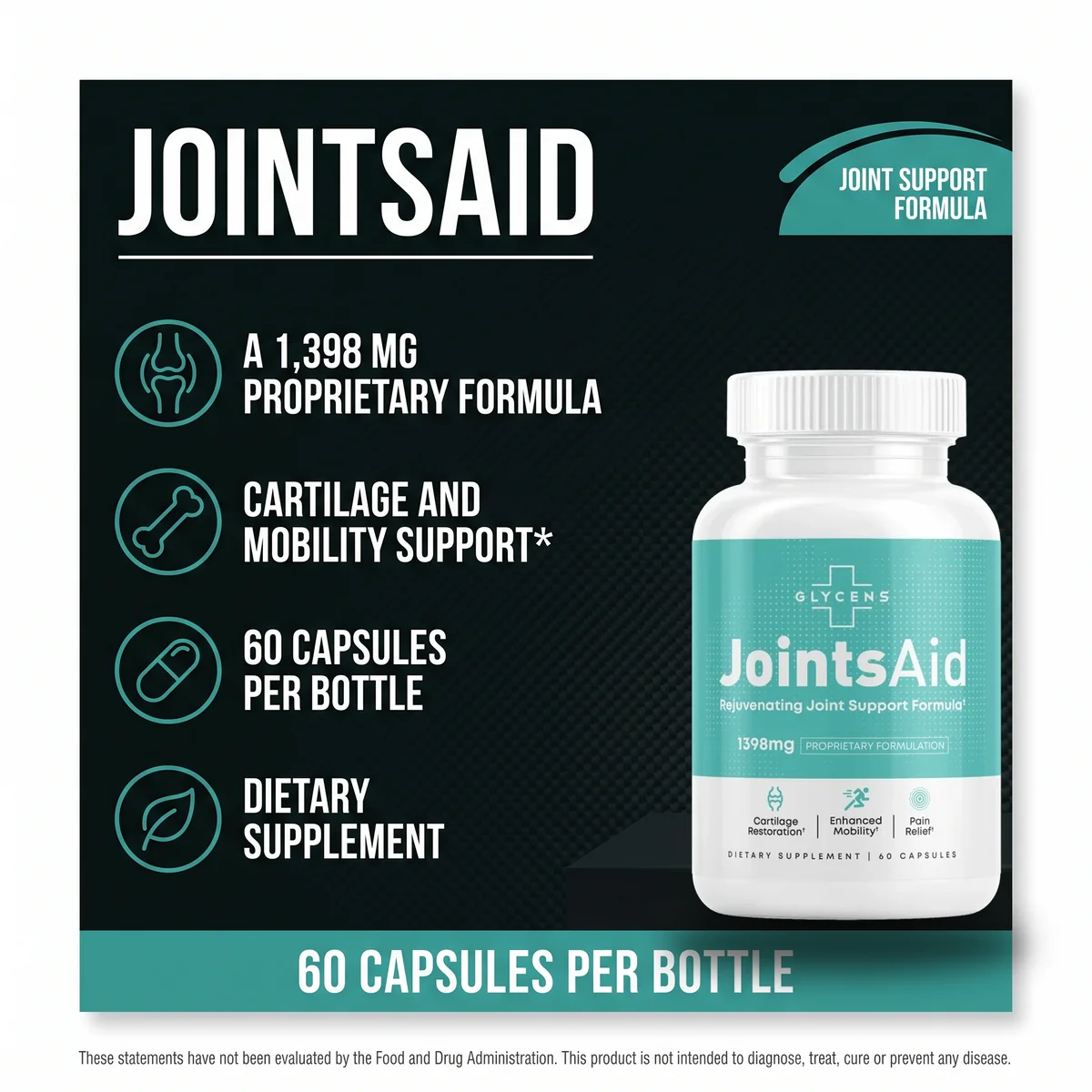
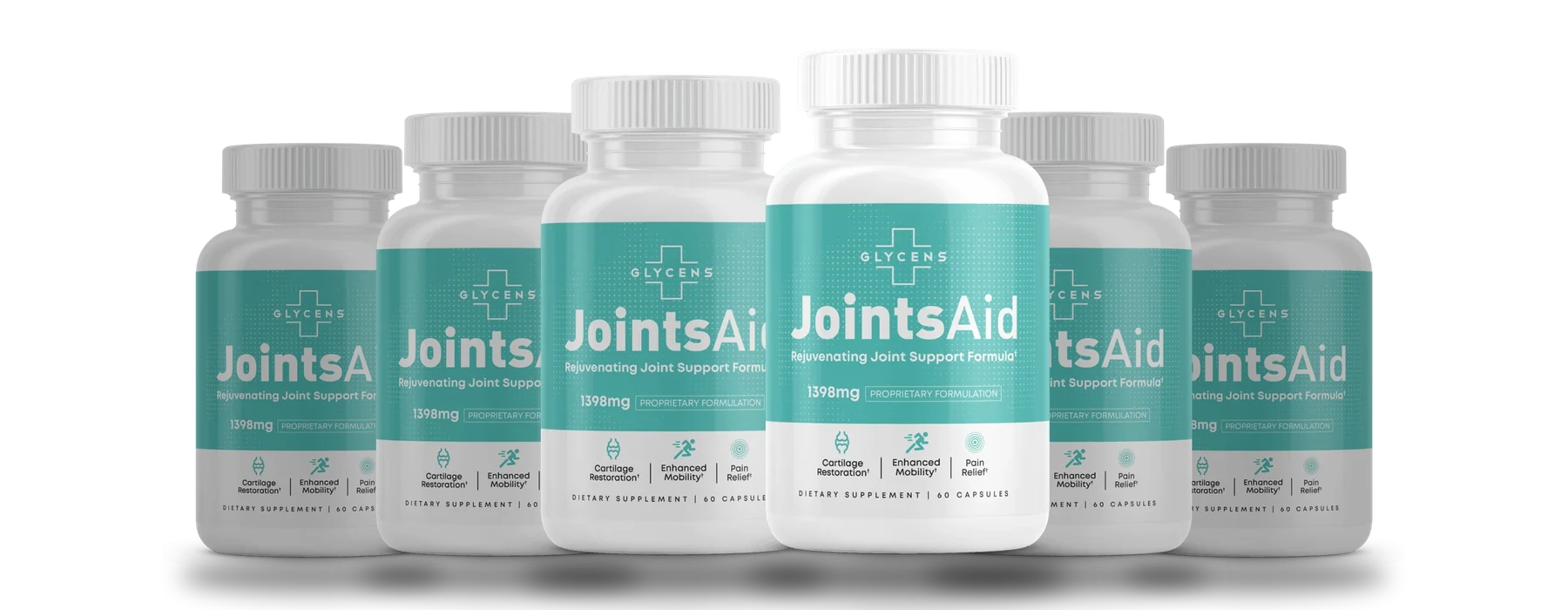
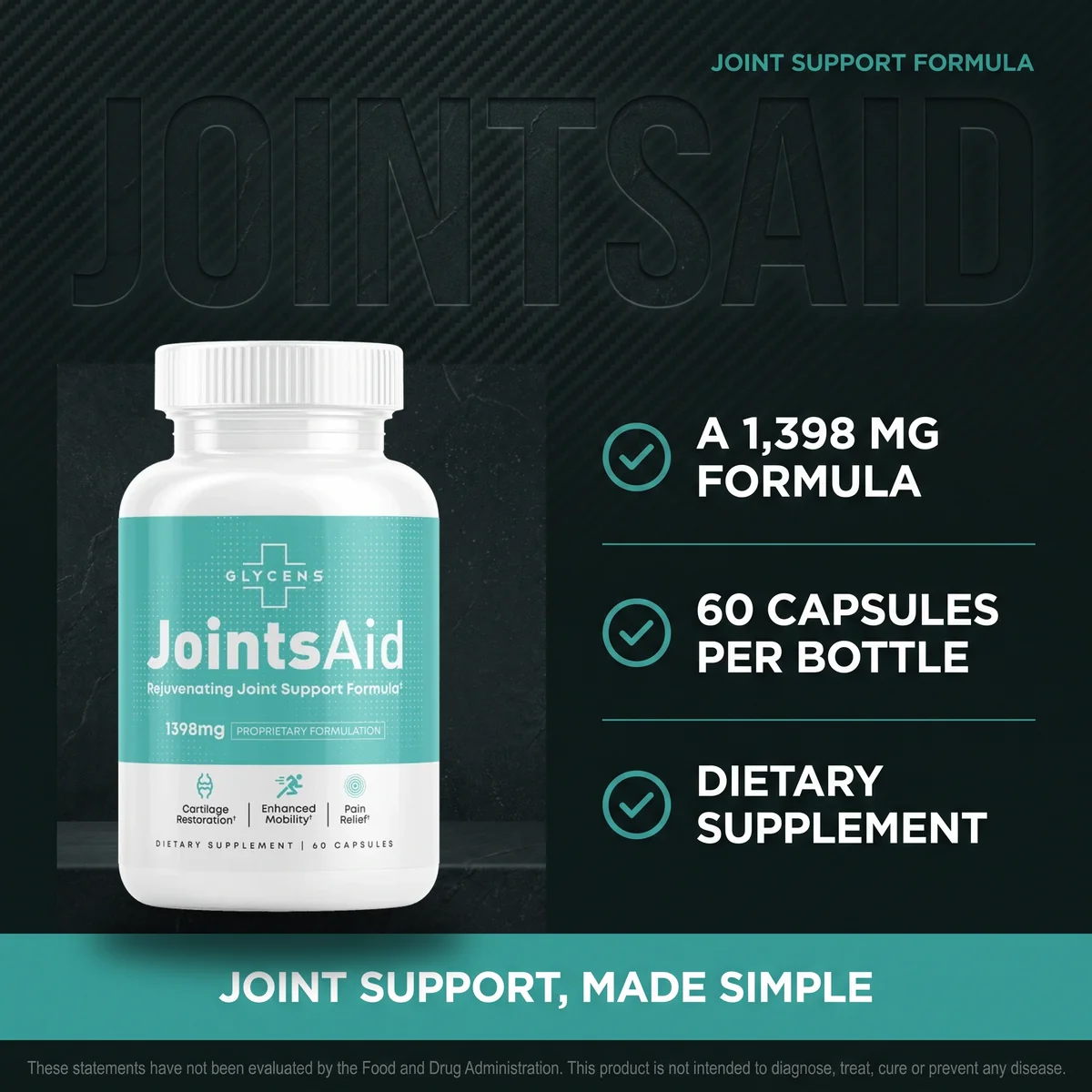
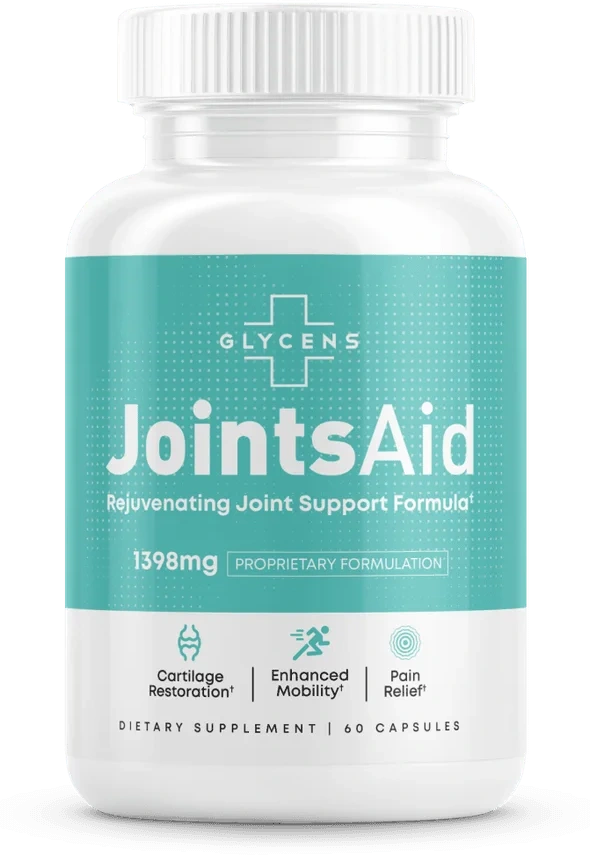
JointsAid folds turmeric, MSM, quercetin and boswellia serrata into a single 1,398 mg proprietary formulation, on a base of glucosamine — a once-daily habit. The six-bottle bundle is the best value at $49 per bottle, with free U.S. shipping and a 60-day money-back guarantee.
Check today’s JointsAid pricing — from $49/bottleHow does ginger work alongside turmeric?
In the kitchen, ginger is usually part of a pairing: ginger and turmeric. Turmeric supplies curcumin, ginger adds its gingerols, and black pepper contributes piperine — a compound studied for helping the body absorb curcumin, which is otherwise poorly taken up on its own. Rather than buying and timing three separate jars, the formula combines them so a single daily capsule carries the warming-botanical layer. Around that trio sit the structural nutrients — glucosamine, turmeric, MSM, quercetin and boswellia serrata — that give cartilage its raw materials.
| Botanical | Key compound | Why it is in the blend |
|---|---|---|
| Ginger root | Gingerols & shogaols | Warming botanical with a long tradition of use for everyday comfort. |
| Turmeric | Curcumin | Best-known culinary botanical in joint formulas; pairs naturally with ginger. |
| Black pepper | Piperine | Added to help the body absorb turmeric’s curcumin. |
| Boswellia | Boswellic acids | Ayurvedic resin used for generations in mobility blends. |
| MSM | Sulfur | Supplies sulfur the body uses in connective tissue. |
For the cartilage side of the formula, see our guide to glucosamine and chondroitin for joints, or the full ingredients section.
How much ginger is in a daily joint routine?
There is no official recommended dose of ginger for joints, but research and traditional use give a useful range. Studies of ginger extracts often use around 500 to 1,000 mg of concentrated extract per day, while culinary use delivers far less but is still enjoyable and warming. In a joint supplement, ginger is one component of a proprietary blend, so the label typically lists the total blend weight rather than each botanical. The table below shows the common ways people take ginger.
| Form of ginger | Typical amount | Best for |
|---|---|---|
| Fresh root in food | A few grams | Everyday flavour and a gentle warming effect. |
| Ginger tea | 1–2 cups | An immediate, soothing warm drink. |
| Dried ginger powder | Under 1 tsp | Cooking and baking; convenient and shelf-stable. |
| Standardised extract | ~500–1,000 mg | A consistent daily amount used in studies. |
| In a joint blend | Part of a blend | Convenience — ginger combined with other joint nutrients in one capsule. |
Because botanical support is cumulative, most people take it daily and choose a multi-month supply so they do not run out mid-routine — compare the packages and pricing on the homepage.
How do you add ginger for joint comfort to your day?
The simplest way to use ginger is to make it a small, repeatable habit rather than an occasional experiment:
- Start with food. Grate fresh ginger into cooking or steep a few slices as tea — a low-effort way to enjoy its warmth.
- Pick one consistent format. For a steady daily amount, a standardised extract or a joint blend beats a variable slice of root.
- Pair it with the basics. Ginger supports — it does not replace — movement, strength work and a whole-food diet; see relieving joint pain naturally.
- Take it at the same time. For JointsAid, that is the labelled serving with a meal each day.
- Give it several weeks. Judge a botanical routine over a month or two, not a single dose.
Is ginger safe? Who should be cautious?
Ginger is widely eaten as a food and is generally well tolerated in culinary and supplement amounts, which is a large part of its appeal. That said, a few cautions apply. Ginger may have a mild blood-thinning effect, so if you take anticoagulant medication, talk to your doctor first. Some people notice mild heartburn at higher doses, and anyone pregnant, nursing, with a bleeding disorder, or preparing for surgery should check with a professional before a concentrated ginger supplement. A botanical is there to support everyday comfort, not to manage a diagnosed condition.
Frequently asked questions
Does ginger help with joint pain?
Ginger is a warming culinary root with a long tradition of use for everyday comfort, and its gingerol and shogaol compounds are the focus of ongoing joint research. It is best seen as a supportive botanical alongside movement, strength and a good diet, not as a treatment for any joint disease.
How does ginger work as an anti-inflammatory?
Laboratory studies suggest ginger’s gingerol compounds interact with some of the same inflammatory signalling pathways, such as COX and LOX enzymes, that the body uses to regulate its inflammatory balance. This is why ginger is described as having anti-inflammatory properties, though everyday food and supplement amounts are gentle rather than drug-like.
Is ginger one of the ingredients in JointsAid?
Ginger root is one of the botanicals inside the 1,398 mg proprietary blend in JointsAid, where it sits alongside turmeric, boswellia serrata and MSM. The label lists the total blend weight rather than each individual botanical, so check the supplement facts panel for the current breakdown.
Can I take ginger and turmeric together for my joints?
Yes. Ginger and turmeric are closely related warming roots traditionally used together, and many people cook with both. JointsAid supplies the turmeric side of that pairing; ginger is not among its named actives. Combining them in a single formula is more convenient than dosing each separately.
How long does ginger take to help joints feel more comfortable?
A warm cup of ginger tea can feel soothing within minutes, but the botanical support people look for from a daily joint formula builds gradually over several weeks of consistent use. Because the effect is cumulative, most people choose a multi-month supply and take it at the same time each day.
Is ginger safe to take every day?
Ginger is widely used as a food and is generally well tolerated in culinary and supplement amounts. Because it may interact with blood-thinning medication and can cause mild heartburn in some people, talk to your doctor before starting a daily ginger supplement if you take medication, are pregnant or have a bleeding condition.
See what JointsAid actually names — risk-free for 60 days →
JointsAid is a dietary supplement, not a treatment for any medical condition. These statements have not been evaluated by the Food and Drug Administration. This product is not intended to diagnose, treat, cure or prevent any disease. Always consult a qualified healthcare professional about your individual needs.
References & further reading
- National Center for Complementary and Integrative Health (NCCIH). Ginger. nccih.nih.gov/health/ginger
- National Center for Complementary and Integrative Health (NCCIH). Turmeric. nccih.nih.gov/health/turmeric
- Bartels EM et al., Osteoarthritis and Cartilage, 2015. Efficacy and safety of ginger in osteoarthritis patients: a meta-analysis of randomized placebo-controlled trials. Bartels EM et al., Osteoarthritis and Cartilage, 2015 — PubMed 25300574
- Examine.com. Ginger — evidence-based summary. examine.com/supplements/ginger
- Mayo Clinic. Ginger — consumer overview. mayoclinic.org/drugs-supplements-ginger
- Altman RD & Marcussen KC, Arthritis & Rheumatism, 2001. Effects of a ginger extract on knee pain in patients with osteoarthritis. Altman RD & Marcussen KC, Arthritis & Rheumatism, 2001 — PubMed 11710709
- Leach MJ & Kumar S, International Journal of Evidence-Based Healthcare, 2008. The clinical effectiveness of Ginger (Zingiber officinale) in adults with osteoarthritis. Leach MJ & Kumar S, International Journal of Evidence-Based Healthcare, 2008 — PubMed 21631828
These references describe the ingredients and habits in general terms and do not constitute evidence that any product treats, cures or prevents any condition.
Keep reading: the turmeric supplement for joint pain · how to relieve joint pain naturally · back to the JointsAid blog · homepage.