Glucosamine and chondroitin for joints: how they work, from JointsAid

Updated August 2026 · reviewed by the JointsAid Research Team. We are an independent information resource, not a medical provider, and this article is educational rather than medical advice.
Glucosamine and chondroitin are the two best-known joint-supplement ingredients, and they are almost always taken together: glucosamine is a building block the body uses for cartilage, and chondroitin helps that cartilage hold water and cushioning. This JointsAid guide explains what each is, how they work, and how they fit into a broader joint blend.
What glucosamine and chondroitin are and how they work, in one place.
- What they are
- Two naturally occurring components of cartilage — glucosamine, an amino sugar, and chondroitin, a large cushioning molecule.
- How they work
- They are the building blocks and water-holding components cartilage uses, and they are usually taken together as a pair.
- Typical forms
- Glucosamine sulfate or hydrochloride, and chondroitin sulfate; glucosamine is commonly shellfish-derived.
- Where JointsAid fits
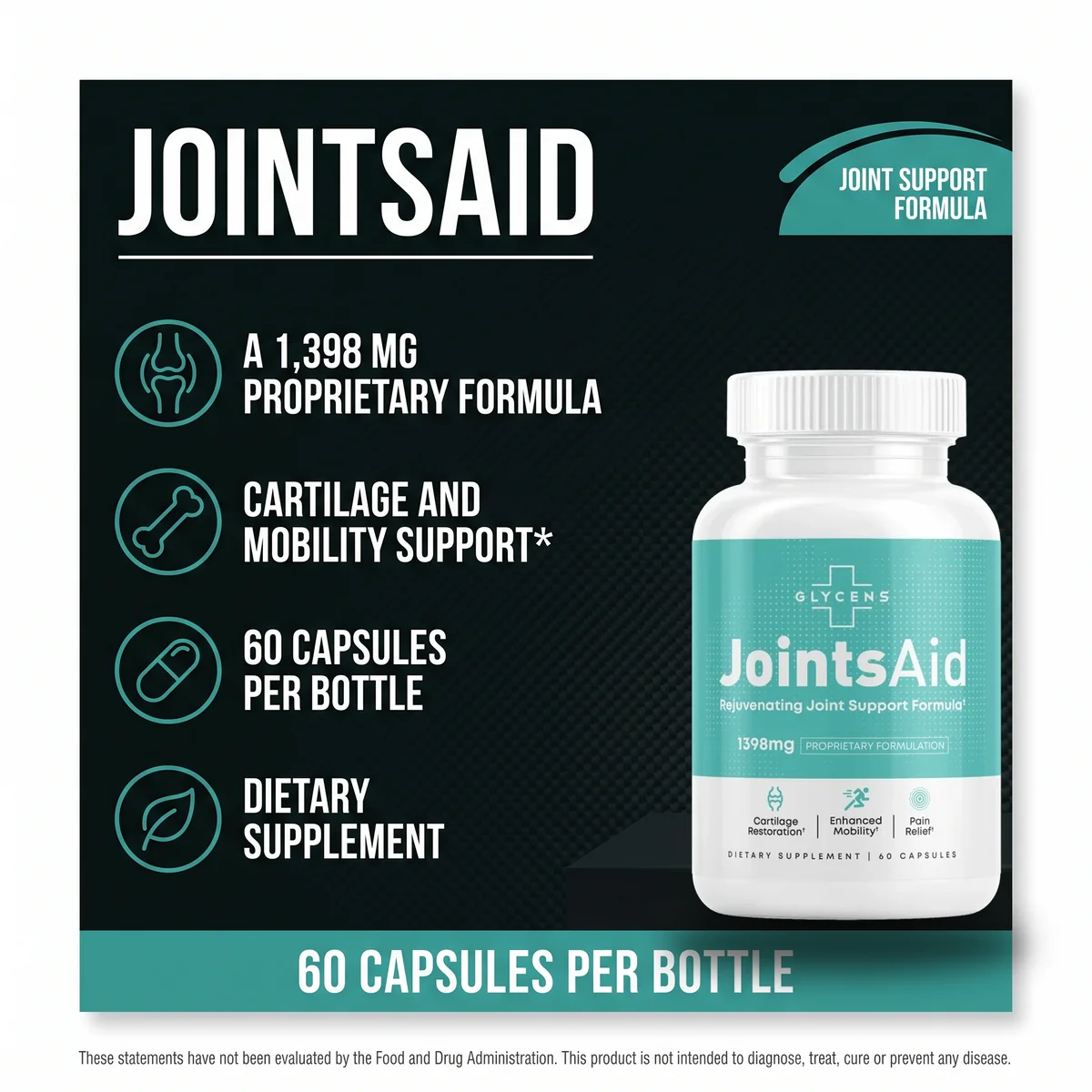
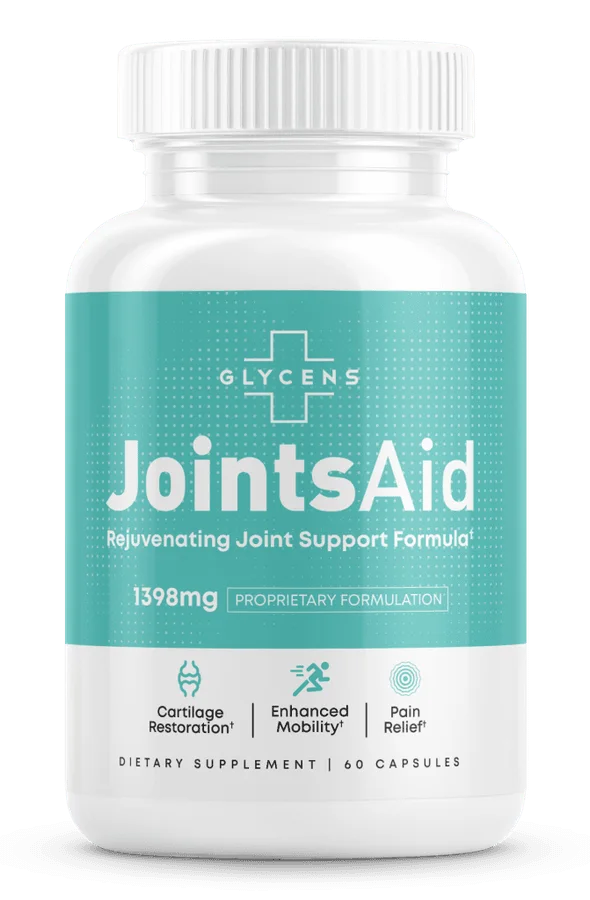
- JointsAid combines both with turmeric, MSM, quercetin and boswellia serrata in a 1,398 mg blend.
- Good to know
- They are a support to movement and diet, build up gradually over weeks, and are not a treatment for any disease.
Glucosamine and chondroitin are the two best-known names in joint supplements, and they are almost always mentioned together. This guide explains what each one is, how they are thought to work, what to look for on a label, and how they fit into a blend like JointsAid — all in plain language, with independent references.
What are glucosamine and chondroitin?
Glucosamine
Glucosamine is an amino sugar the body makes naturally and uses to build and maintain cartilage — the smooth, cushioning tissue that caps the ends of bones (Clegg DO et al., New England Journal of Medicine, 2006). In supplements it is usually supplied as glucosamine sulfate or glucosamine hydrochloride, and it is most often sourced from the shells of shellfish (a vegetarian, corn-fermented version also exists). It is one of the most studied ingredients in the entire joint-supplement category.
Chondroitin
Chondroitin, usually supplied as chondroitin sulfate, is a much larger molecule and a natural component of cartilage (Hochberg MC et al., Annals of the Rheumatic Diseases, 2016). Its job in the body is to help cartilage attract and hold water, which keeps the tissue springy and able to cushion load. Because glucosamine and chondroitin play complementary structural roles, the two are typically combined.
How do they work together?
Think of cartilage as a sponge reinforced with fibres. Glucosamine contributes to the raw materials the body uses to build and maintain that structure, while chondroitin helps the sponge hold water and resist compression. Taken together as a daily pair, they aim to supply the components cartilage is made of — the logic behind pairing them in many formulas. JointsAid is not one of them: it names glucosamine but not chondroitin, and surrounds it with turmeric, MSM, quercetin and boswellia serrata instead.
It is worth being realistic about what that means in practice. Supplying cartilage components in a capsule is not the same as rebuilding a worn joint, and no supplement can promise that. The sensible way to think about the pair is as everyday nutritional support that works quietly in the background, alongside the movement, strength and weight habits that do the heavy lifting — a steady contribution rather than a dramatic one.
What does the research say?
Glucosamine and chondroitin are among the most researched supplement ingredients, and the picture is genuinely mixed: some people report meaningful everyday benefit and some studies are more modest, which is why authoritative bodies describe the evidence as inconsistent rather than settled (NCCIH, Glucosamine and Chondroitin for Osteoarthritis). What most sources agree on is that they have a long track record of use and a good general safety profile. The honest takeaway is that they are a reasonable, well-tolerated option to try as part of a broader routine — not a guaranteed fix, and not a medicine. For a balanced overview, the NCCIH summary linked below is a good starting point.
Dosing and what to look for on a label
Joint studies have commonly used glucosamine and chondroitin in split daily doses taken consistently over weeks to months, since these nutrients build their support gradually rather than working on the first day. When comparing products, a few label details matter more than the marketing on the front.
| On the label | What to look for |
|---|---|
| Forms | Recognisable forms such as glucosamine sulfate and chondroitin sulfate |
| Consistency | A dose you can take daily without fuss — capsules make this simple |
| Companions | Supporting nutrients like MSM, type II collagen, turmeric and boswellia |
| Absorption | Black pepper extract (piperine) to help absorb companion botanicals |
| Quality | Made in an FDA-registered, GMP facility; non-GMO |
| Allergens | A clear note if glucosamine is shellfish-derived |
Glucosamine, plus four plant actives
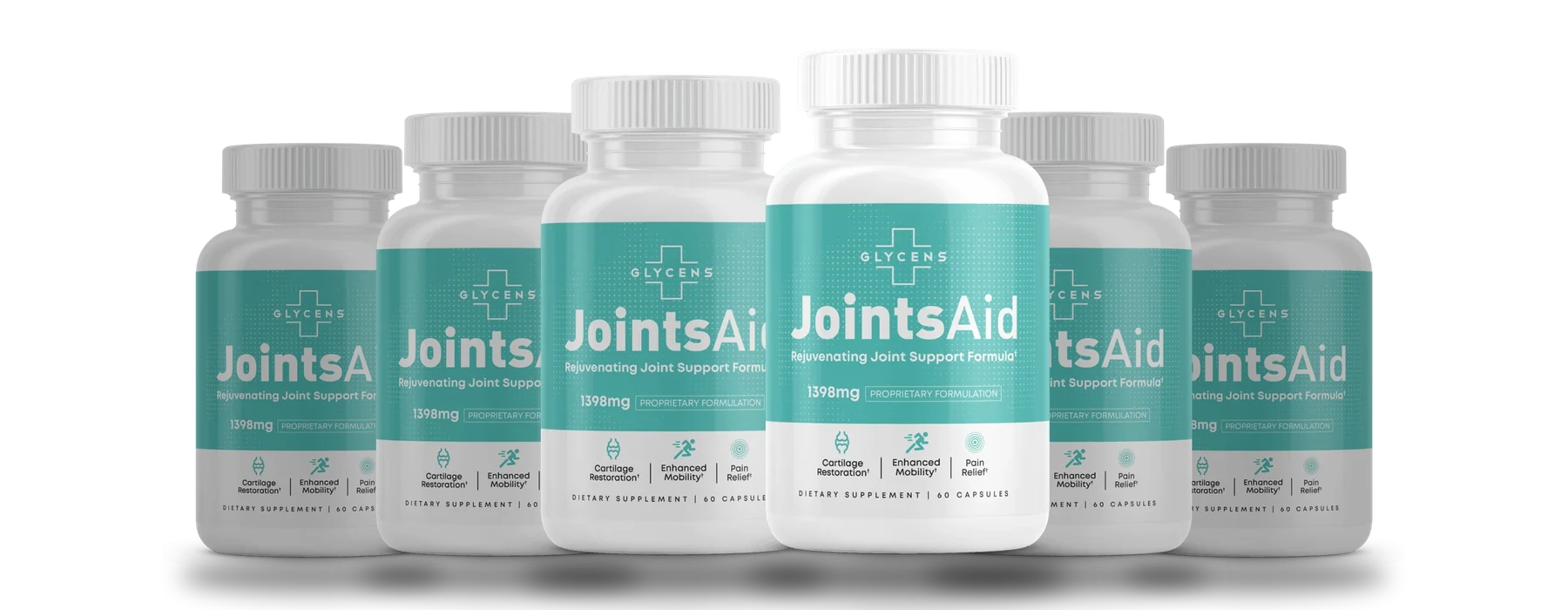
JointsAid combines glucosamine with turmeric, MSM, quercetin and boswellia in a 1,398 mg blend. The six-bottle bundle is the best value at $49 per bottle, with free U.S. shipping and a 60-day guarantee.
Order JointsAid — from $49/bottleHow does JointsAid combine them with other joint nutrients?
Rather than the classic glucosamine-and-chondroitin pair, JointsAid takes a structure-plus-comfort approach: glucosamine on the structural side, then turmeric, MSM, quercetin and boswellia serrata for everyday comfort. The structural side supplies cartilage building blocks; the comfort side layers in botanicals with long traditions of use. Here is how the headline actives compare at a glance.
| Ingredient | Type | General role in the blend |
|---|---|---|
| Glucosamine | Amino sugar | A building block the body uses to maintain cartilage. |
| Chondroitin | Cartilage molecule | Helps cartilage hold water and resist compression. |
| Type II collagen | Structural protein | The main protein in cartilage. |
| MSM | Sulfur source | Supplies sulfur used in connective tissue. |
| Turmeric & boswellia | Botanicals | Traditionally used for everyday joint comfort. |
See the full breakdown, with a reference for each ingredient, in the JointsAid ingredients section, or read our overview of relieving joint pain naturally.
Safety and who should be cautious
Glucosamine and chondroitin have a good general safety record, but a few groups should take care. Because glucosamine is commonly shellfish-derived, anyone with a shellfish allergy should read the label and check with a doctor. People taking blood-thinning medication should ask their doctor first, as chondroitin has a structural similarity to certain anticoagulants. And as with any supplement, those who are pregnant, nursing, under 18 or managing a medical condition should consult a professional before starting.
Frequently asked questions
What is the difference between glucosamine and chondroitin?
Glucosamine is a small amino sugar the body uses to build and maintain cartilage, while chondroitin is a much larger molecule that helps cartilage attract and hold water. They play complementary structural roles, which is why they are usually taken together.
Should glucosamine and chondroitin be taken together?
They are most often combined, because glucosamine contributes building blocks while chondroitin helps cartilage hold water and resist compression. Many formulas, including JointsAid, pair them and add supporting nutrients like turmeric, MSM and quercetin.
How long do glucosamine and chondroitin take to work?
They build their support gradually rather than working on the first day, so studies and product guidance generally suggest taking them consistently for several weeks to a few months before judging them. Individual results vary.
Are glucosamine and chondroitin safe?
They have a good general safety record and are usually well tolerated. Because glucosamine is often shellfish-derived, people with a shellfish allergy should check the label, and anyone on blood-thinning medication or who is pregnant, nursing or under 18 should ask a doctor first.
Is glucosamine suitable for a shellfish allergy?
Most glucosamine is sourced from shellfish shells, so people with a shellfish allergy should read the label carefully and consult a doctor. Vegetarian, corn-fermented glucosamine exists, but you should confirm the source before use.
Does JointsAid contain chondroitin?
JointsAid combines glucosamine with plant-based comfort actives - turmeric, MSM, quercetin and boswellia serrata - a 1,398 mg blend in a once-daily capsule.
Try JointsAid risk-free for 60 days →
JointsAid is a dietary supplement, not a treatment for any medical condition. These statements have not been evaluated by the Food and Drug Administration. This product is not intended to diagnose, treat, cure or prevent any disease. Always consult a qualified healthcare professional about your individual needs.
References & further reading
- National Center for Complementary and Integrative Health (NCCIH). Glucosamine and Chondroitin for Osteoarthritis. nccih.nih.gov/health/glucosamine-and-chondroitin-for-osteoarthritis
- National Institutes of Health, Office of Dietary Supplements. Dietary Supplements for Joint Health. ods.od.nih.gov
- Examine.com. Glucosamine — evidence-based summary. examine.com/supplements/glucosamine
- Examine.com. Chondroitin. examine.com/supplements/chondroitin
- Zhu X et al., Journal of Orthopaedic Surgery and Research, 2018. Effectiveness and safety of glucosamine and chondroitin for the treatment of osteoarthritis: a meta-analysis of randomized controlled trials. Zhu X et al., Journal of Orthopaedic Surgery and Research, 2018 — PubMed 29980200
- Clegg DO et al., New England Journal of Medicine, 2006. Glucosamine, chondroitin sulfate, and the two in combination for painful knee osteoarthritis. Clegg DO et al., New England Journal of Medicine, 2006 — PubMed 16495392
- Hochberg MC et al., Annals of the Rheumatic Diseases, 2016. Combined chondroitin sulfate and glucosamine for painful knee osteoarthritis: a multicentre, randomised, double-blind, non-inferiority trial versus celecoxib. Hochberg MC et al., Annals of the Rheumatic Diseases, 2016 — PubMed 25589511
These references describe the ingredients and habits in general terms and do not constitute evidence that any product treats, cures or prevents any condition.
Keep reading: how to relieve joint pain naturally · the best foods for joint health · back to the JointsAid blog · homepage.