Best foods for joint health: the JointsAid food guide

Updated August 2026 · reviewed by the JointsAid Research Team. We are an independent information resource, not a medical provider, and this article is educational rather than medical advice.
The best foods for joint health form an anti-inflammatory, collagen-friendly pattern — oily fish, colourful produce, nuts, olive oil and spices like turmeric and ginger — that supports comfortable, mobile joints. No single food is magic; the pattern is what counts, and it works alongside movement, a comfortable weight and, if you choose, a joint supplement like JointsAid.
The foods that support comfortable, mobile joints, in one place.
- The idea
- Eat a colourful, anti-inflammatory pattern rich in oily fish, vegetables, fruit, nuts and olive oil, with collagen-friendly and vitamin-C foods.
- Star nutrients
- Omega-3 fats, polyphenol antioxidants, vitamin C and the amino acids the body uses to build collagen.
- Easy wins
- Oily fish twice a week, a daily handful of nuts, plenty of vegetables, and turmeric or ginger in cooking.
- Where supplements fit
- A joint blend such as JointsAid can round out the diet, but it is a supplement to good food, not a replacement.
- Timeframe
- Nutrition works gradually; think of it as a steady pattern over weeks and months rather than a quick fix, and results vary.
Food will not rebuild a worn joint overnight, but the overall pattern of what you eat genuinely influences the inflammatory balance and the raw materials your body has to work with. The good news is that a joint-friendly plate looks a lot like a generally healthy one. This guide sorts the best foods for joint health group by group and shows where a formula like JointsAid fits in.

What makes a food good for your joints?
Three things, mostly. First, an anti-inflammatory balance: foods rich in omega-3 fats and colourful antioxidants are associated with a calmer inflammatory tone, while ultra-processed foods, excess sugar and fried foods tend to pull the other way. Second, collagen raw materials: cartilage and connective tissue are built largely from collagen, and the body needs protein and vitamin C to make it. Third, an overall pattern that supports a comfortable weight, since lighter loads are gentler on weight-bearing joints (Messier SP et al., JAMA, 2013). No single food is magic; the pattern is what counts.
The best foods for joint health, group by group
Fatty fish and omega-3s
Salmon, sardines, mackerel, herring and trout are the headline joint foods, rich in the long-chain omega-3 fats EPA and DHA that support a healthy inflammatory balance (Senftleber NK et al., Nutrients, 2017). Aim for two servings of oily fish a week. If you do not eat fish, walnuts, chia, flax and algae oil provide plant-based omega-3s.
Colourful fruits and vegetables
Deeply coloured produce — berries, cherries, leafy greens, broccoli, peppers and tomatoes — delivers the polyphenol and carotenoid antioxidants linked to a calmer inflammatory tone. Citrus, kiwi, strawberries and peppers are also excellent sources of vitamin C, which the body uses to build collagen (Joseph GB et al., Arthritis Care & Research, 2020).
Collagen and bone-broth sources
Bone broth, slow-cooked cuts, and collagen-rich foods provide the amino acids the body draws on for connective tissue. Pair them with vitamin-C foods, which act as a cofactor in collagen production. Type II collagen is a familiar ingredient in many joint supplements, though it is not among the actives named for JointsAid.
Nuts, seeds and healthy fats
Walnuts, almonds, chia, flax and extra-virgin olive oil supply healthy fats and vitamin E. Olive oil in particular contains a natural compound, oleocanthal, that has drawn interest for its role in the same pathways as everyday comfort.
Spices: turmeric and ginger
Turmeric and ginger are the two culinary spices most associated with joint comfort. Both have long traditions of use and are easy to add to everyday cooking — a curry, a stir-fry, a warm tea. Turmeric’s curcumin and ginger’s gingerols are the naturally occurring compounds behind the interest; turmeric is one of the five actives Glycens names for JointsAid, while ginger is a kitchen habit rather than a listed ingredient.
Whole grains and legumes
Oats, barley, quinoa, brown rice, beans and lentils bring fibre and steady energy, and a higher-fibre pattern is associated with a healthier inflammatory balance. They also help with the comfortable-weight goal by keeping you fuller for longer.
See how JointsAid complements your plate →
Which foods should you enjoy less often?
No food is forbidden, but a few pull against the anti-inflammatory goal when they crowd out the good stuff. Think of these as “less often” rather than “never.”
| Enjoy less often | Why | A better swap |
|---|---|---|
| Sugary drinks & sweets | Added sugar pushes the inflammatory balance the wrong way | Water, unsweetened tea, whole fruit |
| Ultra-processed snacks | Often high in refined oils and additives | Nuts, yoghurt, veg and hummus |
| Deep-fried foods | Fried fats are linked to a less favourable balance | Roasted, grilled or air-fried |
| Excess refined carbs | Low fibre, quick to crowd out whole foods | Whole grains, beans, lentils |
A sample joint-friendly day
Here is what a simple day of joint-friendly eating can look like — no exotic ingredients, just a colourful, whole-food pattern.
| Meal | Example | Joint-friendly stars |
|---|---|---|
| Breakfast | Oats with berries, walnuts and a spoon of chia | Fibre, omega-3s, antioxidants |
| Lunch | Salmon or lentil salad with leafy greens and olive oil | Omega-3s, vitamin C, healthy fat |
| Snack | Greek yoghurt with kiwi, or a handful of almonds | Protein, vitamin C, vitamin E |
| Dinner | Turmeric-ginger vegetable curry with brown rice | Curcumin, gingerols, fibre |
Round out your plate
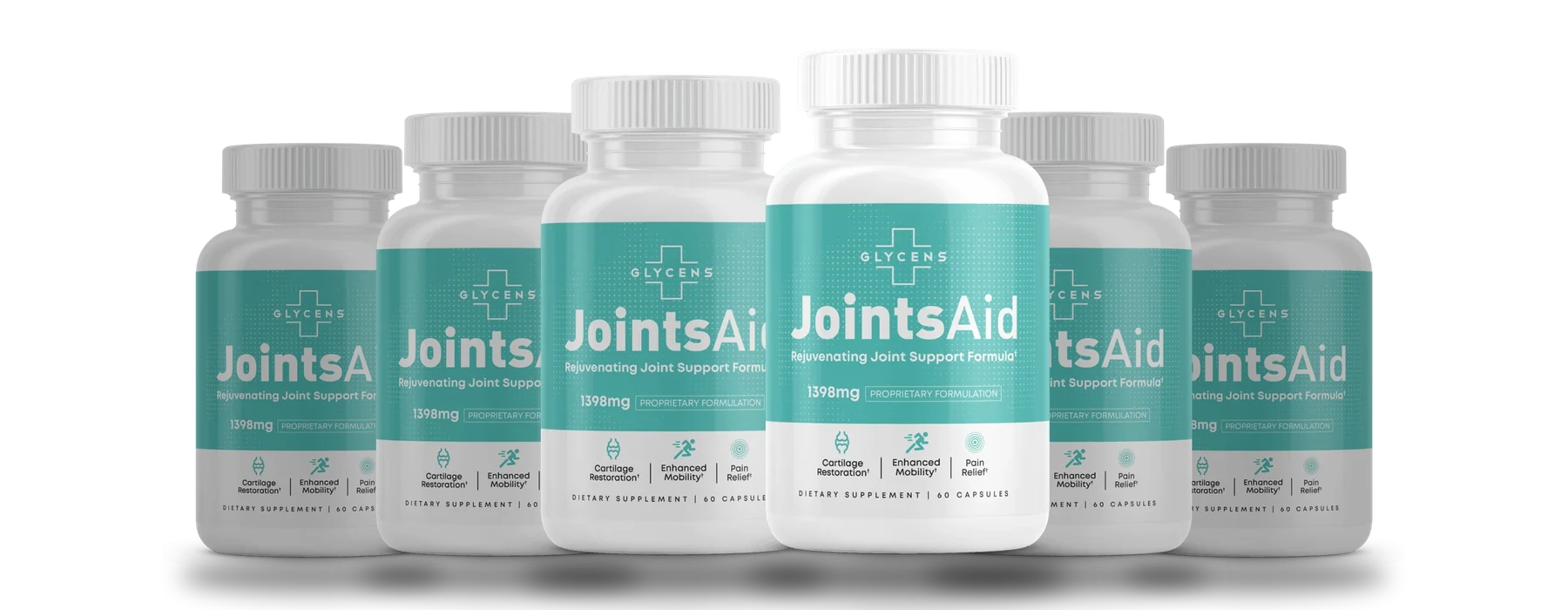
JointsAid names five plant-based actives inside a 1,398 mg proprietary formulation. The six-bottle bundle is the best value at $49 per bottle, with free U.S. shipping and a 60-day guarantee.
Order JointsAid — from $49/bottleWhere do supplements fit?
Supplements are a supplement to good food, not a substitute. That said, some of the nutrients most associated with joint health — type II collagen, turmeric, ginger, glucosamine and chondroitin — are easier to take consistently in a daily capsule than to eat in meaningful amounts every day. That is the idea behind JointsAid: a once-daily blend that layers cartilage building blocks with comfort botanicals. Read more in our guide to glucosamine and chondroitin, or see the full ingredients section.
How do you build a joint-friendly week?
- Plan two oily-fish meals and a couple of plant-protein dinners.
- Fill half your plate with vegetables and fruit at your main meals.
- Cook with olive oil, turmeric and ginger as everyday defaults.
- Keep whole-food snacks — nuts, yoghurt, fruit — within reach.
- Swap one sugary drink a day for water or unsweetened tea.
- Take your JointsAid capsules at the same time daily so the habit sticks.
When should you talk to a professional?
A joint-friendly diet supports general wellness; it is not a treatment for a diagnosed condition. If you have persistent or severe joint pain, a hot or swollen joint, food allergies (including shellfish, since glucosamine is often shellfish-derived), or you take medication, speak with your doctor or a registered dietitian before making big changes. Personalised advice ensures your plan fits your needs.
Frequently asked questions
What are the best foods for joint health?
Foods with an anti-inflammatory profile and collagen raw materials: oily fish for omega-3s, colourful fruit and vegetables for antioxidants and vitamin C, nuts, seeds and olive oil for healthy fats, and spices like turmeric and ginger. The overall pattern matters more than any single food.
Can food really reduce joint discomfort?
Food will not rebuild a worn joint, but the overall dietary pattern influences your inflammatory balance and gives the body the raw materials it uses for connective tissue. A colourful, whole-food, anti-inflammatory pattern is associated with better general joint wellness, and results vary.
Which foods are worst for joints?
Rather than single culprits, it is the pattern that matters: frequent sugary drinks, ultra-processed snacks, deep-fried foods and excess refined carbohydrates tend to crowd out joint-friendly foods and push the inflammatory balance the wrong way. Enjoy them less often rather than never.
Do I need collagen for my joints?
Cartilage is built largely from collagen, and the body makes collagen from protein and vitamin C. You can support that with collagen-rich foods and plenty of vitamin C, and type II collagen is a common ingredient in other joint supplements, though it is not one of the five actives Glycens names for JointsAid.
Is turmeric good for joints?
Turmeric is the culinary spice most associated with joint comfort, thanks to its curcumin compounds, and it has a long tradition of use. It is easy to add to everyday cooking, and turmeric is one of the five actives named for JointsAid.
Does JointsAid replace a healthy diet?
No. JointsAid is a supplement to a joint-friendly diet and active routine, not a replacement for either. It simply makes it easier to take some of the nutrients most associated with joint health - collagen, turmeric, ginger, glucosamine and chondroitin - consistently each day.
Try JointsAid risk-free for 60 days →
JointsAid is a dietary supplement, not a treatment for any medical condition. These statements have not been evaluated by the Food and Drug Administration. This product is not intended to diagnose, treat, cure or prevent any disease. Always consult a qualified healthcare professional about your individual needs.
References & further reading
- National Center for Complementary and Integrative Health (NCCIH). Turmeric. nccih.nih.gov/health/turmeric
- National Institutes of Health, Office of Dietary Supplements. Omega-3 Fatty Acids — Fact Sheet. ods.od.nih.gov/factsheets/Omega3FattyAcids-HealthProfessional
- National Institutes of Health, Office of Dietary Supplements. Vitamin C — Fact Sheet for Health Professionals. ods.od.nih.gov/factsheets/VitaminC-HealthProfessional
- Examine.com. Collagen. examine.com/supplements/collagen
- Vadell AKE et al., American Journal of Clinical Nutrition, 2020. Anti-inflammatory Diet In Rheumatoid Arthritis (ADIRA) — a randomized, controlled crossover trial indicating effects on disease activity. Vadell AKE et al., American Journal of Clinical Nutrition, 2020 — PubMed 32055820
- Senftleber NK et al., Nutrients, 2017. Marine Oil Supplements for Arthritis Pain: A Systematic Review and Meta-Analysis of Randomized Trials. Senftleber NK et al., Nutrients, 2017 — PubMed 28067815
- Messier SP et al., JAMA, 2013. Effects of intensive diet and exercise on knee joint loads, inflammation, and clinical outcomes among overweight and obese adults with knee osteoarthritis: the IDEA randomized clinical trial. Messier SP et al., JAMA, 2013 — PubMed 24065013
- Joseph GB et al., Arthritis Care & Research, 2020. Associations Between Vitamins C and D Intake and Cartilage Composition and Knee Joint Morphology Over 4 Years: Data From the Osteoarthritis Initiative. Joseph GB et al., Arthritis Care & Research, 2020 — PubMed 31282125
These references describe the ingredients and habits in general terms and do not constitute evidence that any product treats, cures or prevents any condition.
Keep reading: how to relieve joint pain naturally · how glucosamine and chondroitin work · back to the JointsAid blog · homepage.