Vitamins for joint health: where JointsAid fits in your routine

Updated August 2026 · reviewed by the JointsAid Research Team. We are an independent information resource, not a medical provider, and this article is educational rather than medical advice.
Vitamins for joint health are the specific nutrients — among them vitamin D, vitamin C, vitamin K and the omega-3 fats — that your body uses to build cartilage, maintain bone and keep the connective tissue around a joint working well (Joseph GB et al., Arthritis Care & Research, 2020). No single vitamin fixes a joint, which is why many people pair a balanced diet with a multi-active formula such as JointsAid rather than chasing one pill at a time.
Joints and bones rely on a small cast of nutrients working together, not one hero vitamin. Vitamin D and calcium support bone; vitamin C helps build collagen; vitamin K steers calcium into bone; and cartilage nutrients such as glucosamine and chondroitin support the joint itself (NIH Office of Dietary Supplements, Vitamin D). A blend keeps them consistent in one daily step.
- Bone-focused
- Vitamin D, vitamin K, calcium and magnesium support the mineral structure inside bone.
- Joint-focused
- Vitamin C, collagen, glucosamine and chondroitin support cartilage and connective tissue.
- Diet first
- Most of these nutrients come from food; supplements fill gaps, not replace a balanced plate.
- Where a blend fits
- A formula like JointsAid covers several joint nutrients at once, simpler than juggling separate pills.
Search “vitamins for joints” and you meet a wall of single-nutrient bottles, each promising to be the one that matters. The reality is more useful: a joint draws on several nutrients at once. This guide covers the vitamins most associated with joint and bone health and shows where a combined formula like JointsAid sits next to a shelf of single vitamins.
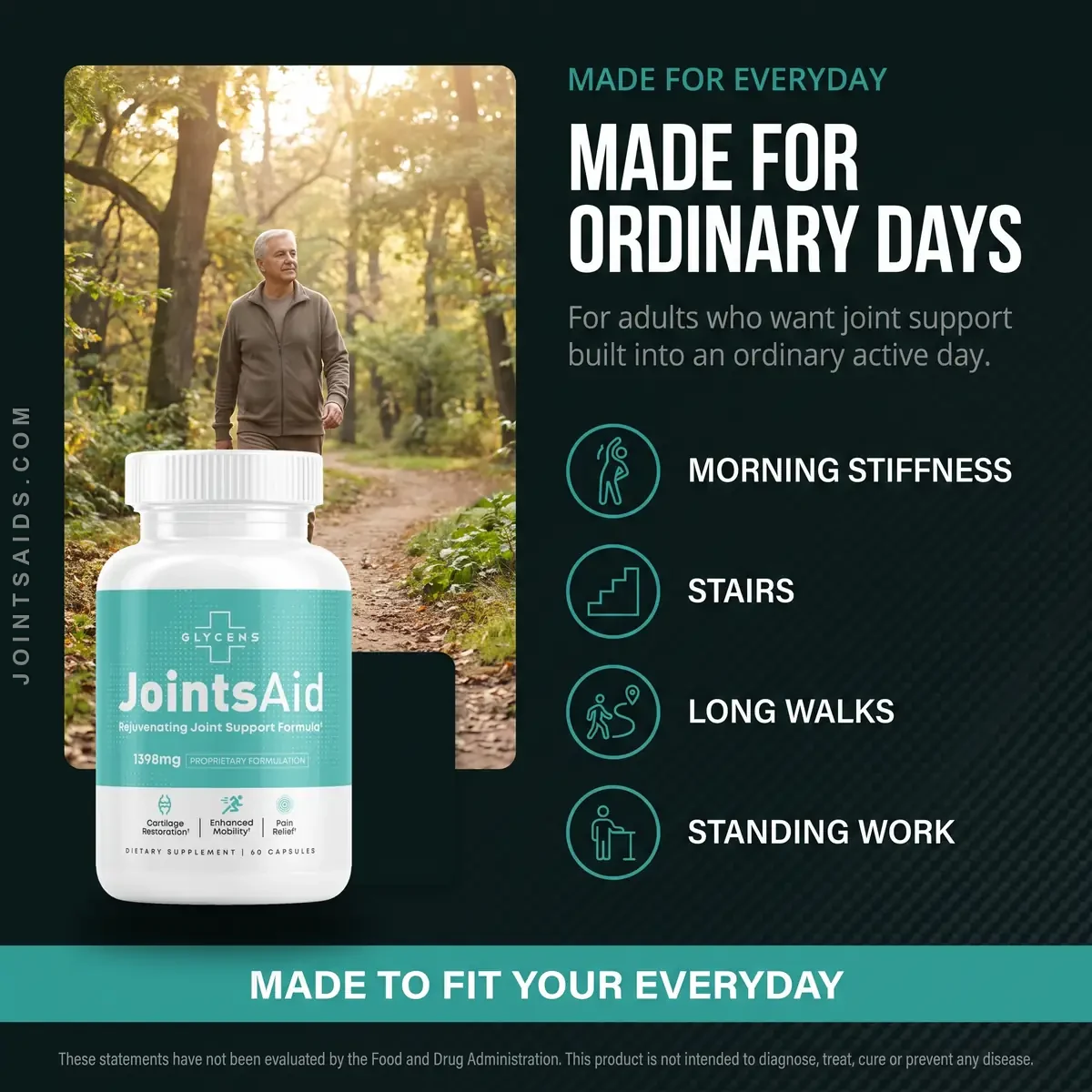
What are the best vitamins for joint health?
The best vitamins for joint health are the ones with a clear biological role in bone and connective tissue — principally vitamin D, vitamin C and vitamin K, backed by calcium, magnesium and the omega-3 fats. Each does a different job, so it helps to read a label as a team of nutrients rather than a ranking.
Which vitamins and nutrients matter most?
The nutrients linked to joint and bone health fall into two overlapping groups: those that support bone, and those that support cartilage. Here is what each does.
Vitamin D — the bone and muscle nutrient
Vitamin D helps the body absorb calcium and is essential for normal bone (McAlindon T et al., JAMA, 2013). It also supports muscle function, and because strong muscles take load off a joint, low vitamin D can leave both bones and the surrounding muscles feeling weaker. Deficiency is common in winter and indoors, which makes it one of the few joint-related nutrients genuinely worth testing for.
Vitamin C — the collagen vitamin
Vitamin C is a required cofactor for making collagen, the protein that forms cartilage, tendons and ligaments. Most people get plenty from fruit and vegetables, but it earns its place on any joint list because so much of a joint is, literally, collagen.
Vitamin K — the calcium director
Vitamin K helps activate proteins that direct calcium into bone and away from soft tissue. It works closely with vitamin D and calcium — another reason these nutrients are best thought of as a team.
Calcium and magnesium — the mineral scaffold
Calcium is the main mineral in bone, and magnesium supports bone structure and muscle relaxation. They belong in the “bones and joints” conversation because a stable skeleton is what your joints move upon.
Omega-3 fats — the balance nutrient
The long-chain omega-3 fats in oily fish are associated with a calmer inflammatory balance. They are fats rather than vitamins, but appear on almost every joint list and pair naturally with the vitamins above.
Glucosamine, chondroitin and collagen — the cartilage building blocks
These are not vitamins, but they are the nutrients people most associate with the joint itself. Glucosamine and chondroitin are natural components of cartilage, and type II collagen supplies its protein. We cover the pair in glucosamine and chondroitin for joints, and collagen in collagen for joints.
| Nutrient | Main role | Everyday food sources |
|---|---|---|
| Vitamin D | Calcium absorption; bone and muscle | Sunlight, oily fish, fortified foods, egg yolk |
| Vitamin C | Collagen formation | Citrus, peppers, berries, broccoli |
| Vitamin K | Directs calcium to bone | Leafy greens, broccoli, some fermented foods |
| Calcium | Main bone mineral | Dairy, fortified plant milks, leafy greens |
| Magnesium | Bone structure; muscle function | Nuts, seeds, whole grains, legumes |
| Omega-3 | Inflammatory balance | Salmon, sardines, mackerel, walnuts |
| Glucosamine / chondroitin | Cartilage components | Supplements (not readily from food) |
See what JointsAid actually names →
Vitamins for bones and joints: what is the difference?
Vitamins for bones and vitamins for joints overlap heavily but point at slightly different tissues. Bone-focused nutrients — vitamin D, vitamin K, calcium and magnesium — support the hard mineral scaffold of the skeleton. Joint-focused nutrients — vitamin C, collagen, glucosamine and chondroitin — support the cartilage and connective tissue that let a joint glide. Because bone and joint meet at every hinge, a well-designed formula tends to cover both.
| Goal | Nutrients that lead | What they support |
|---|---|---|
| Stronger bones | Vitamin D, vitamin K, calcium, magnesium | The mineral density and structure of bone |
| Comfortable, mobile joints | Vitamin C, collagen, glucosamine, chondroitin, MSM | Cartilage, connective tissue and cushioning |
| Overall balance | Omega-3, turmeric, quercetin, boswellia serrata | A calmer everyday inflammatory balance |
Should you take single vitamins or a multi-active blend?
The choice between single vitamins and a multi-active blend comes down to whether you are fixing a specific gap or supporting joints in general. If a blood test shows one clear shortfall — low vitamin D is the usual one — a targeted single supplement makes obvious sense. For broad, everyday joint support, joints draw on several nutrients at once, and five or six separate bottles are harder to keep consistent than a single daily formula. That is where a combined product sits.
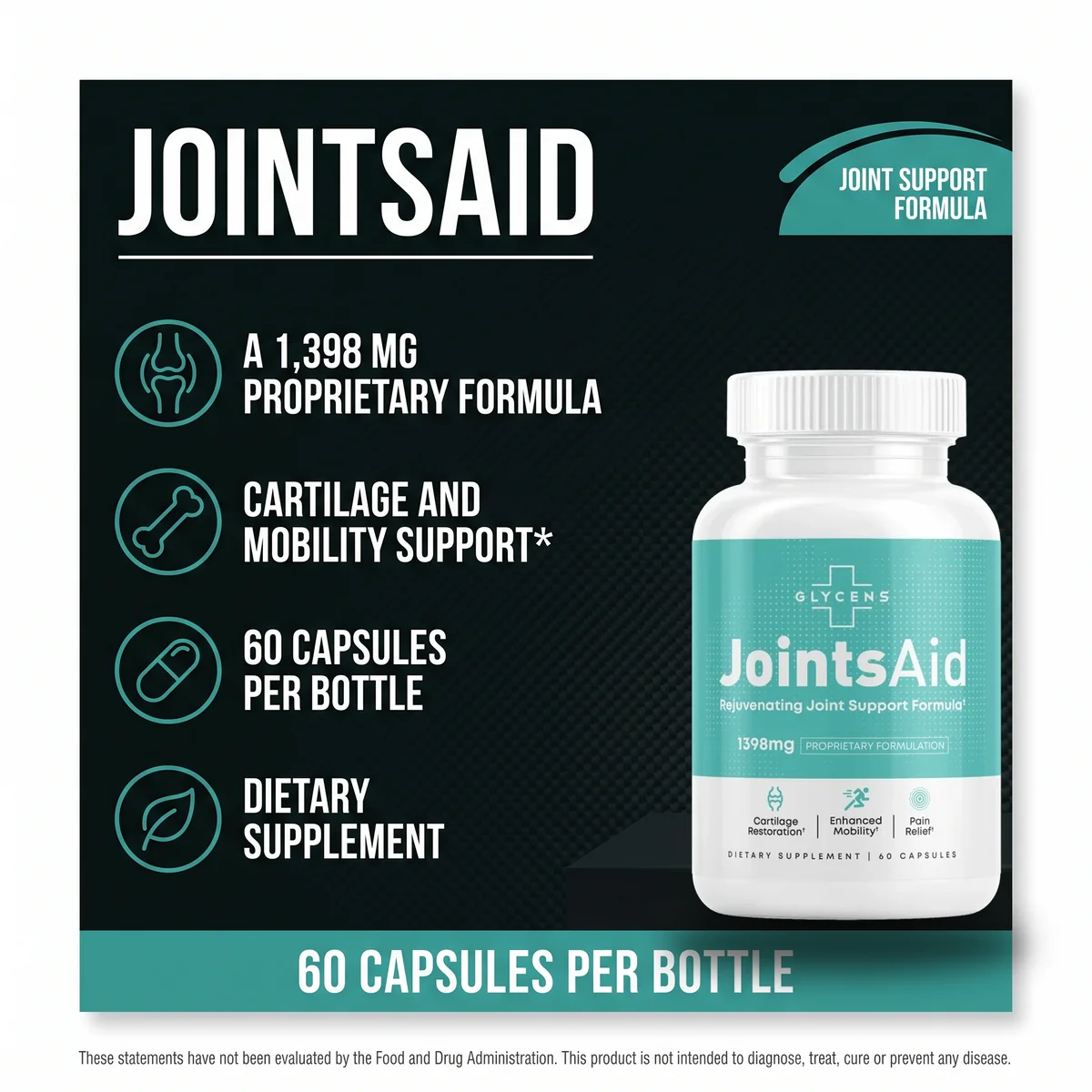
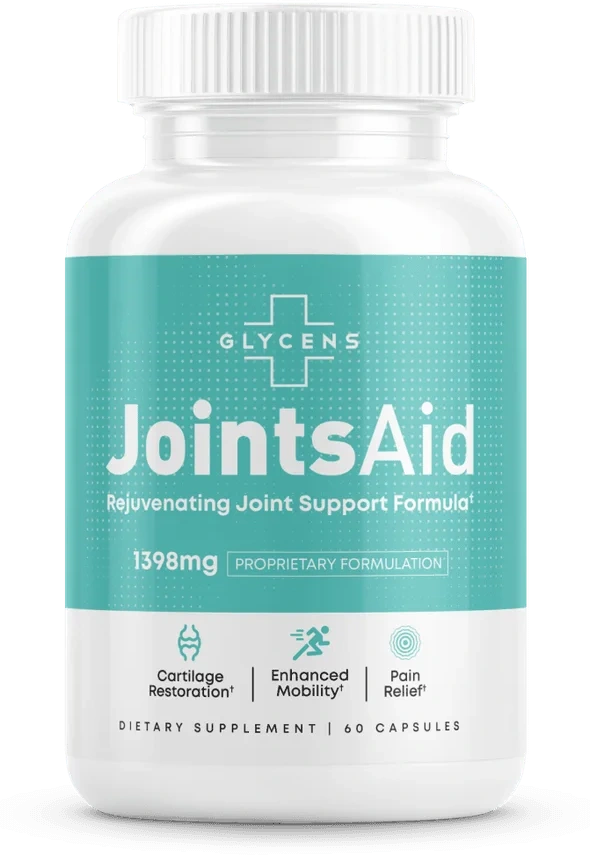
JointsAid takes that combined approach, bringing together the cartilage building block glucosamine alongside a 1,398 mg proprietary blend of turmeric, MSM, quercetin and boswellia serrata, in a once-daily routine. It is nutritional support that complements a balanced diet, not a replacement and not a treatment for any condition. Read the full breakdown in our JointsAid review or jump to the ingredients section.
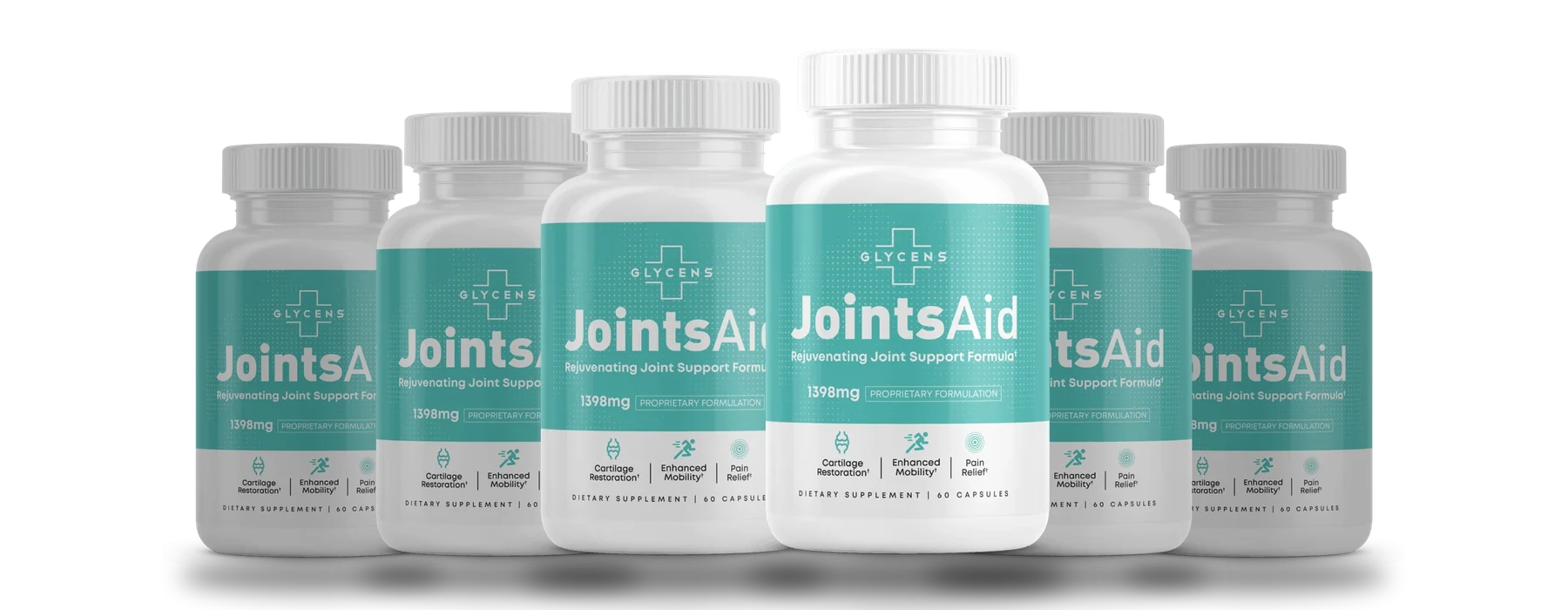
One daily step, several joint nutrients
Instead of a shelf of single vitamins, JointsAid pairs cartilage nutrients with a 1,398 mg proprietary formulation in the labelled daily serving. The six-bottle bundle is the best value at $49 per bottle, with free U.S. shipping and a 60-day money-back guarantee.
Check today’s JointsAid pricing — from $49/bottleHow do you build a simple joint-nutrition routine?
A good joint-nutrition routine starts with food and uses supplements to fill the gaps. Stack one habit at a time until each feels automatic:
- Build meals around whole foods — oily fish, leafy greens, vegetables, nuts and fruit cover most joint nutrients at once.
- Get sensible sun and consider vitamin D, especially in winter; ask your doctor about testing if you are often indoors.
- Include a vitamin-C source daily so your body can build collagen.
- Keep moving and add light strength work — movement is what keeps joints supple. See our guide to relieving joint pain naturally.
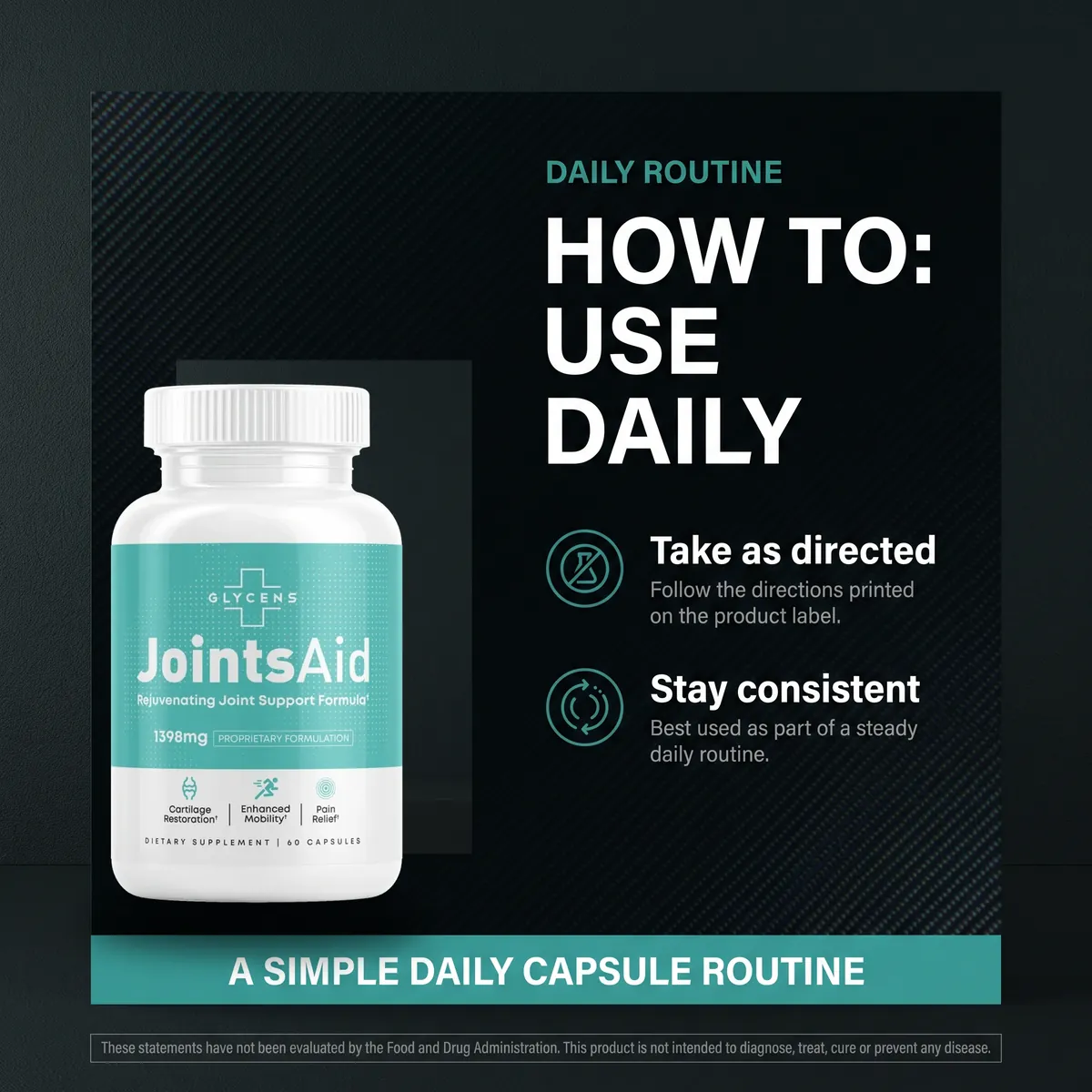
- Pick one supplement and take it at the same time daily — for JointsAid, the labelled serving with a meal.
For a fuller food-first plan, our guide to the best foods for joint health maps these nutrients onto everyday meals.
Can joint vitamins do harm? When should you talk to a doctor?
Most joint vitamins are safe at label doses, but more is not automatically better. The fat-soluble vitamins — A, D, E and K — can build up if you heavily over-supplement, and some interact with medication; vitamin K, for instance, matters for anyone on blood thinners. Because glucosamine is frequently shellfish-derived, mention any shellfish allergy first. Speak with your doctor or pharmacist before adding supplements if you are pregnant, take medication or manage a health condition — and see a doctor for any joint that is hot, red, badly swollen or painful after an injury, since nutrition is not a substitute for medical care.
Frequently asked questions
What are the best vitamins for joint health?
The vitamins most linked to joint and bone health are vitamin D, vitamin C and vitamin K, supported by calcium, magnesium and the omega-3 fats. Vitamin D supports bone, vitamin C helps the body build collagen, and vitamin K directs calcium to bone. There is no single best vitamin; joints rely on several working together with movement and a balanced diet.
Can vitamins for joints reduce joint pain?
Correcting a genuine deficiency such as low vitamin D can help how joints and muscles feel, but vitamins are not a painkiller and are not a treatment for arthritis or any diagnosed condition. They work best as everyday support alongside movement and a sensible weight, and ongoing joint pain should be checked by a doctor.
What is the difference between vitamins for bones and joints?
Vitamins for bones center on vitamin D, vitamin K, calcium and magnesium, which support the mineral scaffold inside bone. Nutrients for joints center on vitamin C, glucosamine, turmeric, MSM and boswellia serrata, which support cartilage and connective tissue. The two overlap because bone and joint sit side by side, so blended formulas often cover both.
Is it better to take single vitamins or a blend like JointsAid?
If a blood test shows one specific shortfall, a single targeted vitamin can make sense. For general everyday joint support many people prefer a multi-active blend such as JointsAid, because joints depend on several nutrients at once and one formula is simpler to keep consistent than several pills. It complements, rather than replaces, a balanced diet.
How long do joint vitamins take to work?
Nutrients for joints and connective tissue build their support gradually, so most people give a routine several weeks to a few months rather than expecting an overnight change. Correcting a clear vitamin D deficiency may be felt sooner, but timelines vary and consistency matters more than any single dose.
Are joint vitamins safe to take every day?
Most joint vitamins are well tolerated at label doses, but fat-soluble vitamins such as A, D and K can build up if heavily over-supplemented, and some interact with medication. Because glucosamine is often shellfish-derived, mention any shellfish allergy. Check with a doctor or pharmacist first if you are pregnant, on medication or managing a condition.
Try JointsAid risk-free for 60 days →
JointsAid is a dietary supplement, not a treatment for any medical condition. These statements have not been evaluated by the Food and Drug Administration. This product is not intended to diagnose, treat, cure or prevent any disease. Always consult a qualified healthcare professional about your individual needs.
References & further reading
- National Institutes of Health, Office of Dietary Supplements. Vitamin D — Fact Sheet for Consumers. ods.od.nih.gov/factsheets/VitaminD-Consumer
- National Institutes of Health, Office of Dietary Supplements. Vitamin C — Fact Sheet for Consumers. ods.od.nih.gov/factsheets/VitaminC-Consumer
- National Center for Complementary and Integrative Health (NCCIH). Glucosamine and Chondroitin for Osteoarthritis. nccih.nih.gov/health/glucosamine-and-chondroitin-for-osteoarthritis
- National Institute of Arthritis and Musculoskeletal and Skin Diseases (NIAMS). Osteoarthritis — Overview. niams.nih.gov/health-topics/osteoarthritis
- Harvard T.H. Chan School of Public Health. The Nutrition Source — Vitamins and Minerals. nutritionsource.hsph.harvard.edu/vitamins
- McAlindon T et al., JAMA, 2013. Effect of vitamin D supplementation on progression of knee pain and cartilage volume loss in patients with symptomatic osteoarthritis: a randomized controlled trial. McAlindon T et al., JAMA, 2013 — PubMed 23299607
- Joseph GB et al., Arthritis Care & Research, 2020. Associations Between Vitamins C and D Intake and Cartilage Composition and Knee Joint Morphology Over 4 Years: Data From the Osteoarthritis Initiative. Joseph GB et al., Arthritis Care & Research, 2020 — PubMed 31282125
- NIH Office of Dietary Supplements, Vitamin D. ods.od.nih.gov/factsheets/VitaminD-HealthProfessional
These references describe the nutrients and habits in general terms and do not constitute evidence that any product treats, cures or prevents any condition.
Keep reading: the best foods for joint health · how glucosamine and chondroitin work · collagen for joints · back to the JointsAid blog · homepage.