Collagen for joints: what type II collagen actually does

Updated August 2026 · reviewed by the JointsAid Research Team. We are an independent information resource, not a medical provider, and this article is educational rather than medical advice.
Collagen for joints refers to using collagen — and specifically type II collagen, the main structural protein in cartilage — as a nutritional building block to support the smooth tissue that cushions your joints. JointsAid names glucosamine, turmeric, MSM, quercetin and boswellia serrata; collagen is not among them, so the two are separate decisions. It is a support to healthy habits, not a treatment for any condition.
What collagen actually does for joints, in one place.
- What it is
- Type II collagen is the dominant protein in cartilage, giving the tissue its framework and resilience.
- Why type II
- Type I collagen mostly lives in skin and bone; type II is the joint-and-cartilage type, so it is the form used in joint formulas.
- How it fits JointsAid
- It does not: the five actives named for JointsAid are glucosamine, turmeric, MSM, quercetin and boswellia serrata.
- What to expect
- Joint nutrients build support gradually over weeks to months, and they work best alongside movement, strength and a sensible diet.
Collagen is the ingredient people recognise but least understand, and the type that matters for joints is not the same one sold for glowing skin. This guide explains what type II collagen is, why it belongs on the structural side of a joint blend, what the evidence shows, and where it appears in JointsAid.
What is collagen for joints, and why does it matter?
Collagen is the most abundant protein in the human body, and it is the raw material your joints are quite literally built from. In cartilage — the firm, slippery tissue that caps the ends of bones — long collagen fibres form a mesh that traps water and other molecules, giving the tissue its ability to compress and spring back thousands of times a day. When people talk about "collagen for joints," they mean supplying that protein as a dietary building block, on the theory that cartilage is a living tissue constantly renewing itself and benefits from a steady supply of raw materials. It is a structural idea, not a painkiller: collagen does not numb a joint, it feeds the framework.
What is type II collagen and how is it different?
Type II collagen is the specific form of collagen that makes up the bulk of the protein in cartilage, which is why it is the collagen chosen for joint-focused supplements. There are more than two dozen types of collagen in the body, but a handful do most of the work. Type I is the one in skin, tendons and bone that the beauty industry markets; type II is the joint-and-cartilage type. Choosing the right type is the whole point — a skin collagen and a cartilage collagen are not interchangeable, and a well-designed joint formula uses type II because that is the protein cartilage is made of.
Where does type II collagen come from?
Type II collagen is almost always sourced from animal cartilage, most commonly chicken sternum, because that tissue is naturally rich in the type II form. This matters for two groups of people. Vegetarians and vegans should know that mainstream type II collagen is an animal-derived ingredient. And anyone with an allergy to the source animal should read the label carefully before starting any collagen product. JointsAid discloses its ingredients so you can check the source against your own needs.
What does "undenatured" type II collagen mean?
Undenatured type II collagen (sometimes labelled UC-II) is collagen kept in its original three-dimensional shape rather than broken down by heat, and it is dosed very differently from ordinary collagen (Crowley DC et al., International Journal of Medical Sciences, 2009). Where hydrolysed collagen is taken by the gram as a building-block protein, undenatured type II is studied in tiny milligram amounts, because its theory is about the immune system recognising the intact protein shape rather than supplying bulk raw material. The research on each is still developing — worth remembering whenever a label simply says "collagen."
How does collagen work with hyaluronic acid?
Collagen and hyaluronic acid are often described as a structural pairing, because collagen builds the framework of cartilage while hyaluronic acid relates to the fluid that keeps a joint lubricated. Think of a joint as a sponge sitting in a bath: collagen is the mesh of the sponge, and hyaluronic acid is associated with the watery, cushioning environment around it. Pairing them is a deliberate design choice in the formulas that use both — rather than leaning on a single nutrient, they supply several cartilage-related components at once. You can see how those two work together in our companion guide to glucosamine and chondroitin for joints.

What does the research on collagen supplements for joint health say?
The honest summary is that collagen for joint comfort is an area of active but still-developing research, with some encouraging small studies and no grounds for treatment claims. Collagen supplements for joint health have been studied in athletes and in older adults, and reviews from bodies such as the National Center for Complementary and Integrative Health treat the overall evidence for joint supplements as mixed rather than settled (Clark KL et al., Current Medical Research and Opinion, 2008). That is why every honest joint product — JointsAid included — frames collagen as nutritional support for the structures of the joint, never as a therapy. The table below sorts the evidence picture without overselling it.
| Collagen form | How it is typically used | State of the evidence |
|---|---|---|
| Type II (cartilage) | Joint-focused formulas | The type that matches cartilage; small studies are promising but not conclusive. |
| Undenatured type II (UC-II) | Low-milligram daily dose | Studied for joint comfort in small trials; a developing, immune-based theory. |
| Hydrolysed (peptides) | Grams per day, general use | Best known for skin and connective-tissue support; joint data is emerging. |
| Type I (skin/bone) | Beauty and bone products | Not the cartilage type; less relevant to a joint-specific goal. |
The takeaway is not that collagen is proven to fix joints — it is that type II collagen is the most sensible collagen to include when the goal is cartilage support, and that it should always be one part of a broader routine rather than a standalone promise.
See what JointsAid actually names →
Is there any type II collagen in JointsAid?
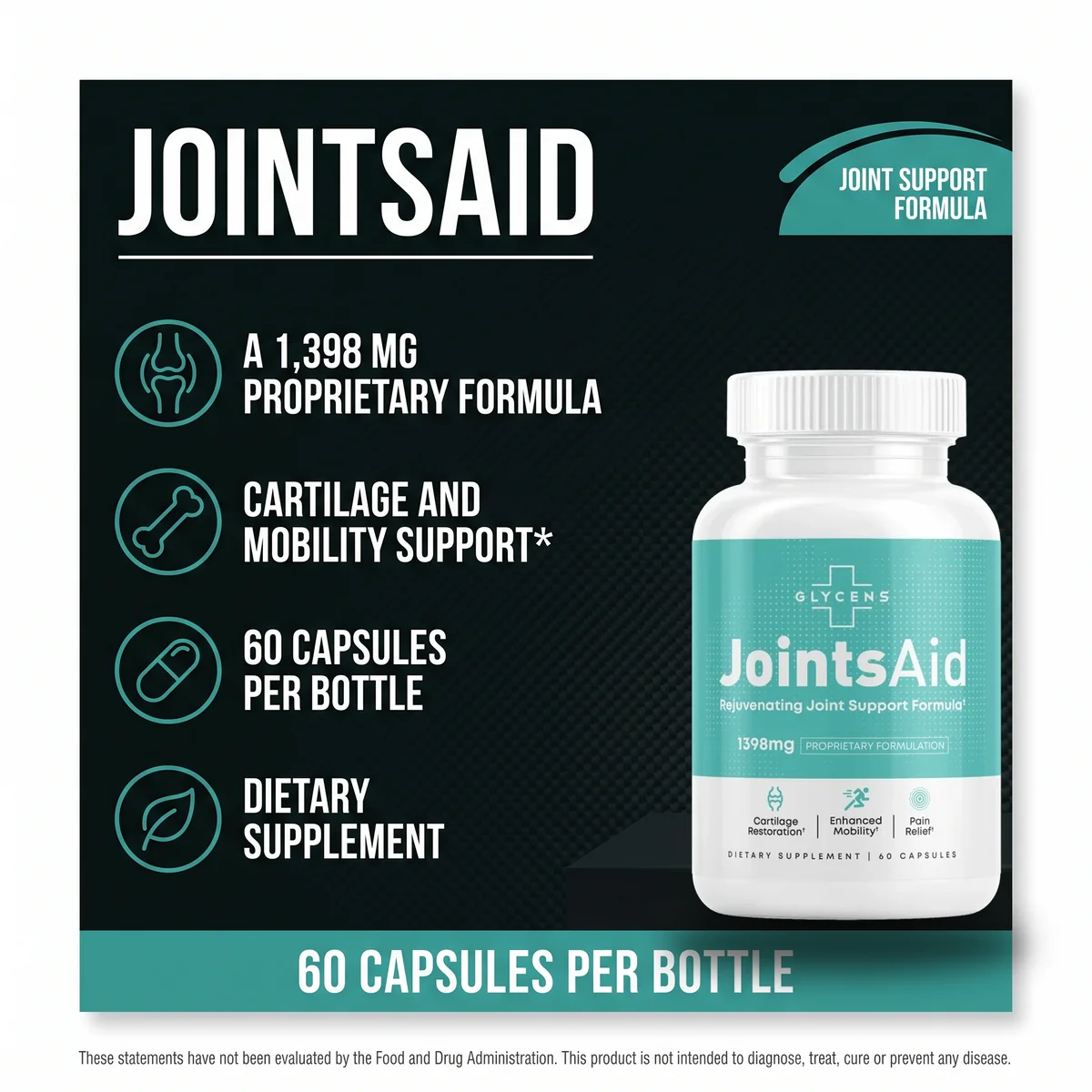
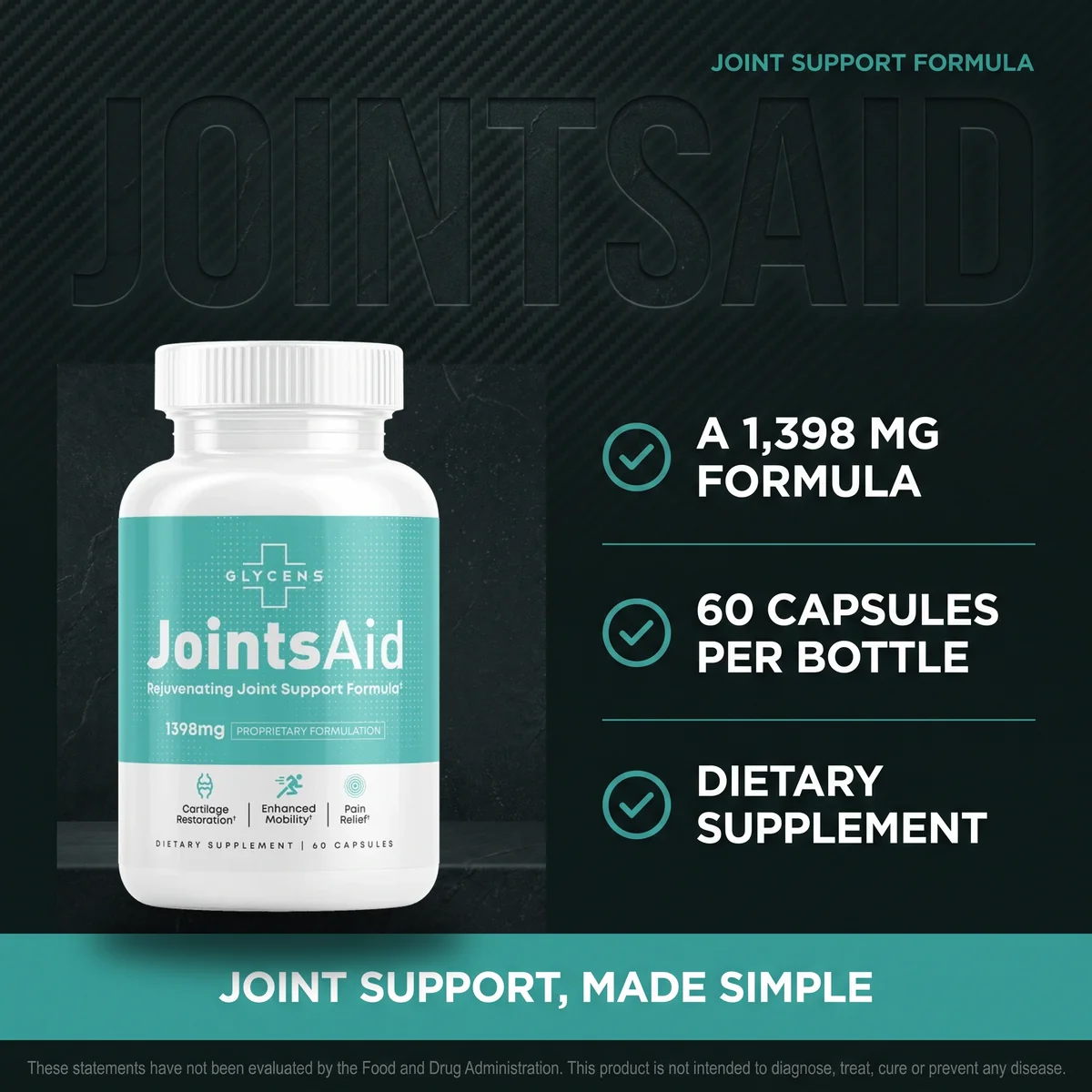
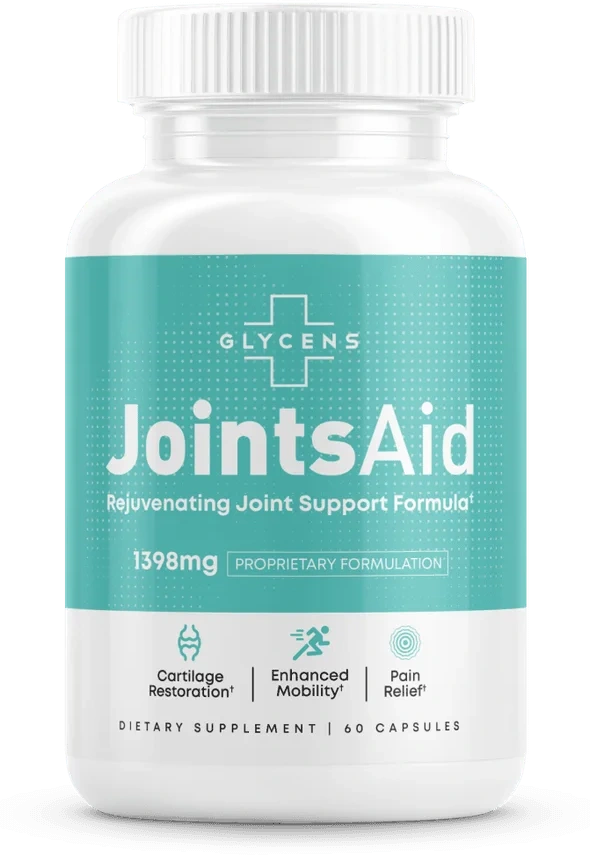
No. Glycens names five actives for JointsAid — glucosamine, turmeric, MSM, quercetin and boswellia serrata — inside a 1,398 mg proprietary formulation, and collagen is not one of them. Because it is part of a proprietary blend, the label lists the ingredients and the total blend weight rather than a separate milligram figure for every component — a common format in multi-ingredient joint formulas. The point of that design is breadth: instead of a single large dose of one nutrient, the daily daily serving spreads several cartilage-related nutrients across one routine. The snapshot below shows where collagen sits.
| Structural side | Role in the blend |
|---|---|
| Type II collagen | The main protein of cartilage; supplies structural building blocks. |
| Hyaluronic acid | Associated with the fluid that lubricates and cushions the joint. |
| Glucosamine | A natural cartilage component; one of the most studied joint nutrients. |
| Chondroitin | Helps cartilage retain water and cushioning; often paired with glucosamine. |
| MSM & botanicals | turmeric, MSM, quercetin and boswellia serrata round out the comfort blend. |
The daily habit, without the guesswork
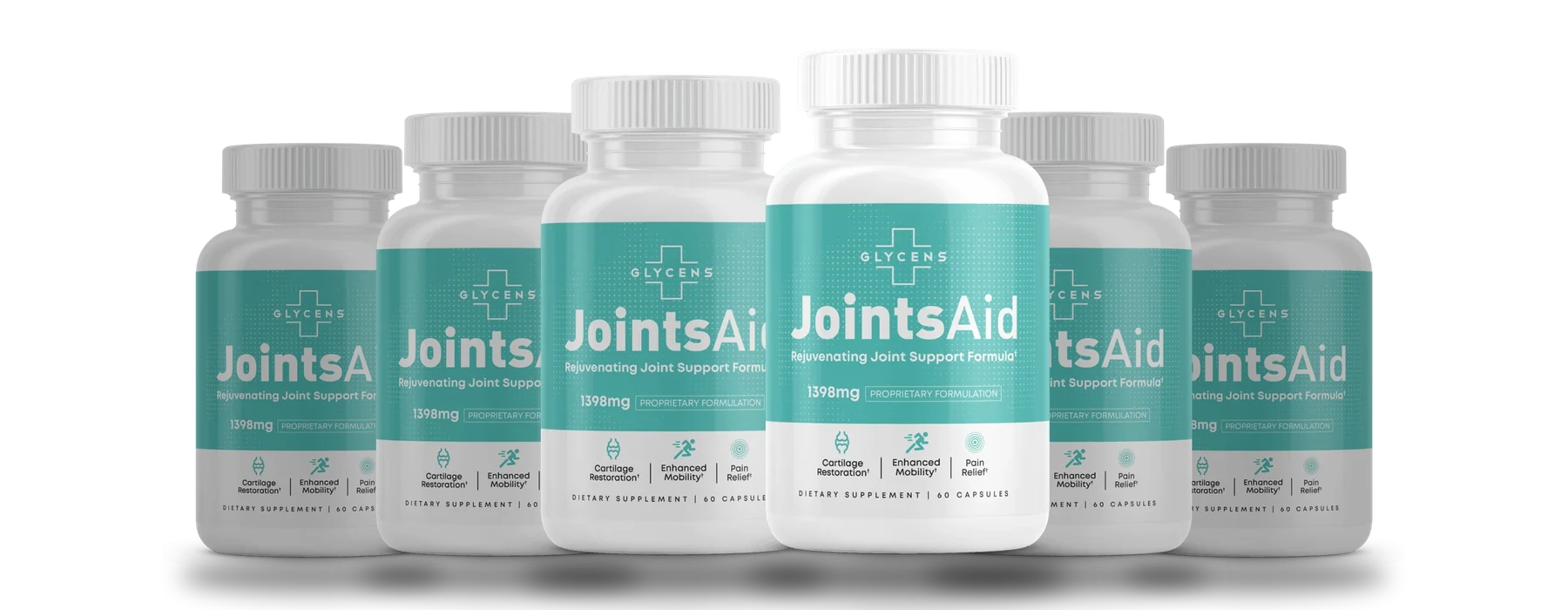
JointsAid keeps to five named plant-based actives — glucosamine, turmeric, MSM, quercetin and boswellia serrata — in a 1,398 mg proprietary formulation, taken once daily. The six-bottle bundle is the best value at $49 per bottle, with free U.S. shipping and a 60-day guarantee.
Check today's JointsAid pricing — from $49/bottleCollagen supplements for joint pain — who should be cautious?
Collagen supplements for joint pain are generally well tolerated, but a few groups should check with a healthcare professional before starting. Because type II collagen is animal-derived, it is not suitable for a vegetarian or vegan diet, and anyone allergic to the source animal — often chicken — should avoid it. People who are pregnant or nursing, who take prescription medication, or who manage a diagnosed condition should speak with their doctor first, as they should with any supplement. And it bears repeating: collagen supports the nutritional needs of joint tissue; it is not a substitute for medical care when a joint is hot, red, badly swollen or painful after an injury.
How do you get the most from collagen for joints?
Collagen works best as one steady input among several, not as a quick fix taken in isolation. The habits that move the needle most for joints are still movement, muscle strength, a comfortable body weight and an anti-inflammatory diet — and a well-designed supplement quietly supports that foundation rather than replacing it. A few practical points:
- Take it daily and consistently. Joint nutrients build their support gradually, so a multi-month run gives a fairer read than a week or two.
- Pair it with movement. Gentle, regular activity nourishes cartilage; collagen is the raw material, movement is the stimulus.
- Support it with food. Vitamin-C-rich foods provide a cofactor the body uses in collagen production — see our guide to the best foods for joint health (NIH Office of Dietary Supplements, Vitamin C).
- Give it time. Expect weeks to months, not days, and remember individual results vary.
For the full ingredient list and how the structural and comfort sides fit together, read the complete JointsAid review or jump to the ingredients section.
Frequently asked questions
What is type II collagen for joints?
Type II collagen is the main structural protein in cartilage, the smooth tissue that cushions the ends of bones. Collagen supplements for joint health aim to supply this protein as a building block. JointsAid does not name collagen among its five actives, so this guide covers collagen on its own terms. It is a nutritional support, not a treatment for any condition.
Is type II collagen the best collagen for joints?
Type II collagen is the form most associated with cartilage, whereas type I predominates in skin and bone. For joint-focused formulas, type II is the type usually chosen, whereas type I is the one marketed for skin and nails.
How is collagen different from glucosamine and chondroitin?
Collagen is a whole structural protein, while glucosamine and chondroitin are smaller cartilage components. They sit on the same structural side of a joint formula and are frequently combined, as they are in JointsAid, so the blend supplies several cartilage-related nutrients at once.
How long does collagen for joints take to work?
Collagen and other joint nutrients build their support gradually, so most people take them daily for several weeks to a few months before judging how they feel. Results vary between individuals, and collagen works best alongside movement, strength and a sensible diet.
Is collagen suitable for vegetarians?
Most type II collagen is sourced from chicken or other animal cartilage, so it is not vegetarian. Anyone following a plant-based diet, or with an allergy to the source animal, should read the label and check with a healthcare professional first.
Can I take a collagen supplement alongside JointsAid?
JointsAid does not name collagen among its actives, so a collagen supplement is a separate product taken alongside it. As with any supplement, people who are pregnant, nursing, taking medication or managing a health condition should speak with their doctor before starting.
Try JointsAid risk-free for 60 days →
JointsAid is a dietary supplement, not a treatment for any medical condition. These statements have not been evaluated by the Food and Drug Administration. This product is not intended to diagnose, treat, cure or prevent any disease. Always consult a qualified healthcare professional about your individual needs.
References & further reading
- National Center for Complementary and Integrative Health (NCCIH). Glucosamine and Chondroitin for Osteoarthritis. nccih.nih.gov/health/glucosamine-and-chondroitin-for-osteoarthritis
- National Institute of Arthritis and Musculoskeletal and Skin Diseases (NIAMS). Osteoarthritis — Overview. niams.nih.gov/health-topics/osteoarthritis
- García-Coronado JM et al., International Orthopaedics, 2019. Effect of collagen supplementation on osteoarthritis symptoms: a meta-analysis of randomized placebo-controlled trials. García-Coronado JM et al., International Orthopaedics, 2019 — PubMed 30368550
- Lugo JP et al., Nutrition Journal, 2016. Efficacy and tolerability of an undenatured type II collagen supplement in modulating knee osteoarthritis symptoms: a multicenter randomized, double-blind, placebo-controlled study. Lugo JP et al., Nutrition Journal, 2016 — PubMed 26822714
- Examine.com. Collagen — evidence-based summary. examine.com/supplements/collagen
- Crowley DC et al., International Journal of Medical Sciences, 2009. Safety and efficacy of undenatured type II collagen in the treatment of osteoarthritis of the knee: a clinical trial. Crowley DC et al., International Journal of Medical Sciences, 2009 — PubMed 19847319
- Clark KL et al., Current Medical Research and Opinion, 2008. 24-Week study on the use of collagen hydrolysate as a dietary supplement in athletes with activity-related joint pain. Clark KL et al., Current Medical Research and Opinion, 2008 — PubMed 18416885
- NIH Office of Dietary Supplements, Vitamin C. ods.od.nih.gov/factsheets/VitaminC-HealthProfessional
These references describe the ingredients and habits in general terms and do not constitute evidence that any product treats, cures or prevents any condition.
Keep reading: how glucosamine and chondroitin work · the best foods for joint health · how to relieve joint pain naturally · back to the JointsAid blog · homepage.