Collagen vs glucosamine for joints: the JointsAid view

Updated August 2026 · reviewed by the JointsAid Research Team. We are an independent information resource, not a medical provider, and this article is educational rather than medical advice.
In the collagen vs glucosamine for joints debate, collagen is the protein scaffold that gives cartilage its shape and stretch, while glucosamine is a small building block the body uses to make and maintain that cartilage and the fluid that cushions it. They are not rivals doing the same job — they are two parts of one system, which is exactly why JointsAid includes both rather than asking you to pick a side.
Collagen or glucosamine — which one, in one place.
- The short version
- Collagen is the cartilage protein; glucosamine is a raw material for cartilage. Different jobs, same tissue — so for most people it is not either/or.
- What collagen does
- Type II collagen forms the bulk of the protein scaffold in joint cartilage and gives it tensile strength.
- What glucosamine does
- Glucosamine is a building block the body uses to produce the molecules that keep cartilage hydrated and cushioned.
- Why not both
- Many people take both, because they support different parts of the same structure; JointsAid itself supplies only the glucosamine side.
- Timeframe
- Both are structural nutrients the body incorporates gradually, so give any routine several weeks to a few months; results vary.
If you have ever stood in a supplement aisle holding a collagen tub in one hand and a glucosamine bottle in the other, you have met one of the most common questions in joint wellness. The good news is that the choice is less of a contest than the labels suggest. This guide explains the different jobs each nutrient does inside cartilage, what the evidence supports and where it is thin, and why a combined formula like JointsAid takes both along for the ride.
What is the difference between collagen and glucosamine for joints?
The difference between collagen and glucosamine for joints is one of structure versus supply: collagen is the finished protein that builds cartilage, and glucosamine is a raw material the body draws on to build and repair it (NCCIH, Glucosamine and Chondroitin for Osteoarthritis). Cartilage is the smooth, rubbery tissue capping the ends of bones, and it is mostly water held inside a mesh of protein and sugar-based molecules. Collagen provides the mesh; glucosamine feeds the machinery that keeps the mesh hydrated and springy. Thinking of them as competitors is a bit like asking whether a house needs bricks or the workers who lay them — the question misses that both belong to the same job.
What job does glucosamine do in a joint?
Glucosamine is a naturally occurring amino sugar that the body uses as a building block for the large, water-loving molecules that give cartilage its cushioning (Clegg DO et al., New England Journal of Medicine, 2006). It is often called a cartilage building block for good reason: your own cells make glucosamine to help produce glycosaminoglycans and proteoglycans, the components that let cartilage hold water and spring back under load. In supplements it usually appears as glucosamine sulfate or glucosamine hydrochloride, and it is one of the most studied nutrients in the entire joint category.
Where does supplemental glucosamine come from?
Most glucosamine is derived from the shells of shellfish, though vegetarian versions fermented from corn also exist. That shellfish origin is the single most important practical note: if you have a shellfish allergy, you should speak to a doctor before taking a glucosamine product. It is frequently paired with chondroitin, another cartilage component, and we cover that duo in depth in our guide to glucosamine and chondroitin for joints.
What job does collagen do in a joint?
Collagen is the most abundant protein in the body and the main structural material in cartilage, tendons, ligaments and skin. Inside a joint, collagen fibres form the scaffold that gives cartilage its tensile strength — the ability to resist stretching and shearing as the joint bends and loads. Without that protein framework there is nothing for the water and cushioning molecules to sit inside. When people talk about collagen as a cartilage protein, this scaffolding role is what they mean.

Is type II collagen different from the collagen in beauty products?
Yes, and the distinction matters. Type II collagen is the specific form that makes up the majority of the collagen in joint cartilage, whereas the collagen marketed for skin and hair is usually type I or type III, often as hydrolyzed peptides (Crowley DC et al., International Journal of Medical Sciences, 2009). In joint research, type II collagen is frequently studied in a tiny undenatured dose — measured in milligrams rather than grams — based on the idea that it interacts with the immune system rather than simply being absorbed as raw material. The evidence here is genuinely early and smaller than the glucosamine literature, so it is fair to call it promising rather than proven.
Type II collagen vs glucosamine: how do they compare?
Type II collagen vs glucosamine is best read as a comparison of roles, not a ranking of winners: one supplies the protein architecture of cartilage, the other supplies a building block for its cushioning matrix. The table below lays the two side by side so you can see why so many formulas carry both.
| Feature | Glucosamine | Type II collagen |
|---|---|---|
| What it is | An amino sugar (building block) | A structural protein (cartilage scaffold) |
| Main job in cartilage | Raw material for water-holding molecules | Provides the framework and tensile strength |
| Typical form | Glucosamine sulfate or HCl, ~1,500 mg range | Undenatured type II collagen, small mg dose |
| Common source | Shellfish shells (or fermented corn) | Chicken sternum cartilage, typically |
| Depth of evidence | Large, long-studied, mixed but substantial | Smaller, earlier, promising |
| Best thought of as | The cartilage building block | The cartilage protein |
Don’t want to choose? You don’t have to.
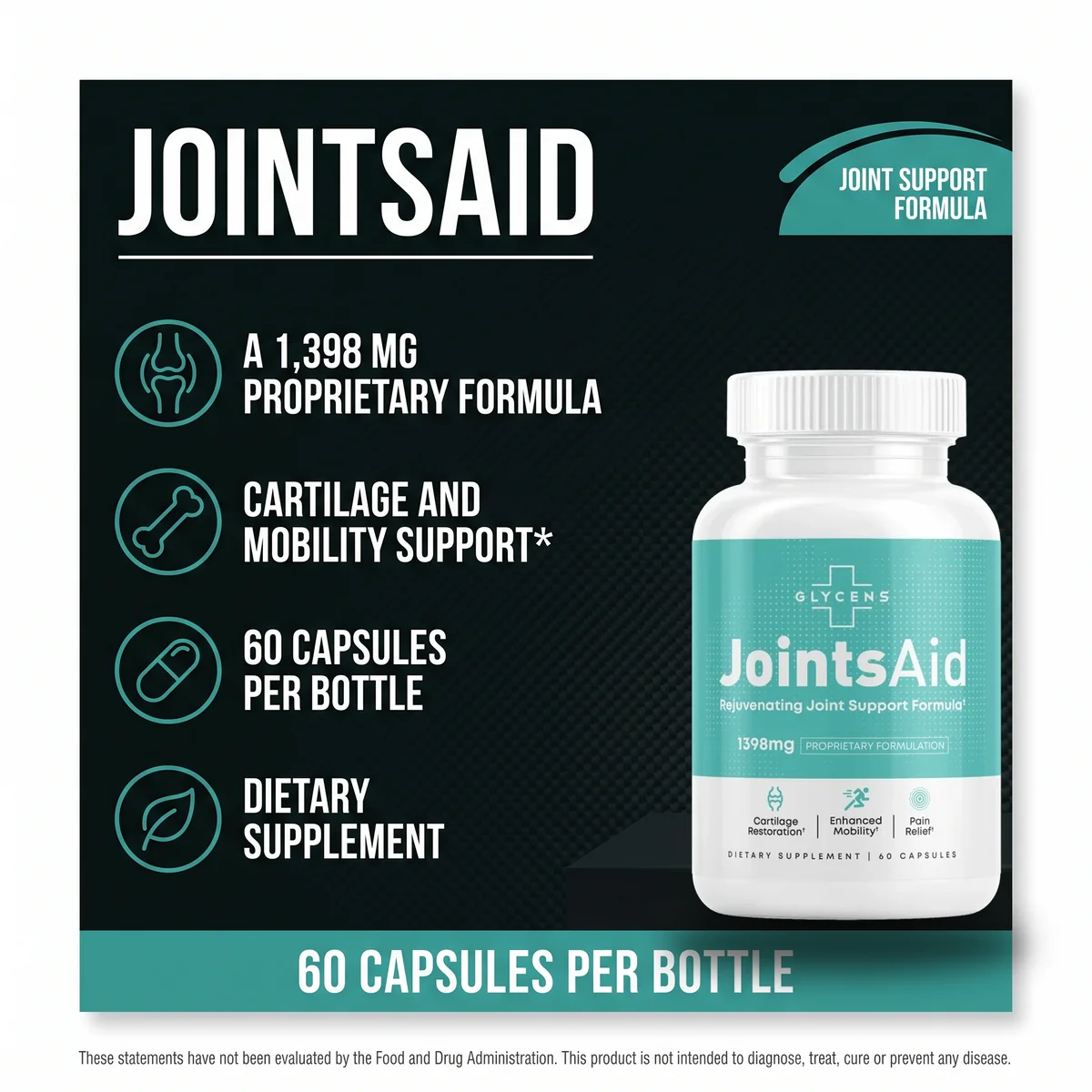
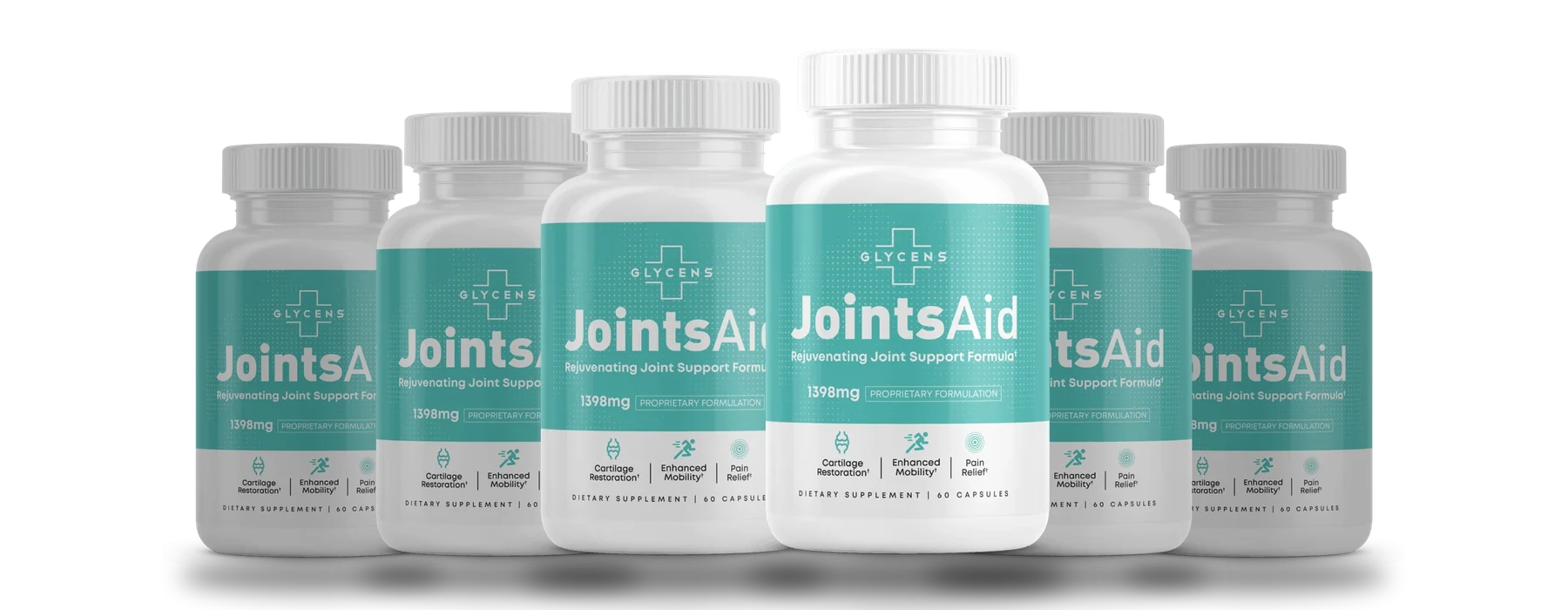
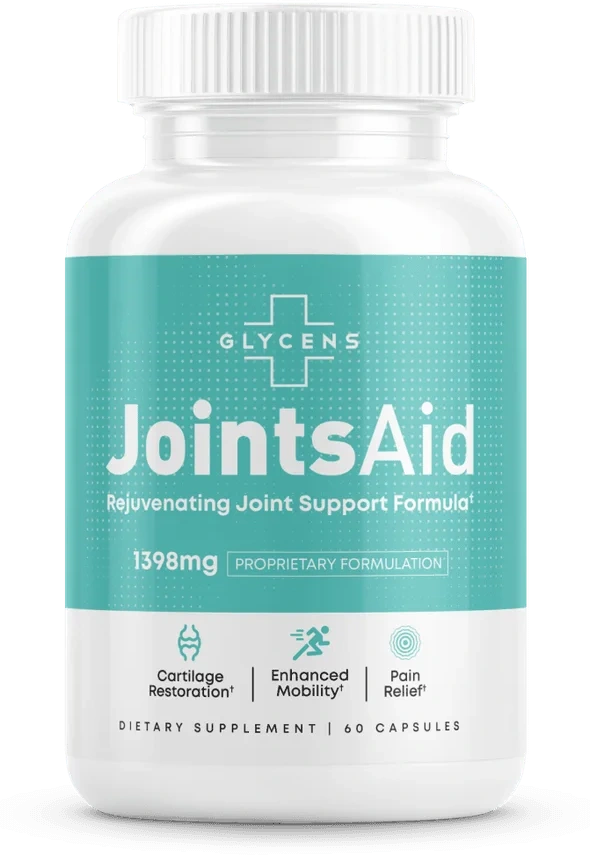
JointsAid supplies glucosamine with four plant-based comfort actives - turmeric, MSM, quercetin and boswellia serrata - inside a 1,398 mg proprietary formulation. See what JointsAid actually names and today’s pricing — the six-bottle bundle is the best value at $49 per bottle with a 60-day guarantee.
Check today’s JointsAid pricing — from $49/bottleShould you take collagen or glucosamine — or both?
For most people the honest answer to collagen or glucosamine is both, because the two nutrients act on different parts of the same cartilage and there is no biological reason they would cancel each other out. Choosing between them only makes sense in specific cases — a shellfish allergy that rules out standard glucosamine, or a strict preference for one ingredient. Otherwise, a combined approach means you are supporting the protein scaffold and the building-block supply at the same time, which is the logic behind pairing them in one formula.
How does JointsAid combine them?
JointsAid is built on the idea that cartilage needs both structure and supply. Rather than a single-ingredient tub, it layers cartilage building blocks with botanicals traditionally used for everyday comfort, all in a daily serving. The table below shows how the pieces fit together.
| Component | Category | Role in the formula |
|---|---|---|
| Glucosamine | Building block | Raw material for cartilage cushioning molecules |
| Chondroitin | Cartilage component | Helps cartilage retain water; pairs with glucosamine |
| Type II collagen | Cartilage protein | Supports the structural scaffold of cartilage |
| MSM | Sulfur source | Supplies sulfur the body uses in connective tissue |
| Turmeric, boswellia, ginger | Botanical blend | Traditional companions in a 1,398 mg blend for everyday comfort |
In other words, collagen and glucosamine are not an either/or inside JointsAid — they are two entries on a longer list. You can see the complete breakdown in the ingredients section, or read our deep dive on collagen for joints for more on the protein side of the story.
What does the evidence actually say?
The evidence for these nutrients is real but should be described honestly rather than oversold. Glucosamine, usually alongside chondroitin, has been studied in large trials for years, and reviews from bodies such as the National Center for Complementary and Integrative Health describe the results as mixed — some people report benefit, average effects across studies are modest, and it is generally considered well tolerated. Type II collagen has a smaller, newer body of research, with a handful of trials on the undenatured form that look encouraging but are far from the last word. None of this amounts to a treatment for arthritis or any other disease, and any product claiming otherwise is overreaching.
The sensible reading is that these are supportive nutrients, best layered on top of the habits that do the heavy lifting — movement, muscle strength, a comfortable weight and an anti-inflammatory diet, which we cover in how to relieve joint pain naturally. Supplements fill a supporting role in that routine; they do not replace it.
Who should be cautious with either nutrient?
Both collagen and glucosamine are widely used and generally well tolerated, but a few groups should check with a professional first. Because supplemental glucosamine is commonly made from shellfish, anyone with a shellfish allergy should ask a doctor before starting. People who are pregnant or nursing, who take blood thinners, or who manage a diagnosed health condition should also seek personalised advice, since a comparison article cannot account for your individual situation. And if a joint is hot, red or badly swollen, or pain follows an injury, that is a reason to see a clinician rather than reach for a supplement.
Frequently asked questions
What is the difference between collagen and glucosamine for joints?
Collagen is the protein that makes up most of the cartilage scaffold, while glucosamine is a small building block the body uses to make and maintain that cartilage and its cushioning fluid. In short, collagen is the structure and glucosamine is a raw material for the structure - which is why many formulas include both - though JointsAid itself names glucosamine and not collagen.
Is type II collagen better than glucosamine?
Neither is simply better; they do different jobs. Type II collagen is the specific collagen found in joint cartilage and is studied in small undenatured doses, whereas glucosamine is one of the most researched cartilage building blocks. They are best viewed as complementary, not as rivals where one wins.
Can you take collagen and glucosamine together?
Yes. Collagen and glucosamine work on different parts of the same tissue, so they are commonly combined - but JointsAid names glucosamine, turmeric, MSM, quercetin and boswellia serrata, not collagen. As with any supplement, check with your doctor if you take medication or have an allergy.
Which works faster, collagen or glucosamine?
Neither is a fast fix. Both collagen and glucosamine are structural nutrients the body incorporates gradually, so most people give a joint routine several weeks to a few months of consistent daily use, and individual results vary.
Does JointsAid contain collagen as well as glucosamine?
Yes. No. JointsAid names glucosamine plus four plant-based comfort actives - turmeric, MSM, quercetin and boswellia serrata - inside a 1,398 mg proprietary formulation. Collagen is not among them, so a collagen supplement would be a separate purchase.
Who should be careful with collagen or glucosamine supplements?
Because glucosamine is often shellfish-derived, anyone with a shellfish allergy should ask a doctor first, and people who are pregnant, nursing, on blood thinners or managing a health condition should check before starting. These nutrients support everyday joint comfort and are not a treatment for any disease.
See what JointsAid actually names →
JointsAid is a dietary supplement, not a treatment for any medical condition. These statements have not been evaluated by the Food and Drug Administration. This product is not intended to diagnose, treat, cure or prevent any disease. Always consult a qualified healthcare professional about your individual needs.
References & further reading
- National Center for Complementary and Integrative Health (NCCIH). Glucosamine and Chondroitin for Osteoarthritis. nccih.nih.gov/health/glucosamine-and-chondroitin-for-osteoarthritis
- National Institute of Arthritis and Musculoskeletal and Skin Diseases (NIAMS). Osteoarthritis — Overview. niams.nih.gov/health-topics/osteoarthritis
- Examine.com. Collagen — evidence-based summary. examine.com/supplements/collagen
- Examine.com. Glucosamine — evidence-based summary. examine.com/supplements/glucosamine
- Lugo JP et al., Journal of the International Society of Sports Nutrition, 2013. Undenatured type II collagen (UC-II) for joint support: a randomized, double-blind, placebo-controlled study in healthy volunteers. Lugo JP et al., Journal of the International Society of Sports Nutrition, 2013 — PubMed 24153020
- Crowley DC et al., International Journal of Medical Sciences, 2009. Safety and efficacy of undenatured type II collagen in the treatment of osteoarthritis of the knee: a clinical trial. Crowley DC et al., International Journal of Medical Sciences, 2009 — PubMed 19847319
- Clegg DO et al., New England Journal of Medicine, 2006. Glucosamine, chondroitin sulfate, and the two in combination for painful knee osteoarthritis. Clegg DO et al., New England Journal of Medicine, 2006 — PubMed 16495392
These references describe the ingredients in general terms and do not constitute evidence that any product treats, cures or prevents any condition.
Keep reading: collagen for joints, explained · how glucosamine and chondroitin work · the JointsAid review · back to the JointsAid blog.