How joint supplements work: inside the JointsAid blend

Published August 2026 · reviewed by the JointsAid Research Team. We are an independent information resource, not a medical provider; this article is educational, not medical advice.
Joint supplements work by supplying two different kinds of support at once: structural nutrients that give cartilage its raw materials, and comfort botanicals that support a calmer everyday inflammatory balance. They are a slow, cumulative nudge to a healthy routine rather than a fast-acting painkiller — and a formula like JointsAid is designed so those two jobs reinforce each other in a single daily dose.
How joint supplements work, in one place.
- Two jobs at once
- Structural nutrients feed cartilage; comfort botanicals support an easier inflammatory balance.
- Structure side
- Glucosamine, chondroitin and collagen are the building blocks of cartilage and connective tissue.
- Comfort side
- Turmeric, boswellia serrata, quercetin and MSM are long associated with everyday joint comfort.
- The JointsAid example
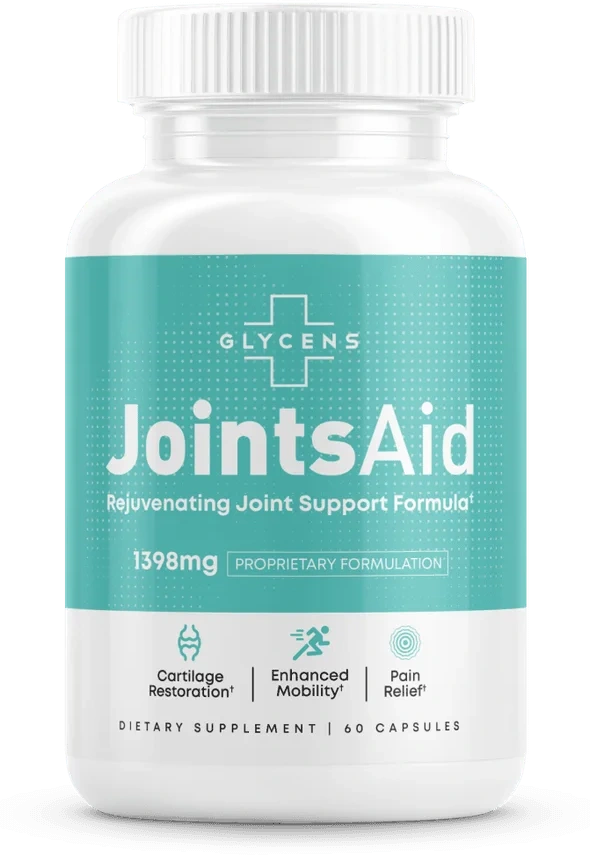
- Cartilage nutrients plus a 1,398 mg proprietary blend, taken as the labelled daily serving.
- Timeframe
- Gradual. Most joint nutrients are studied over weeks to months, and results vary.
“How do joint supplements work?” deserves an honest answer the marketing rarely gives (Zhang Y et al., Nutrients, 2025). A good joint supplement is not one thing — it is a small team of nutrients, each with a role, packaged so you take them together. This guide walks through those pieces, using JointsAid as a worked example of the structure-plus-comfort model.

What does it mean when we say a joint supplement “works”?
When we say a joint supplement “works,” we mean it supplies nutrients the body already uses in cartilage and connective tissue, plus botanicals traditionally linked to everyday comfort, so a consistent routine has more to draw on. It does not mean the capsule numbs pain on contact or repairs a joint overnight. A supplement is a food product, not a drug: its role is to support normal joint function and comfort — never to diagnose, treat, cure or prevent disease.
How do joint supplements work in the body?
Joint supplements work through two complementary pathways: they feed the structures of the joint, and they support the comfort of moving it. Cartilage has no blood supply of its own, so it depends on the raw materials circulating around it — where the structural nutrients come in — while the comfort botanicals target the day-to-day inflammatory balance that shapes how a joint feels. Here is how each side does its job.
What do the structural ingredients do?
Structural ingredients supply the building blocks cartilage and connective tissue are made from. Glucosamine is a naturally occurring compound the body uses to make and maintain cartilage; chondroitin helps cartilage attract and hold the water that gives the tissue its cushioning; and type II collagen provides the protein scaffold that keeps cartilage resilient. None is a quick fix. If the body is constantly renewing connective tissue, a steady supply of the components it uses is sensible support. Our deep-dive on glucosamine and chondroitin for joints covers this pair in detail.
What do the comfort botanicals do?
Comfort botanicals are plant compounds with a long tradition of use for everyday joint ease. Turmeric’s curcumin compounds, boswellia (frankincense) resin used for centuries in Ayurvedic practice, and ginger are the best known, generally discussed in terms of supporting a calmer inflammatory response rather than blocking pain the way a medication does (Daily JW et al., Journal of Medicinal Food, 2016). MSM, a sulfur source the body uses in connective tissue, is often added as a companion. The evidence here is mixed and still developing — some studies encouraging, others inconclusive — so these are best understood as traditional support, not proven remedies. Read more in our guides to turmeric for joints and boswellia serrata.
Why combine structure and comfort in one formula?
Combining structural nutrients and comfort botanicals lets a single daily dose address both the tissue and the feel of a joint, which is why most modern formulas blend the two. Taking glucosamine from one bottle, turmeric from a second and collagen from a third is not only inconvenient — it makes a consistent routine harder to keep, and consistency is the whole point (Clegg DO et al., New England Journal of Medicine, 2006). A combined formula removes that friction, which is why the whole ingredient list matters more than any single component.
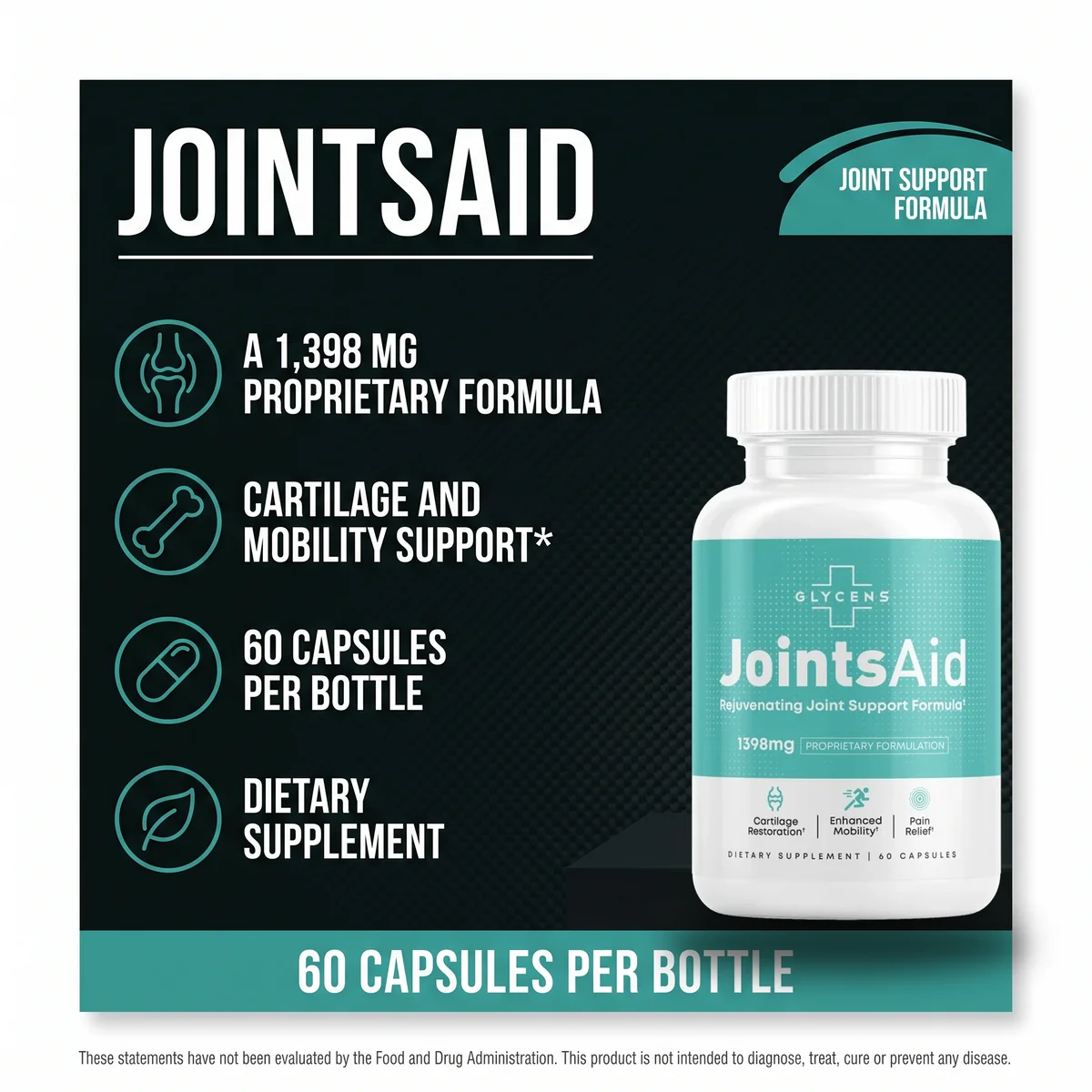
What is inside the 1,398 mg JointsAid proprietary blend?
The JointsAid formula is built on cartilage building blocks plus a 1,398 mg proprietary blend of joint-associated nutrients, taken as a once-daily dose. Rather than leaning on one headline ingredient, it spreads support across the structure and comfort roles above. The table below groups the best-known components by the job they do — a useful way to read any joint supplement label.
| Ingredient | Role in the formula | What it contributes |
|---|---|---|
| Glucosamine | Structure | A naturally occurring cartilage component; one of the most-studied joint nutrients. |
| Chondroitin | Structure | Helps cartilage hold water and cushioning; a classic partner to glucosamine. |
| Type II collagen | Structure | Supplies the protein scaffold found in cartilage and connective tissue. |
| MSM | Support | A source of sulfur the body uses in connective tissue; a common comfort-blend companion. |
| Turmeric | Comfort | Its curcumin compounds have a long tradition of use for everyday comfort. |
| Boswellia | Comfort | Frankincense resin used for generations in traditional mobility formulas. |
| Ginger | Comfort | A culinary botanical long associated with a calm inflammatory balance. |
For the complete list and amounts as printed on the label, see the ingredients section on the JointsAid homepage, or read our closer look at collagen for joints.
See what JointsAid actually names
JointsAid combines cartilage building blocks with a 1,398 mg proprietary formulation in a once-daily routine. The six-bottle bundle is the best value at $49 per bottle, with free U.S. shipping and a 60-day guarantee.
See what JointsAid actually names — from $49/bottleWhat is a proprietary blend, and why do supplements use one?
A proprietary blend is a group of ingredients listed together with one combined weight — 1,398 mg in JointsAid’s case — instead of a separate figure for each item. Brands use blends to protect a recipe from being copied. For shoppers, the trade-off is transparency: you can see what is in the blend and, by convention, the ingredients are listed in order of predominance by weight, but not the exact split. That is not automatically a red flag — blends are common and legal — but the smart move is to read which named ingredients appear, where they sit, and whether the total weight is meaningful.
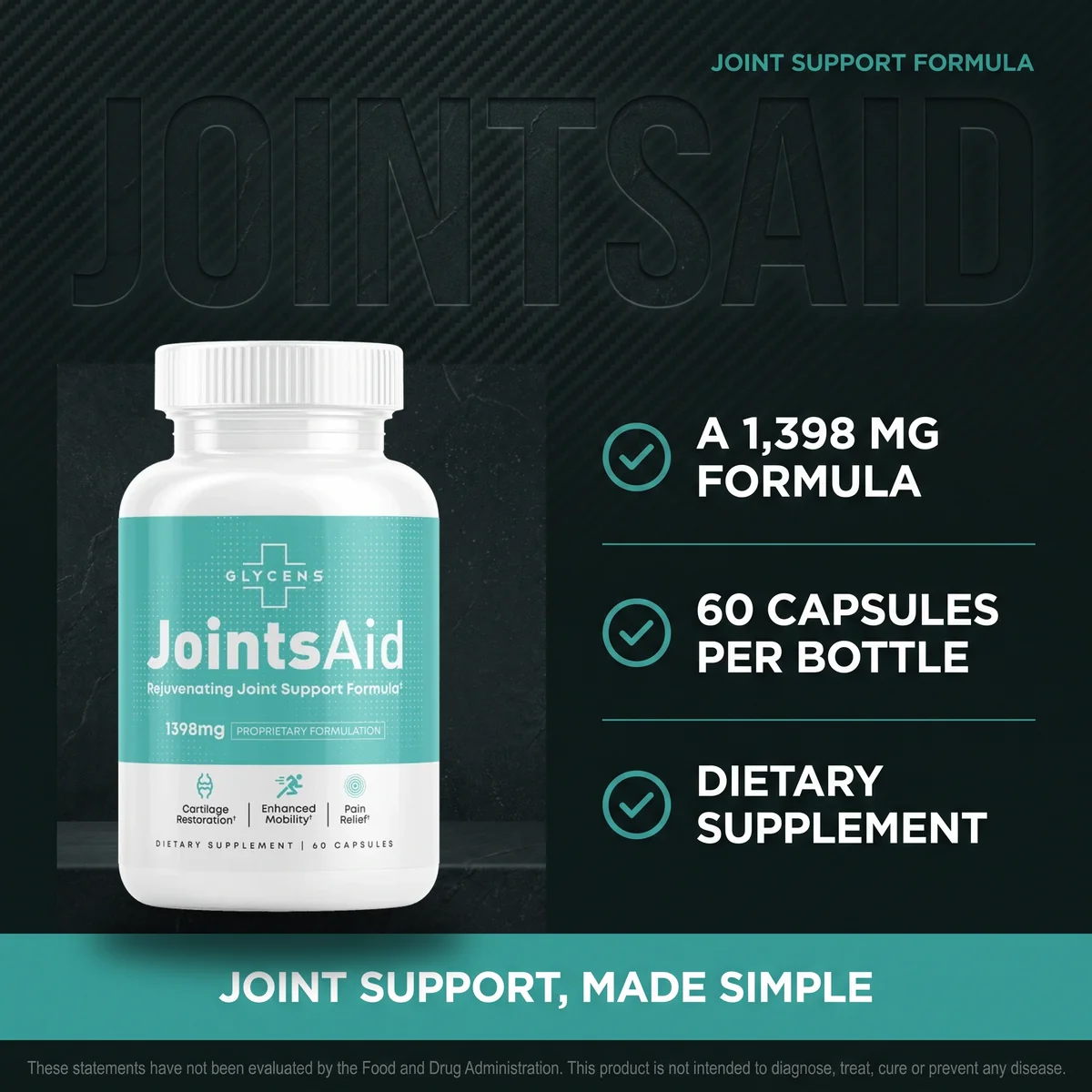
How long do joint supplements take to work?
Joint supplements work gradually, so the honest timeframe is weeks to months, not days. Because these nutrients build support slowly, most well-known ingredients are studied over 8-to-12-week windows or longer, and it is worth giving a routine a fair run before judging it. This table sets realistic expectations by ingredient role — a general guide to the research, not a promise of results, which vary.
| Ingredient role | How it is usually studied | Practical expectation |
|---|---|---|
| Structural nutrients (glucosamine, chondroitin, collagen) | Trials commonly run 12 weeks to 6 months | Slow, cumulative support — best judged over months |
| Comfort botanicals (turmeric, quercetin, boswellia serrata) | Often studied over several weeks | Gradual; evidence is mixed and still developing |
| MSM and sulfur sources | Studied as blend companions over weeks | Supporting role rather than a standalone effect |
| The daily habit itself | Depends entirely on consistency | Take at the same time daily; do not skip |
Because the timeline is measured in months, most people choose a multi-month supply. Compare the packages and pricing on the homepage, and see how the daily habit fits together in our guide to relieving joint pain naturally.
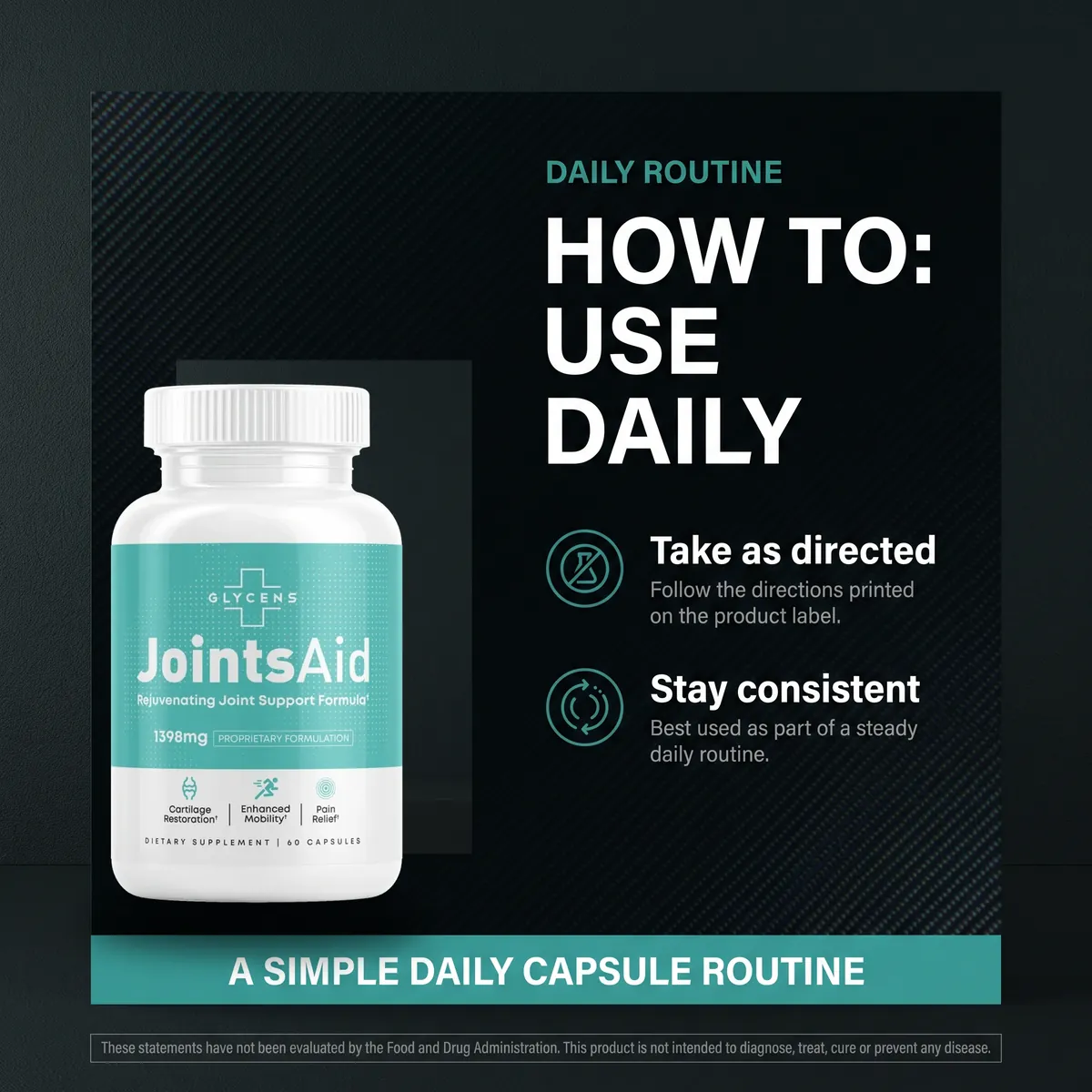
Who are dietary supplements for joint pain best suited to?
Dietary supplements for joint pain are best suited to generally healthy adults who want to support an active routine and everyday comfort, not those seeking a substitute for medical care. They pair naturally with the habits that do the heavy lifting — low-impact movement, strength work, a comfortable weight and an anti-inflammatory diet — but they are not right for everyone. Because glucosamine is frequently shellfish-derived, mention any shellfish allergy first; and anyone pregnant or nursing, on medication such as a blood thinner, or managing a diagnosed condition should check with a doctor. Speak with a professional if a joint is hot, red or badly swollen, or if pain follows an injury.
Frequently asked questions
How do joint supplements actually work?
Most joint supplements work in two ways at once. Structural nutrients such as glucosamine, turmeric, MSM and boswellia serrata supply the raw materials cartilage is made from, while comfort botanicals such as turmeric, quercetin and boswellia serrata support a calmer everyday inflammatory balance. They feed the routine gradually rather than acting like a fast painkiller.
What is in the 1,398 mg JointsAid proprietary blend?
JointsAid pairs the cartilage building block glucosamine with a 1,398 mg proprietary blend that layers in turmeric, MSM, quercetin and boswellia serrata, delivered as a once-daily dose. See the full ingredients section on the JointsAid homepage for the complete list.
What is a proprietary blend and why do supplements use one?
A proprietary blend lists its ingredients and the combined total weight - 1,398 mg in JointsAid's case - without breaking out the milligrams of each item. Brands use blends to protect a formula recipe. The trade-off for shoppers is less transparency, so it helps to check which named ingredients appear and in what order.
How long do joint supplements take to work?
Joint nutrients build their support gradually, so most well-known ingredients are studied over 8 to 12 weeks or longer rather than days. That is why people usually choose a multi-month supply and take it at the same time daily. Individual results vary and a supplement is not a treatment for any condition.
Are dietary supplements for joint pain safe to take daily?
For most healthy adults the common joint nutrients are generally well tolerated at label doses, but they are not right for everyone. Because glucosamine is often shellfish-derived, mention any shellfish allergy, and anyone pregnant, nursing, on medication such as blood thinners, or managing a health condition should ask a doctor before starting.
Do joint supplements replace exercise and weight management?
No. A supplement is a support to the everyday habits that matter most - low-impact movement, strength work around the joint, a comfortable body weight and an anti-inflammatory diet - not a substitute for them. The two are designed to stack, with the routine doing the heavy lifting.
Check today’s JointsAid pricing →
JointsAid is a dietary supplement, not a treatment for any medical condition. These statements have not been evaluated by the Food and Drug Administration. This product is not intended to diagnose, treat, cure or prevent any disease. Always consult a qualified healthcare professional about your individual needs.
References & further reading
- National Center for Complementary and Integrative Health (NCCIH). Glucosamine and Chondroitin for Osteoarthritis. nccih.nih.gov/health/glucosamine-and-chondroitin-for-osteoarthritis
- National Center for Complementary and Integrative Health (NCCIH). Turmeric. nccih.nih.gov/health/turmeric
- National Institute of Arthritis and Musculoskeletal and Skin Diseases (NIAMS). Osteoarthritis — Overview. niams.nih.gov/health-topics/osteoarthritis
- Bannuru RR et al., Seminars in Arthritis and Rheumatism, 2018. Efficacy of curcumin and Boswellia for knee osteoarthritis: systematic review and meta-analysis. Bannuru RR et al., Seminars in Arthritis and Rheumatism, 2018 — PubMed 29622343
- Examine.com. Glucosamine — evidence-based summary. examine.com/supplements/glucosamine
- Mayo Clinic. Glucosamine — drugs and supplements. mayoclinic.org/drugs-supplements-glucosamine
- Clegg DO et al., New England Journal of Medicine, 2006. Glucosamine, chondroitin sulfate, and the two in combination for painful knee osteoarthritis. Clegg DO et al., New England Journal of Medicine, 2006 — PubMed 16495392
- Daily JW et al., Journal of Medicinal Food, 2016. Efficacy of Turmeric Extracts and Curcumin for Alleviating the Symptoms of Joint Arthritis: A Systematic Review and Meta-Analysis of Randomized Clinical Trials. Daily JW et al., Journal of Medicinal Food, 2016 — PubMed 27533649
- Zhang Y et al., Nutrients, 2025. Comparative Effectiveness of Nutritional Supplements in the Treatment of Knee Osteoarthritis: A Network Meta-Analysis. Zhang Y et al., Nutrients, 2025 — PubMed 40806131
These references describe the ingredients in general terms and are not evidence that any product treats, cures or prevents any condition.
Keep reading: glucosamine and chondroitin · best foods for joint health · the JointsAid blog · the JointsAid review.