MSM supplement for joint pain: the sulfur donor inside JointsAid

Updated August 2026 · reviewed by the JointsAid Research Team. We are an independent information resource, not a medical provider, and this article is educational rather than medical advice.
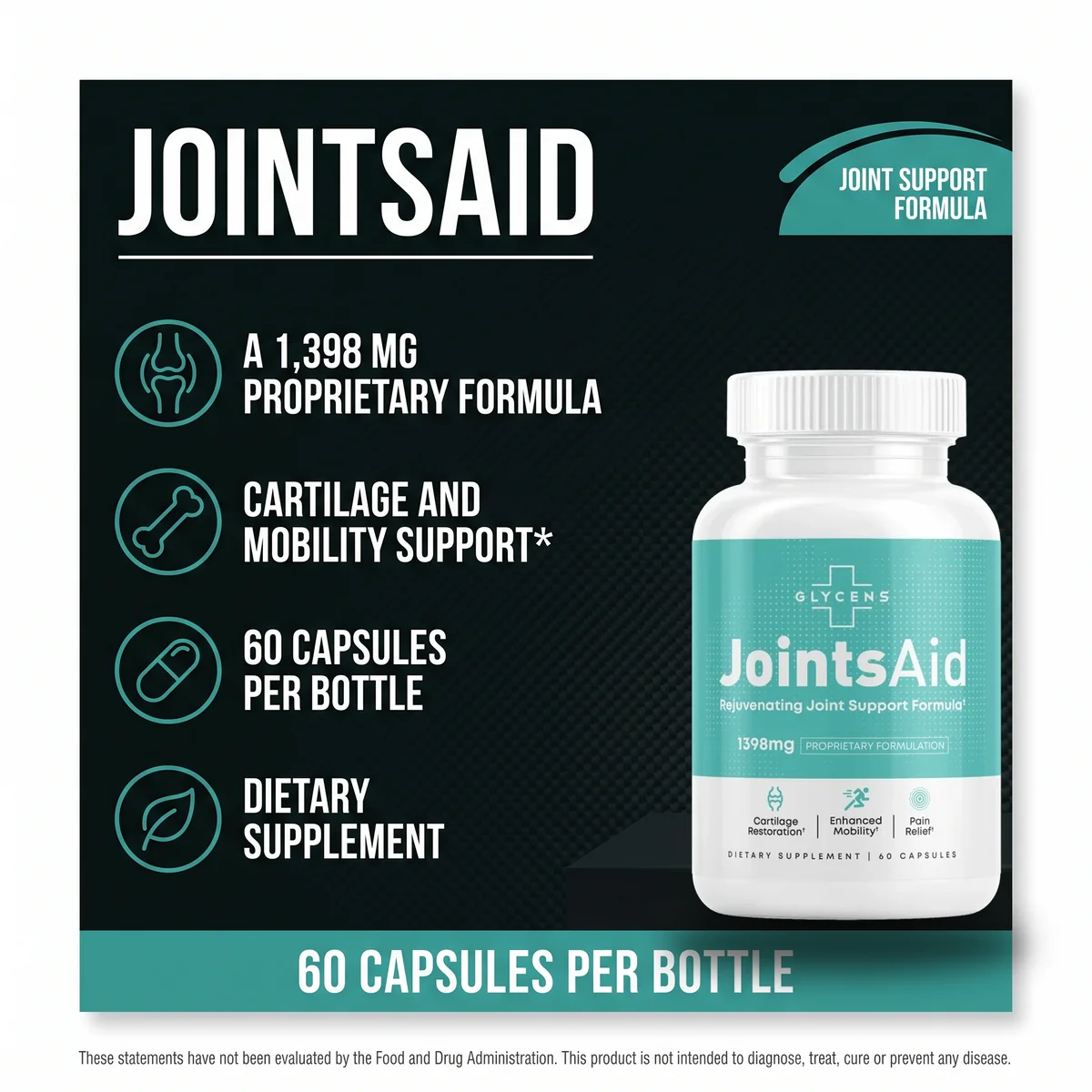
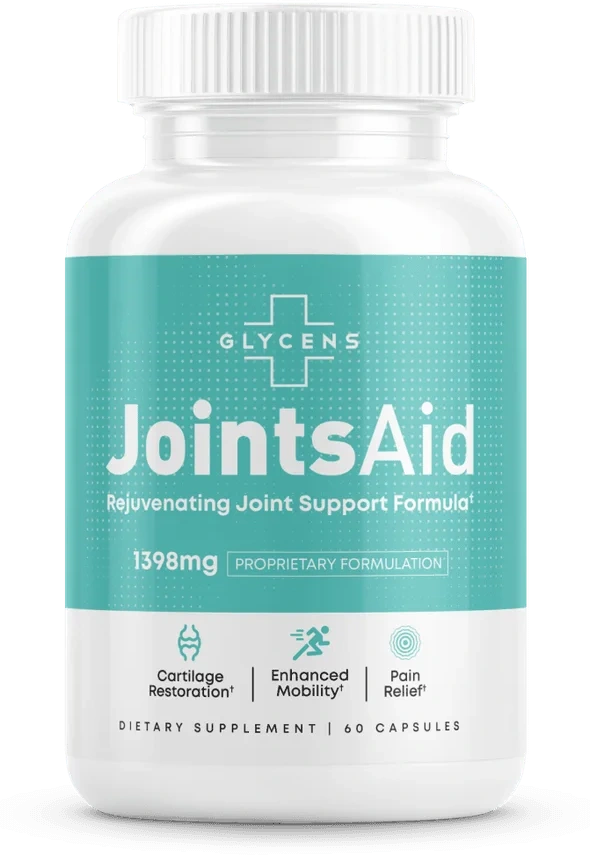
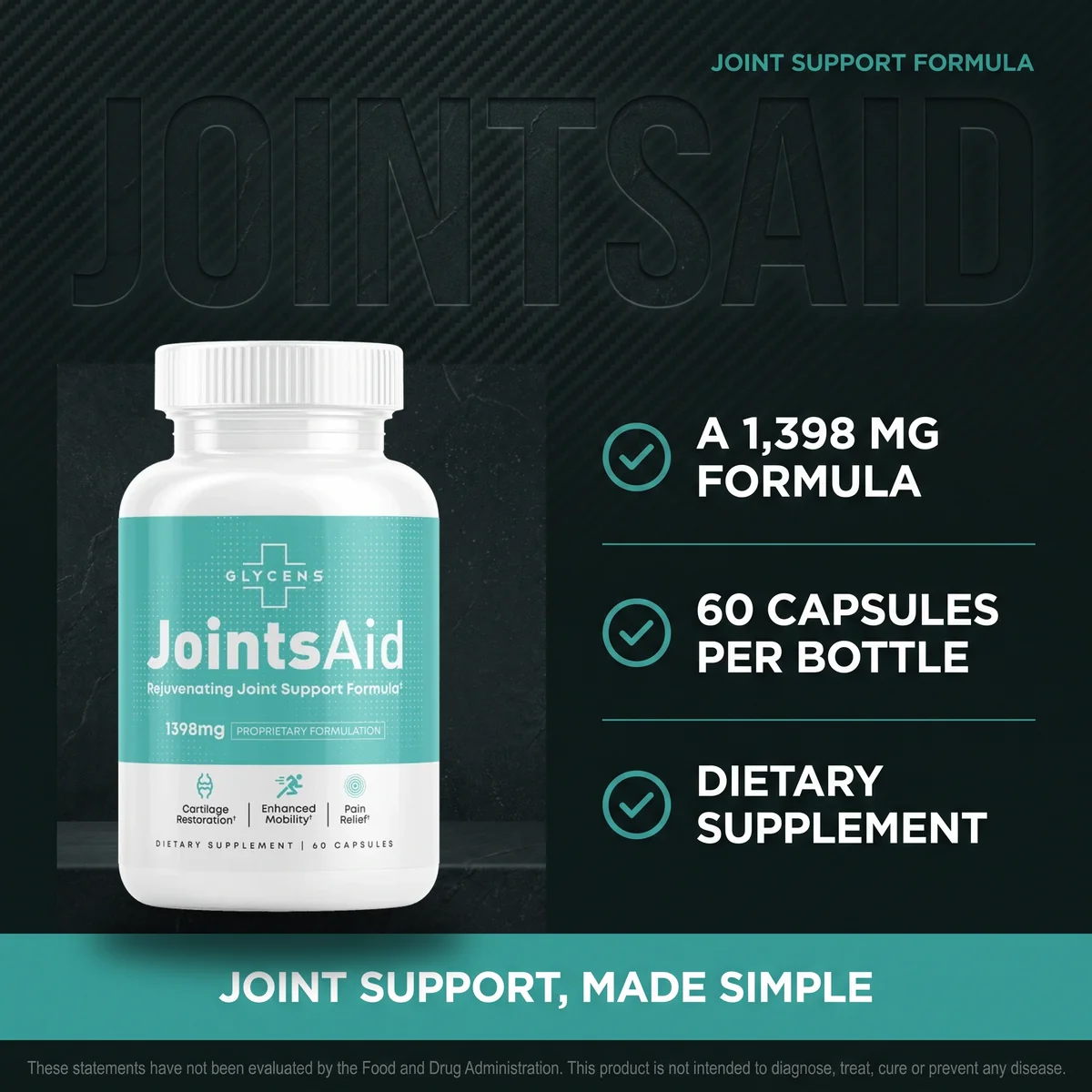
An MSM supplement for joint pain is a concentrated dose of methylsulfonylmethane — a naturally occurring sulfur compound the body uses to build connective tissue — taken to support everyday joint comfort. In JointsAid, MSM is one of the sulfur-donor botanicals folded into a 1,398 mg blend that sits on top of glucosamine, turmeric, MSM, quercetin and boswellia serrata. It supports a routine; it does not treat, cure or prevent any disease.
What MSM is, and where it fits in a joint routine, in one place.
- What it is
- MSM (methylsulfonylmethane) is an organic sulfur compound found in trace amounts in food and made concentrated for supplements.
- Why joints
- Sulfur is a raw material the body uses to make connective-tissue proteins such as collagen, so MSM is a common joint-blend companion.
- Why the pairing
- MSM is usually combined with glucosamine and chondroitin because these nutrients cover complementary roles and are often studied together.
- In JointsAid
- MSM sits inside the 1,398 mg proprietary blend, alongside turmeric, quercetin and boswellia serrata, on a base of cartilage nutrients.
- Honest note
- MSM is a support to movement, strength and diet — not a fast-acting painkiller and not a treatment for any condition.
If you have compared joint formulas, you have seen three letters on almost every label: MSM. It rarely gets top billing the way glucosamine does, yet it is one of the most common ingredients in the category. This guide explains what methylsulfonylmethane is, why sulfur matters to joints, and where MSM sits in the JointsAid formula so you can judge it for yourself.
What is MSM (methylsulfonylmethane)?
MSM, short for methylsulfonylmethane, is a naturally occurring organosulfur compound that serves as a dietary source of sulfur (Butawan M et al., Nutrients, 2017). It occurs in tiny amounts in foods such as some fruits, vegetables, grains and milk, as part of the earth’s natural sulfur cycle. Because the amounts in food are small and much is lost to heat and processing, the MSM used in supplements is a purified, concentrated powder — odorless and easily dissolved. On a label it reads “MSM” or “methylsulfonylmethane,” and it is sometimes called a “sulfur donor” because supplying usable sulfur is its defining role.
Sulfur itself is easy to overlook, yet it is one of the more abundant minerals in the body. The interest in MSM for joints comes down to that supply: connective tissue is built from proteins that depend on sulfur-containing links, so a nutrient that reliably provides sulfur is a natural fit for a mobility formula. That is the mechanism people point to when they add MSM to a routine — not a drug-like action, but a raw-material contribution.
How does MSM support joints?
MSM supports joints chiefly by supplying sulfur, a building-block mineral the body uses to form and maintain connective tissue, rather than by acting as a painkiller. That distinction is the key to fair expectations. Below are the two questions people ask most.
Does MSM really supply sulfur for connective tissue?
Yes — supplying sulfur is what MSM is for. The body incorporates sulfur into amino acids such as methionine and cysteine, which help form the collagen and other proteins that make up cartilage and the tissues around a joint. This does not mean MSM rebuilds a joint on its own; it means the nutrient contributes a raw material the body draws on during normal maintenance — topping up the supply shelf, not repairing the building.
Can MSM ease everyday stiffness?
MSM is popular in comfort-focused blends, and some small studies have explored it for everyday joint comfort and post-exercise soreness, but the evidence is limited and mixed (Zhang Y et al., Nutrients, 2025). Independent reviewers such as the National Center for Complementary and Integrative Health note that many joint supplements have modest or inconsistent research behind them, and MSM is no exception. The honest summary: MSM is widely used and well tolerated, has a plausible mechanism through sulfur, and is best viewed as a gentle support within a broader routine — not proof of relief for any individual.
Why does MSM pair with glucosamine and chondroitin?
MSM is paired with glucosamine and chondroitin because the three nutrients play complementary roles and are most often studied as a combination rather than in isolation. Glucosamine and chondroitin are cartilage building blocks; MSM contributes the sulfur used to build connective-tissue proteins. That logic sits behind most modern joint formulas, including JointsAid. The table below lines up how each one is usually described.
| Nutrient | What it is | Usual role in a joint blend |
|---|---|---|
| Glucosamine | Amino sugar, a cartilage component | One of the most studied joint nutrients; a building block of cartilage. |
| Chondroitin | Cartilage component | Helps cartilage hold water and cushioning; usually paired with glucosamine. |
| MSM | Organic sulfur compound | Supplies sulfur used in connective-tissue proteins; a comfort-blend companion. |
| Type II collagen | Structural protein | The main protein in cartilage; provides the tissue’s framework. |
None of these is a stand-alone treatment, and the combination is not a cure — but the pairing is why you rarely see MSM sold as a solo joint answer. For a deeper look at the two headline nutrients it accompanies, read our guide to glucosamine and chondroitin for joints, and our piece on how to relieve joint pain naturally for the movement and weight habits that matter most.
See MSM in the full JointsAid blend
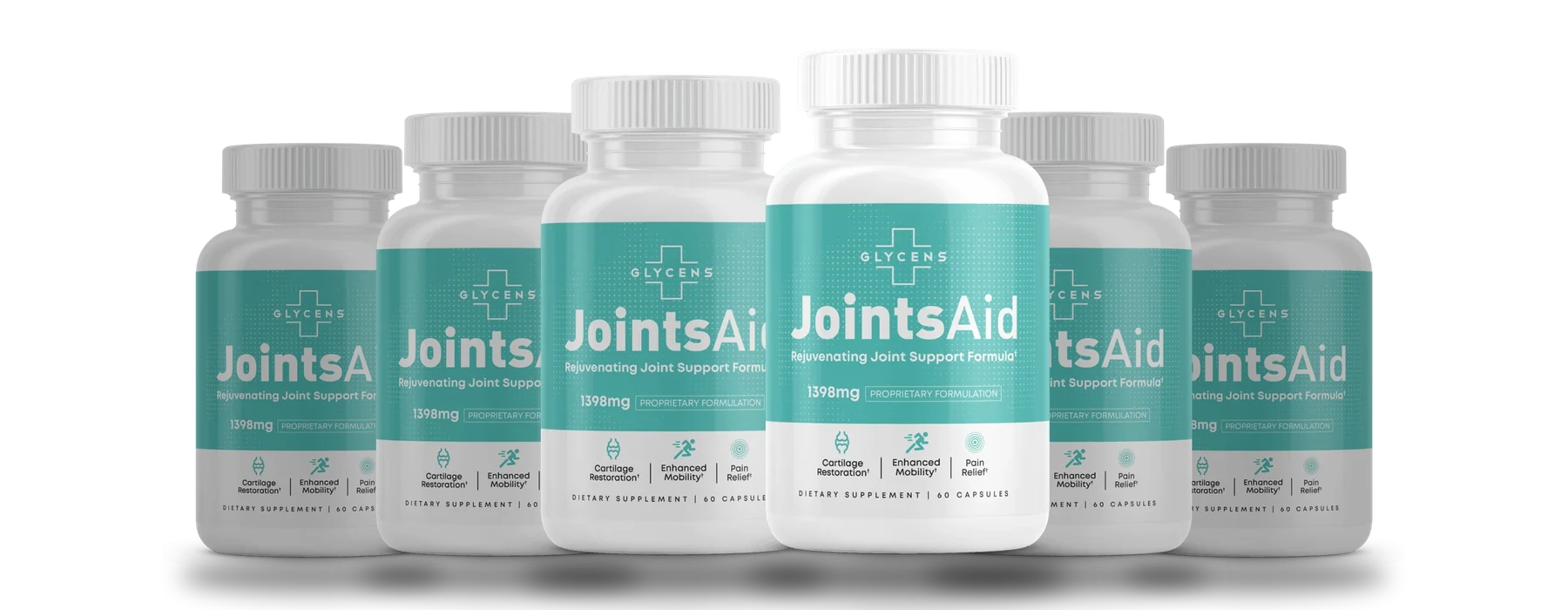
JointsAid layers MSM into a 1,398 mg proprietary formulation on a base of glucosamine, turmeric, MSM, quercetin and boswellia serrata — once-daily, the labelled daily serving. The six-bottle bundle is the best value at $49 per bottle, with free U.S. shipping and a 60-day guarantee.
Check today’s JointsAid pricing — from $49/bottleHow much MSM is in the JointsAid formula?
In JointsAid, MSM is one of the ingredients inside a 1,398 mg proprietary blend, listed as a combined total rather than broken out gram by gram. That blend sits on top of the separately labeled the cartilage nutrient glucosamine. Proprietary blends are common here: they disclose the total weight and every ingredient, but not each individual amount. The snapshot below shows how the formula is organized.
| Formula layer | Example ingredients | What it contributes |
|---|---|---|
| Cartilage nutrients | Glucosamine | The labeled building-block base of the formula. |
| Sulfur donor | MSM (methylsulfonylmethane) | Supplies sulfur used in connective-tissue proteins. |
| Comfort botanicals | Turmeric, boswellia, ginger | Long-traditional plants popular in mobility blends. |
| Blend total | 1,398 mg proprietary blend | The combined weight of the botanical and sulfur companions. |
To see the exact panel, the full Supplement Facts and the ingredients section on the homepage list everything in the formula. The key point for MSM is that it is part of a considered combination, not bolted on as an afterthought.
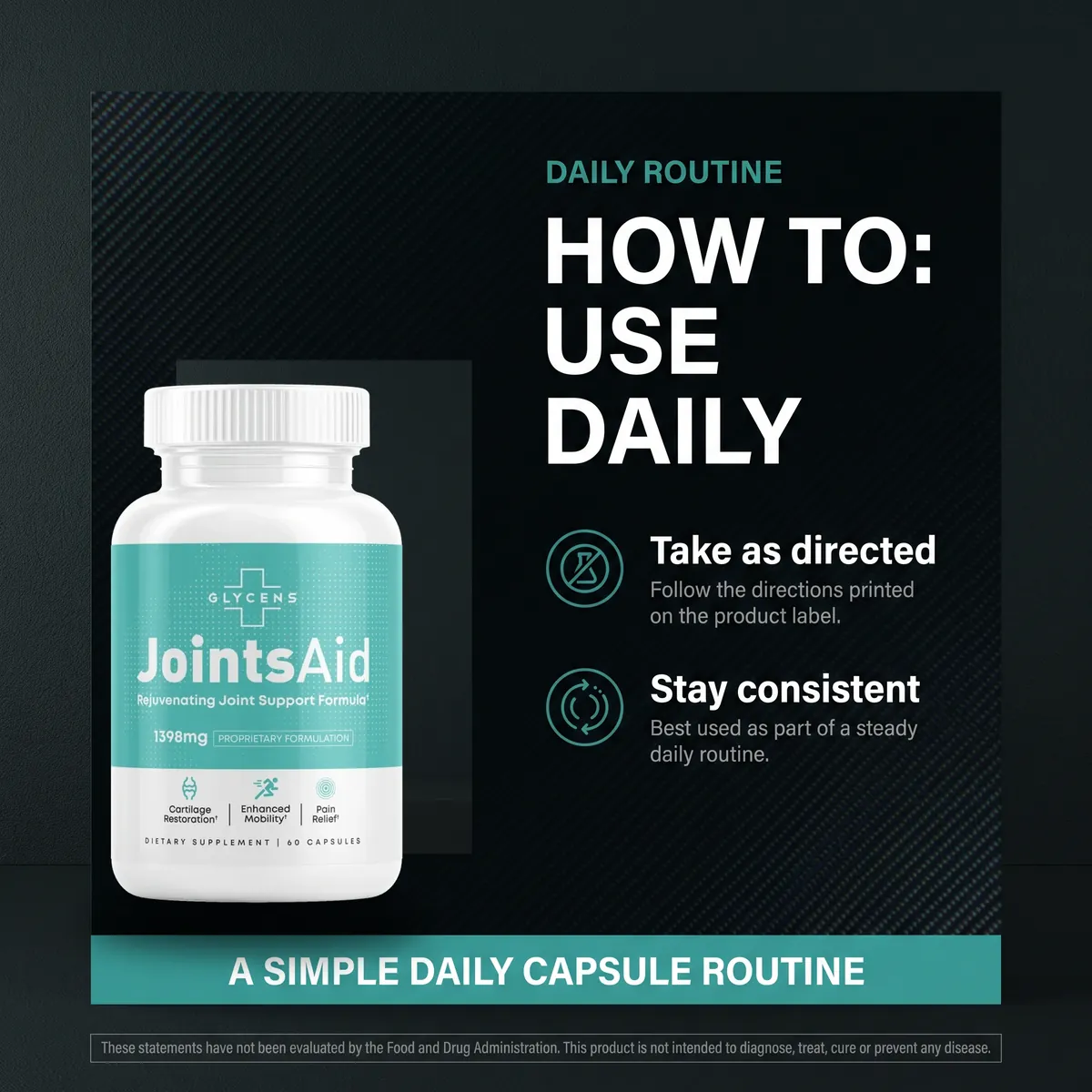
How do you take an MSM sulfur supplement?
The simplest way to take MSM is inside a daily joint formula, at the same time each day, with a meal — consistency matters more than any single dose. Standalone MSM is sold across a wide range of amounts with no single official figure everyone agrees on, another reason most people take it within a balanced blend.
What is a sensible daily approach?
For JointsAid, the routine is JointsAid once a day as directed on the label, ideally with food and a glass of water, at a consistent time so it becomes automatic. Taking a joint supplement with a meal can also be gentler on the stomach. Because MSM and its companions build support gradually, they reward steady daily use over several weeks rather than occasional dosing.
How long before you judge it?
Joint nutrients are not fast-acting painkillers, so give any MSM routine a fair trial — typically several weeks to a few months of daily use — before deciding whether it belongs in your regimen (Kim LS et al., Osteoarthritis and Cartilage, 2006). This slow-build pattern is why most people choose a multi-month supply rather than a single bottle. You can compare the packages and pricing on the homepage.
Is MSM safe, and who should ask a doctor first?
MSM is generally regarded as well tolerated at the doses commonly found in supplements, with mild digestive upset being the side effect people report most often. That said, “generally well tolerated” is not the same as “right for everyone.” Anyone who is pregnant or nursing, taking prescription medication, or managing a health condition should speak with a doctor before starting MSM or any joint supplement. And because JointsAid’s glucosamine is typically shellfish-derived, mention any shellfish allergy before starting. This is the ordinary due diligence any supplement deserves: MSM supports a routine — it is not a treatment for arthritis or any other disease.
Frequently asked questions
What is MSM and what does it do for joints?
MSM, or methylsulfonylmethane, is a naturally occurring sulfur compound found in small amounts in some foods and made synthetically for supplements. It supplies sulfur, a mineral the body uses to build connective-tissue proteins like collagen, which is why it is a common companion in joint-comfort blends. It supports a joint routine rather than treating any condition.
Why is MSM combined with glucosamine and chondroitin?
Glucosamine and chondroitin are cartilage building blocks, while MSM contributes sulfur used in connective tissue, so the three cover complementary roles. Many formulas, including JointsAid, pair them because studies of joint routines often test them together rather than in isolation.
How much MSM is in JointsAid?
MSM sits inside the 1,398 mg proprietary blend in JointsAid, alongside turmeric, quercetin, boswellia serrata and other botanicals, on top of the labeled glucosamine, turmeric, MSM, quercetin and boswellia serrata. The blend is listed as a total on the Supplement Facts panel rather than broken out gram by gram.
How long does MSM take to work?
Joint nutrients like MSM are taken to build support gradually rather than for same-day relief, so most routines are given several weeks to a few months of consistent daily use before judging them. Individual results vary, and MSM is not a fast-acting painkiller.
Is MSM safe to take?
MSM is generally well tolerated at common supplement doses, and mild digestive upset is the side effect people report most often. As with any supplement, anyone who is pregnant, nursing, taking medication or managing a health condition should check with a doctor first, and MSM is not a treatment for any disease.
Can I get enough MSM from food instead?
MSM occurs only in trace amounts in foods such as some fruits, vegetables and grains, and much of it is lost in cooking and processing, so a diet rarely provides the amounts used in joint supplements. This is why MSM is typically taken as a concentrated supplement within a blend like JointsAid.
See what JointsAid actually names →
JointsAid is a dietary supplement, not a treatment for any medical condition. These statements have not been evaluated by the Food and Drug Administration. This product is not intended to diagnose, treat, cure or prevent any disease. Always consult a qualified healthcare professional about your individual needs.
References & further reading
- National Center for Complementary and Integrative Health (NCCIH). Osteoarthritis: In Depth. nccih.nih.gov/health/osteoarthritis-in-depth
- National Center for Complementary and Integrative Health (NCCIH). Glucosamine and Chondroitin for Osteoarthritis. nccih.nih.gov/health/glucosamine-and-chondroitin-for-osteoarthritis
- Examine.com. Methylsulfonylmethane (MSM) — evidence-based summary. examine.com/supplements/methylsulfonylmethane
- Debbi EM et al., BMC Complementary and Alternative Medicine, 2011. Efficacy of methylsulfonylmethane supplementation on osteoarthritis of the knee: a randomized controlled study. Debbi EM et al., BMC Complementary and Alternative Medicine, 2011 — PubMed 21708034
- National Institute of Arthritis and Musculoskeletal and Skin Diseases (NIAMS). Osteoarthritis — Overview. niams.nih.gov/health-topics/osteoarthritis
- Kim LS et al., Osteoarthritis and Cartilage, 2006. Efficacy of methylsulfonylmethane (MSM) in osteoarthritis pain of the knee: a pilot clinical trial. Kim LS et al., Osteoarthritis and Cartilage, 2006 — PubMed 16309928
- Butawan M et al., Nutrients, 2017. Methylsulfonylmethane: Applications and Safety of a Novel Dietary Supplement. Butawan M et al., Nutrients, 2017 — PubMed 28300758
- Zhang Y et al., Nutrients, 2025. Comparative Effectiveness of Nutritional Supplements in the Treatment of Knee Osteoarthritis: A Network Meta-Analysis. Zhang Y et al., Nutrients, 2025 — PubMed 40806131
These references describe the ingredients in general terms and do not constitute evidence that any product treats, cures or prevents any condition.
Keep reading: how glucosamine and chondroitin work · relieving joint pain naturally · the best foods for joint health · the JointsAid review.