Does glucosamine really work? A JointsAid fact check

Updated August 2026 · fact-checked by the JointsAid Research Team. We are an independent information resource, not a medical provider, and this article is educational rather than medical advice.
Does glucosamine really work? The honest answer is “sometimes, a little, for some people” — the evidence is genuinely mixed, with some big trials showing no benefit over placebo and others suggesting a modest effect over months of daily use. That is exactly why JointsAid treats glucosamine as one building block among several, rather than a miracle molecule the whole formula leans on.
Does glucosamine really work, in plain terms?
- The verdict
- The research is mixed: some trials show no benefit over placebo, others a small, gradual effect for certain people. Treat it as modest support, not a cure.
- What helps it work
- A proper dose (around 1,500 mg glucosamine sulfate daily) taken consistently for eight to twelve weeks before you judge the result.
- Why the debate
- Different forms, doses, funding sources and strong placebo effects make joint-pain studies hard to compare.
- Where JointsAid fits
- JointsAid pairs glucosamine with turmeric, MSM, quercetin and boswellia serrata, so nothing rests on one mixed-evidence ingredient.
Glucosamine carries a lot of hype in both directions — hailed as a joint saviour by some, dismissed as an expensive placebo by others — and the truth sits in the messy middle. In this fact check we separate what the evidence actually supports from what marketing over-promises, and explain why JointsAid uses glucosamine as a supporting player rather than the star.

Does glucosamine really work? What the evidence actually says
Glucosamine really works only in a modest, inconsistent way: high-quality reviews are split, with some finding no meaningful benefit over placebo and others reporting a small improvement in comfort and function over several months. Large independent trials, including publicly funded studies, have often struggled to separate glucosamine from placebo on pain scores. At the same time, several European trials of a specific prescription-grade crystalline glucosamine sulfate reported a small but measurable benefit (Reginster JY et al., The Lancet, 2001). The disagreement is not a sign that everyone is wrong; it is a sign that any real effect is small enough that study design, dose and product form can tip the result either way.
The practical takeaway is that glucosamine is not a painkiller and not a rebuild-your-cartilage guarantee. For some people it appears to ease day-to-day stiffness over time; for others it does nothing they can feel.
What is glucosamine and how is it supposed to help?
Glucosamine is a naturally occurring compound your body uses as a raw material for cartilage, the smooth cushioning tissue at the ends of your bones. The theory is straightforward: cartilage wears down with age and use, so supplying extra glucosamine might give the body more of the building blocks it needs to maintain that tissue. It is an appealing idea, and it is why glucosamine has been a joint-aisle staple for decades.
Where does supplement glucosamine come from?
Most glucosamine in supplements is made from the shells of shellfish such as crab, shrimp and lobster, though vegetarian versions fermented from corn also exist. This matters for two reasons: people with a shellfish allergy need to check the source, and the form on the label — sulfate or hydrochloride — can differ from the one used in the more positive studies.
Why doesn’t swallowing cartilage building blocks simply rebuild cartilage?
The gap between theory and biology is the crux of the debate. Taking a building block by mouth does not guarantee it reaches a specific joint, or that the joint uses it to lay down new cartilage. The body is not a construction site where extra bricks automatically become a wall. That is why the honest framing is “support,” not “repair,” and why sober sources such as the NCCIH describe the evidence as inconsistent.
Do joint supplements really work, or is it all hype?
Some joint supplements do work modestly for some people, but the category is full of myths that over-promise and cherry-pick evidence. Marketing tends to compress a nuanced picture into “clinically proven” slogans, so it helps to hold common claims up against what the research actually supports. The table below fact-checks the biggest glucosamine and joint-supplement myths.
| Common claim | What the evidence says | Fair verdict |
|---|---|---|
| “Glucosamine rebuilds cartilage” | No strong human evidence that oral glucosamine regrows worn cartilage | Overstated |
| “It’s clinically proven for pain” | Trials are split; effect, if any, is small and slow | Half-true |
| “All glucosamine is the same” | Form and dose (sulfate vs HCl, 1,500 mg) vary across studies | False |
| “It works within days” | Studies allow 8–12 weeks before judging | False |
| “Supplements replace exercise” | Movement and weight control have stronger support | False |
The pattern is clear: the useful truth about joint supplements is smaller and slower than the marketing, but it is not zero. That is a very different message from either “miracle” or “scam.”
Why do the studies on glucosamine effectiveness disagree so much?
Glucosamine studies disagree mainly because of differences in the product used, the dose, the funding source and the powerful placebo response that shows up in any pain research. When you understand these variables, the “contradictory” headlines start to make sense.
Different forms and doses
Many positive trials used a single prescription-grade crystalline glucosamine sulfate at 1,500 mg once daily, while other studies used glucosamine hydrochloride, split doses or lower amounts. Comparing them is a bit like comparing different medicines and expecting identical results.
The placebo effect is real
Pain is subjective and responds strongly to expectation, so placebo groups in joint trials often improve noticeably. That makes it genuinely hard for any supplement to prove a clear advantage, and it is a fair reason for scepticism about dramatic testimonials.
Who paid for the study?
Independent, publicly funded trials have tended to report weaker results than some industry-funded ones. This does not mean industry studies are worthless, but it is a reason to weight large, independent reviews such as the network meta-analysis by Wandel S et al., BMJ, 2010 more heavily.
| Variable | Why it changes the result | What to look for |
|---|---|---|
| Form | Sulfate vs hydrochloride behave differently in trials | Crystalline glucosamine sulfate in positive studies |
| Dose | Under-dosing can blunt any effect | Around 1,500 mg daily total |
| Duration | Effects are slow, so short trials miss them | 8–12 weeks minimum |
| Funding | Independent trials tend to be more conservative | Large, publicly funded reviews |
| Placebo control | Strong placebo response narrows any gap | Randomised, blinded design |
Why doesn’t JointsAid rely on glucosamine alone?
JointsAid does not rely on glucosamine alone precisely because the evidence for glucosamine on its own is modest and mixed (Zhang Y et al., Nutrients, 2025). Building an entire product around one mixed-evidence ingredient would be a shaky foundation, so JointsAid layers glucosamine with turmeric, MSM, quercetin and boswellia serrata. The logic is diversification: each ingredient contributes to comfort and mobility through its own pathway, so the formula is not betting everything on a single molecule that the science treats with caution.
This is also why we write balanced guides instead of hype. If you want the deeper dive on the two ingredients most often paired, see our explainer on glucosamine and chondroitin, and our head-to-head on collagen versus glucosamine (Hochberg MC et al., Annals of the Rheumatic Diseases, 2016).
See what JointsAid actually names
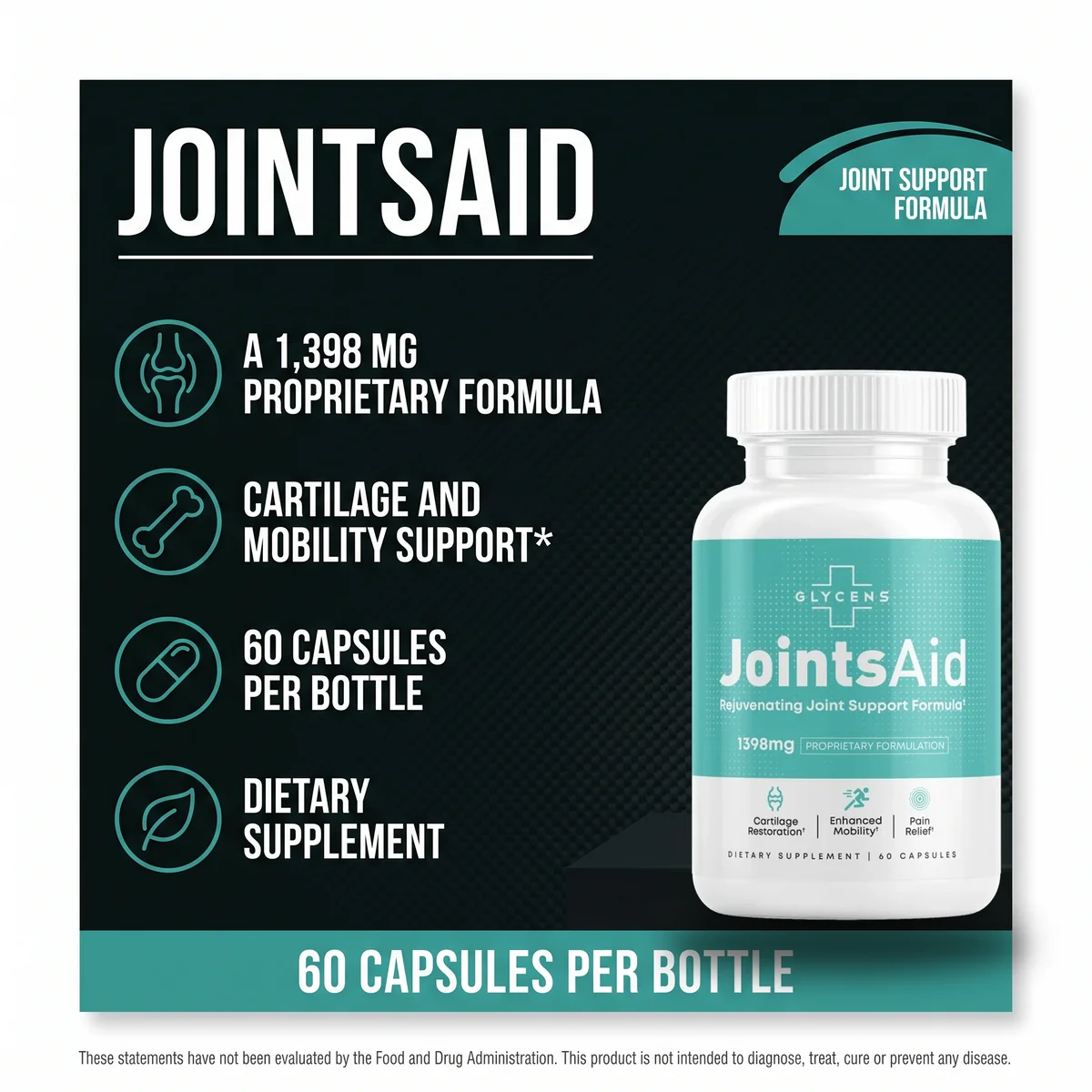
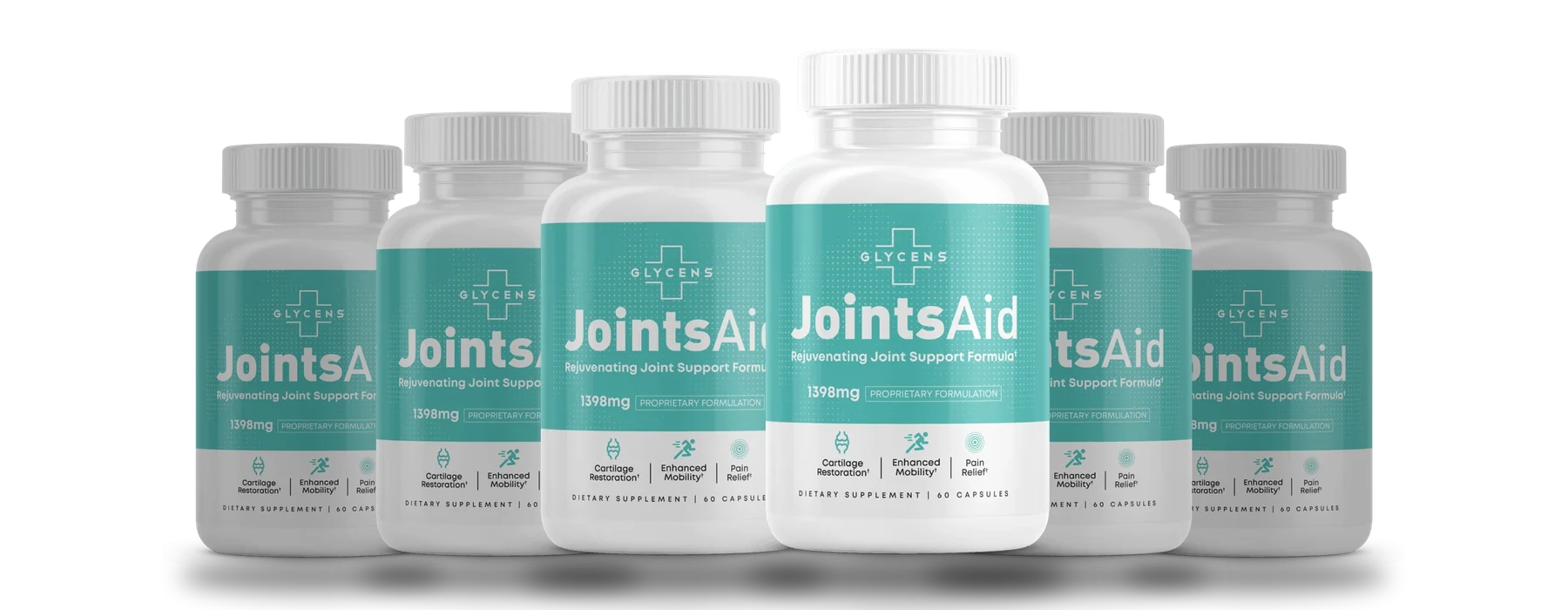
JointsAid combines cartilage nutrients with a 1,398 mg blend of turmeric, quercetin, boswellia serrata and more — so glucosamine is one part of a broader formula. The six-bottle bundle is the best value at $49 per bottle, with free U.S. shipping and a 60-day guarantee.
Order JointsAid — from $49/bottleHow do you give glucosamine a fair trial?
Giving glucosamine a fair trial means committing to a proper dose for long enough to actually judge it, while tracking your joints honestly. Because any effect is small and slow, a half-hearted week or two tells you nothing. Here is a sensible protocol.
- Use an adequate dose — around 1,500 mg of glucosamine daily, ideally the sulfate form used in positive studies.
- Take it consistently at the same time each day so you never miss doses.
- Give it 8–12 weeks before deciding, since it is not a fast-acting painkiller.
- Keep a simple log of stiffness and comfort so you judge by data, not memory.
- Pair it with the basics — movement, a comfortable weight and a joint-friendly plate.
- Reassess honestly: if nothing changes after a fair trial, it may not be for you.

When should you talk to a professional?
A joint supplement supports general comfort and mobility; it is not a treatment for a diagnosed condition, and some situations call for medical advice first. If you have persistent or severe joint pain, a hot or swollen joint, a shellfish allergy (since glucosamine is often shellfish-derived), or you take blood thinners, manage diabetes, or are pregnant or nursing, speak with your doctor before starting glucosamine or any new supplement. A professional can tell you whether a trial makes sense for your situation and rule out issues a capsule cannot address.
Frequently asked questions
Does glucosamine really work for joint pain?
The honest answer is that the evidence is mixed. Some large trials and reviews find glucosamine performs no better than a placebo for pain, while others suggest a small benefit for certain people over months of consistent use. It is best thought of as a modest, gradual support rather than a reliable fix, and results vary from person to person.
How long does glucosamine take to work?
If glucosamine is going to help you at all, most studies allow eight to twelve weeks of daily use before judging the result. It is not a fast-acting painkiller, so a fair trial means taking it consistently at a proper dose for a couple of months and tracking how your joints feel.
Do joint supplements really work, or is it just placebo?
Placebo effects are real and can be strong in pain studies, which is one reason the research is hard to read. That said, several joint ingredients have more consistent evidence than glucosamine alone, and a sensible supplement is best judged over weeks alongside movement, weight management and a joint-friendly diet rather than in isolation.
Which form of glucosamine is best?
Most positive trials used crystalline glucosamine sulfate at around 1,500 mg a day, so that is the form and dose usually cited when people report a benefit. Glucosamine hydrochloride is also common and better studied in combination products, but head-to-head evidence between the forms is limited.
Why does JointsAid include glucosamine if the evidence is mixed?
JointsAid includes glucosamine as one building block among several rather than the whole story. Because the evidence for glucosamine alone is modest, JointsAid pairs it with turmeric, MSM, quercetin and boswellia serrata so the formula does not rest on a single mixed-evidence ingredient.
Is glucosamine safe to take every day?
Glucosamine is generally well tolerated in studies, with mild digestive upset being the most common complaint. Because it is often shellfish-derived, people with a shellfish allergy should check the source, and anyone on blood thinners, managing diabetes, pregnant or nursing should speak with a doctor before starting.
Check today’s JointsAid pricing →
JointsAid is a dietary supplement, not a treatment for any medical condition. These statements have not been evaluated by the Food and Drug Administration. This product is not intended to diagnose, treat, cure or prevent any disease. Always consult a qualified healthcare professional about your individual needs.
References & further reading
- National Center for Complementary and Integrative Health (NCCIH). Glucosamine and Chondroitin for Osteoarthritis. nccih.nih.gov/health/glucosamine-and-chondroitin-for-osteoarthritis
- National Institutes of Health, MedlinePlus. Glucosamine Sulfate. medlineplus.gov/druginfo/natural/807.html
- Examine.com. Glucosamine — Evidence and Effects. examine.com/supplements/glucosamine
- Mayo Clinic. Glucosamine — Drugs and Supplements. mayoclinic.org/drugs-supplements-glucosamine
- Zhu X et al., Journal of Orthopaedic Surgery and Research, 2018. Effectiveness and safety of glucosamine and chondroitin for the treatment of osteoarthritis: a meta-analysis of randomized controlled trials. Zhu X et al., Journal of Orthopaedic Surgery and Research, 2018 — PubMed 29980200
- Reginster JY et al., The Lancet, 2001. Long-term effects of glucosamine sulphate on osteoarthritis progression: a randomised, placebo-controlled clinical trial. Reginster JY et al., The Lancet, 2001 — PubMed 11214126
- Hochberg MC et al., Annals of the Rheumatic Diseases, 2016. Combined chondroitin sulfate and glucosamine for painful knee osteoarthritis: a multicentre, randomised, double-blind, non-inferiority trial versus celecoxib. Hochberg MC et al., Annals of the Rheumatic Diseases, 2016 — PubMed 25589511
- Zhang Y et al., Nutrients, 2025. Comparative Effectiveness of Nutritional Supplements in the Treatment of Knee Osteoarthritis: A Network Meta-Analysis. Zhang Y et al., Nutrients, 2025 — PubMed 40806131
These references describe the ingredients and evidence in general terms and do not constitute evidence that any product treats, cures or prevents any condition.
Keep reading: how glucosamine and chondroitin work · collagen vs glucosamine · back to the JointsAid blog · JointsAid review.