How to improve joint flexibility naturally with JointsAid

Updated August 2026 · reviewed by the JointsAid Research Team. We are an independent information resource, not a medical provider, and this article is educational rather than medical advice.
To improve joint flexibility naturally, you move each joint gently through its full comfortable range most days, warm up before you stretch, and add a little strength so the joint feels stable as it loosens. Flexibility responds to consistency, not intensity — small daily reps over weeks — and it works best alongside a comfortable weight, good hydration and, if you choose, an everyday mobility supplement like JointsAid.
How to build more flexible, supple joints the natural way.
- The idea
- Take each joint through its full pain-free range daily, warm up first, and hold gentle stretches for 20–30 seconds.
- The mix
- Combine stretching with joint mobility exercises (slow circles, cat-cow, hip openers) and light strength so new range feels stable.
- Consistency
- Short, near-daily sessions beat occasional long ones; usable flexibility is built over weeks, and results vary.
- Where JointsAid fits
- A once-daily blend supports everyday joint comfort and mobility alongside movement — a supplement to the habit, not a substitute.
Flexibility is highly trainable — a “use it or lose it” quality: the more regularly you ask a joint to travel through its comfortable range, the more readily it does. This guide covers the stretching, mobility work and daily habits that build supple joints, and shows where a formula like JointsAid fits into an everyday routine.
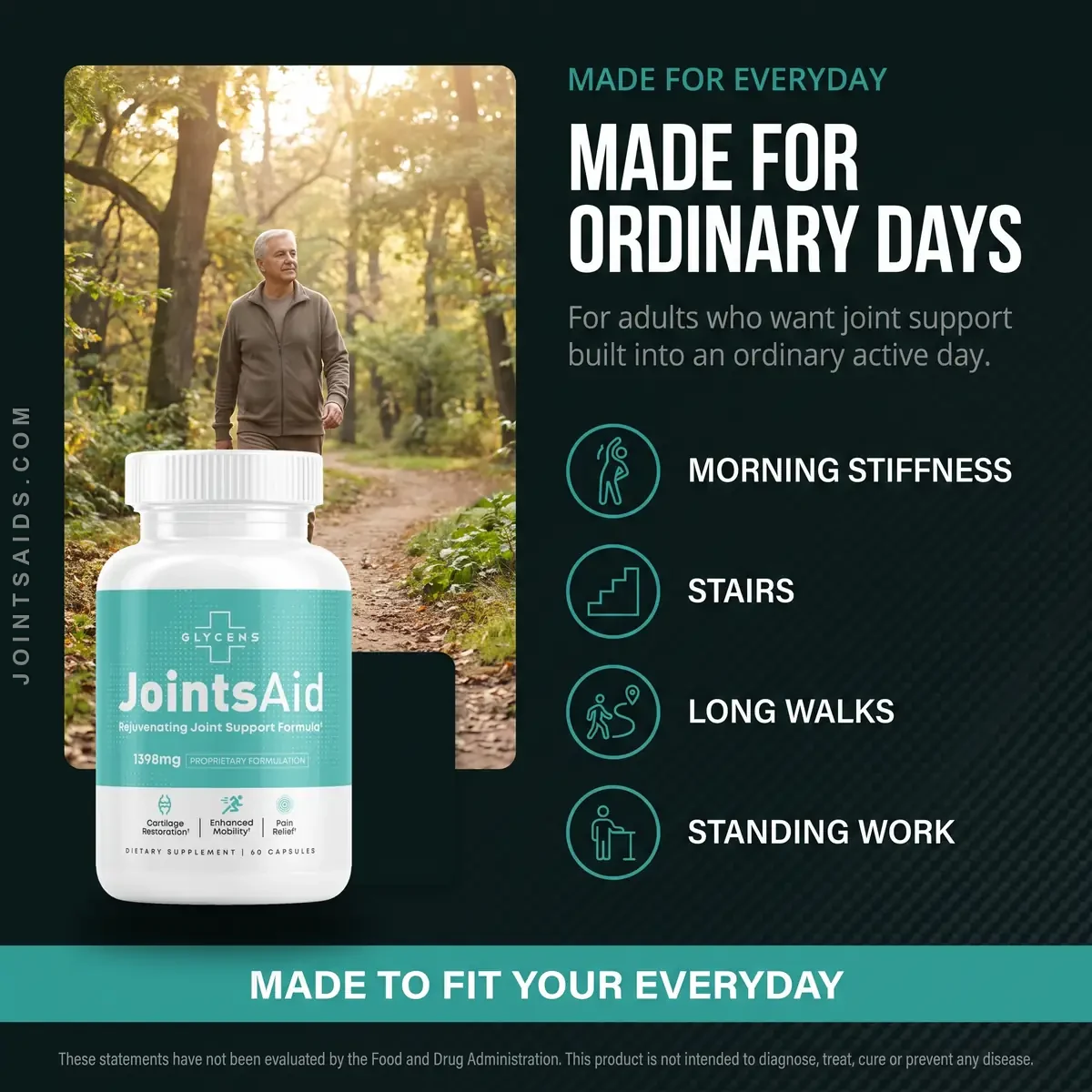
What does it mean to improve joint flexibility naturally?
Improving joint flexibility naturally means gradually widening the pain-free range a joint can move through using movement, stretching and habit rather than a procedure or drug (NCCIH, Yoga: What You Need To Know). Two things change underneath: the soft tissues around the joint become more tolerant of length, and your nervous system slowly allows a larger range because it stops guarding against it. Both adapt to gentle, repeated demand, which is why the pattern of practice matters more than any single heroic stretch.
It helps to separate two ideas: flexibility is how far a joint can be stretched, while mobility is how far you can actively move and control it. Supple, dependable joints need both.
Why do joints get stiff in the first place?
Joints get stiff mainly because they are not asked to move through their full range often enough, and that under-use compounds with age, sitting and dehydration. When a joint spends most of the day in a narrow middle range — think hours at a desk — the surrounding tissue adapts to that shorter working length and the edges of the range start to feel foreign. Add the natural changes that come with the decades, and morning stiffness becomes familiar (NCCIH, Osteoarthritis: In Depth).
Is it age, or is it inactivity?
It is usually both, but inactivity is the part you can most influence. Age changes the tissue, yet the biggest driver of stiffness for most people is simply how little range they use, and a comfortable body weight and good hydration make the flexibility work easier still. For more on the eating side, see our guide to the best foods for joint health.

What are the best joint mobility exercises for flexibility?
The best joint mobility exercises take a joint slowly through its full comfortable circle without loading it heavily — think joint circles, controlled cat-cow and gentle hip openers rather than aggressive, bouncing stretches. They are low-risk, need no equipment, and take only a few minutes. The table below is a simple starting menu.
| Exercise | Joints worked | How to do it |
|---|---|---|
| Ankle & wrist circles | Ankles, wrists | Slow, full circles, 8–10 each direction, morning and evening |
| Shoulder rolls & reaches | Shoulders | Roll back 10 times, then reach overhead and hold gently for 20 seconds |
| Cat-cow | Spine | On hands and knees, alternate a gentle arch and round for 8–10 slow breaths |
| Standing hip openers | Hips | Slow leg swings and figure-four holds, supported, 20–30 seconds a side |
| Neck half-circles | Neck | Chin to chest, roll ear-to-shoulder side to side, never rolling fully back |
| Daily walk | Knees, hips, ankles | 20–30 minutes at an easy pace; the simplest whole-body mobility drill |
How should you stretch without hurting yourself?
Warm up first, ease into the stretch until you feel a mild pull rather than pain, then hold it steady for 20 to 30 seconds while you breathe. Never bounce into the end of a range, and never chase a sensation that turns sharp. Aim for the “comfortably uncomfortable” line: you should feel the stretch clearly but still be able to breathe within it. Cold tissue resists and can strain, which is why a couple of minutes of easy movement first pays off.
Why does light strength work help supple joints?
Light strength work helps because a joint you can control through a wide range is safer and feels more supple than one that is merely loose. Slow bodyweight squats, gentle bridges and supported lunges teach the muscles to hold and stabilise the new range you are opening up — the difference between flexibility and true, usable mobility.
How long until you notice more flexible joints?
You will often feel looser within a single session because warm tissue moves more easily, but lasting change in your usable range typically builds over several weeks of near-daily practice. The honest expectation is steady, gradual progress rather than an overnight transformation. Every individual is different, so treat the timeline below as a guide, not a promise.
| Timeframe | What tends to happen | What to focus on |
|---|---|---|
| Session 1–2 | You feel looser and warmer while you move; the effect fades by the next day | Building the habit and learning the movements |
| Week 1–2 | Warm-ups feel easier; morning stiffness may ease a little sooner | Turning up daily, even for five minutes |
| Week 3–6 | A modest but real increase in usable range for the joints you train most | Adding gentle strength to hold the new range |
| Ongoing | Flexibility is maintained as long as the routine continues | Consistency; range is kept by using it |
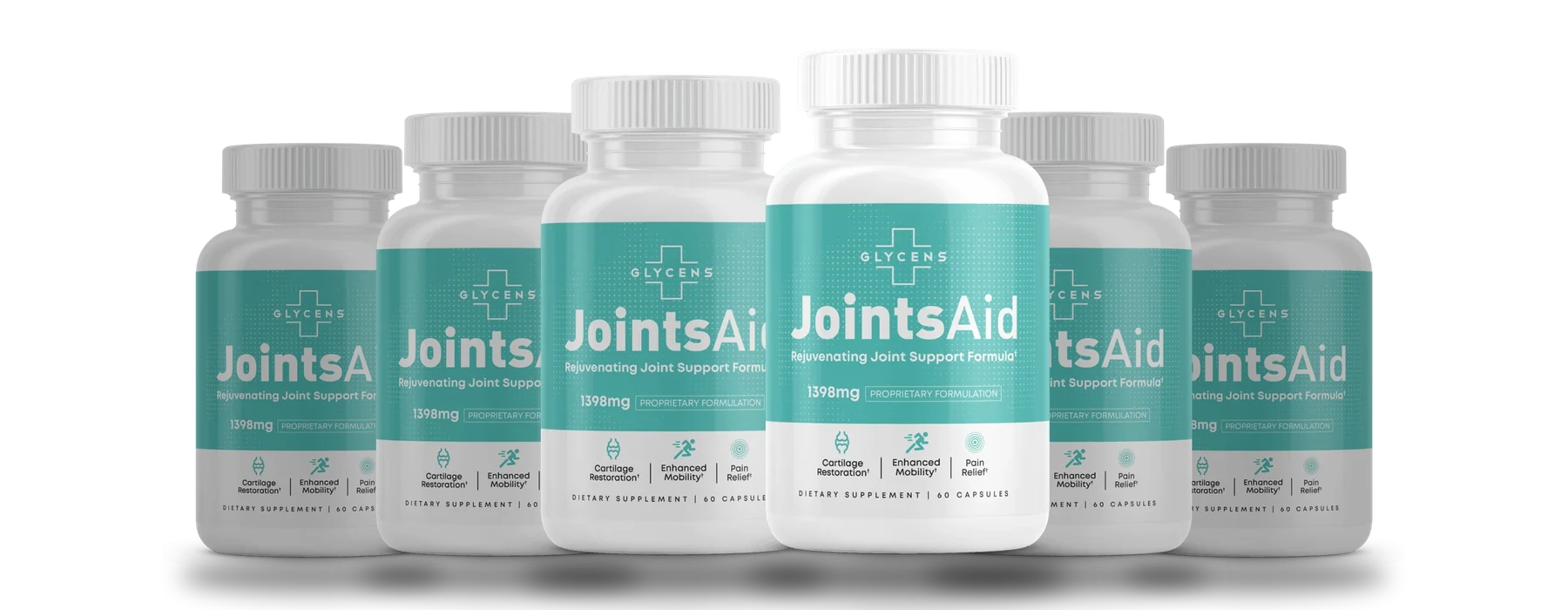
Support the habit from the inside
JointsAid pairs cartilage nutrients with a 1,398 mg blend of turmeric, quercetin and boswellia serrata to support everyday joint comfort and mobility — a daily companion to your stretching routine. See what JointsAid actually names and today’s pricing on the six-bottle bundle.
Check today’s JointsAid pricing — from $49/bottleHow does JointsAid support everyday mobility?
JointsAid is a once-daily dietary supplement that layers cartilage building blocks with comfort botanicals to support everyday joint comfort and mobility — it works with your movement routine, not instead of it (Fransen M et al., Cochrane Database of Systematic Reviews, 2015). Its 1,398 mg blend brings together type II collagen, glucosamine and chondroitin, alongside turmeric, quercetin and boswellia serrata. Movement keeps joints supple; a daily blend simply makes the nutrient side easy to keep up.
To be clear about the evidence: a supplement does not stretch you or directly change your range of motion, and individual responses vary. What it can do is make getting joint-associated nutrients every day effortless. Read how two of those ingredients are studied in our explainer on glucosamine and chondroitin for joints, or see the full ingredients breakdown.
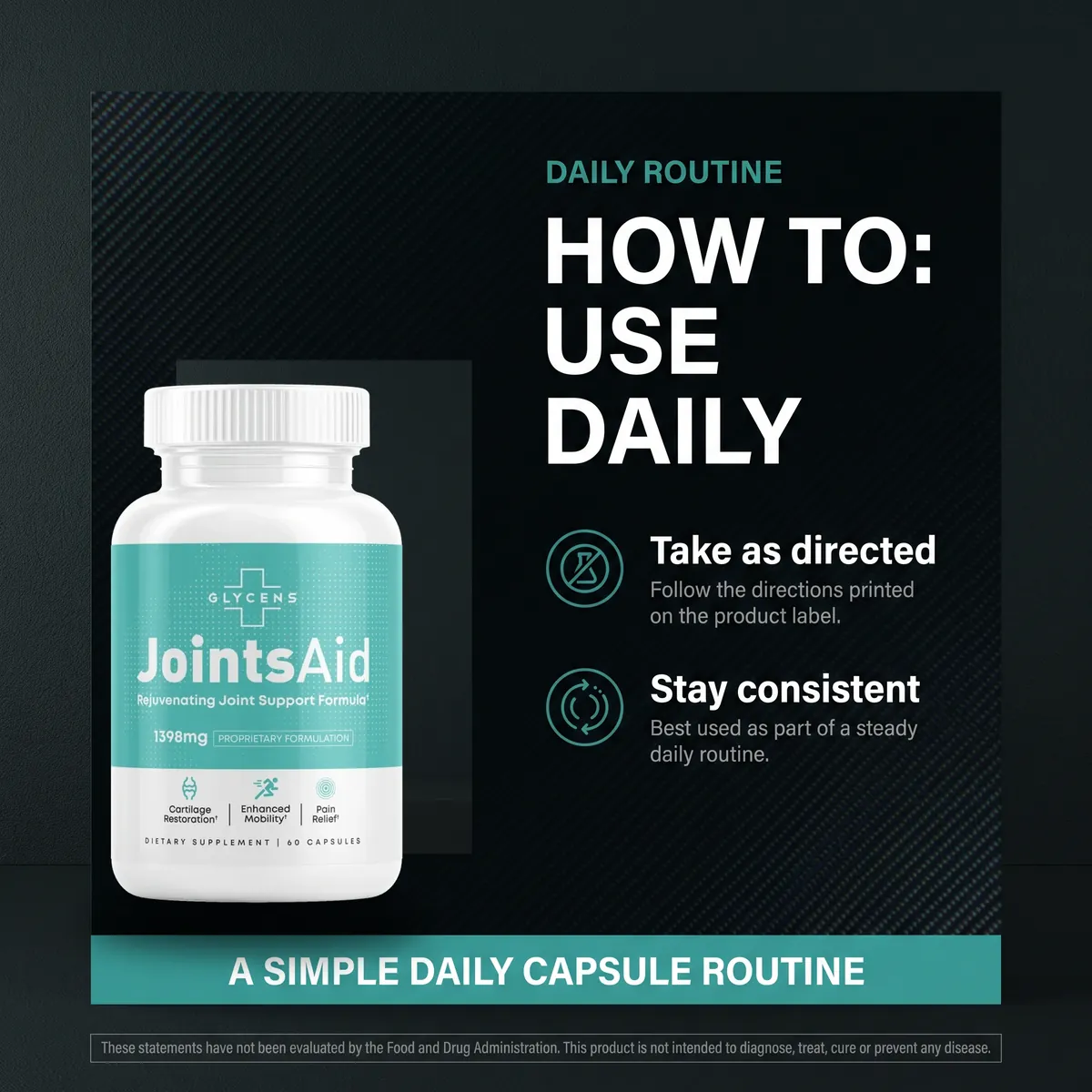
What does a simple weekly mobility routine look like?
A good weekly routine is short, repeatable and attached to something you already do, so it survives busy days. Here is a template you can adapt.
- Start with a two-minute warm-up — marching on the spot, arm swings, easy ankle and wrist circles.
- Run through the mobility menu — joint circles, cat-cow and hip openers, most days of the week.
- Hold two or three gentle stretches for the joints that feel tightest, 20–30 seconds each, never into pain.
- Add light strength twice a week — slow squats, bridges and supported lunges to own your new range.
- Take a daily walk — the simplest, most sustainable whole-body mobility drill there is.
- Take your JointsAid capsules at the same time daily so the nutrient habit sticks alongside the movement one.
For gentler, pain-focused variations, our companion guide on how to relieve joint pain naturally covers heat, rest and pacing.
When should you talk to a professional?
Gentle mobility work is suitable for most people, but some signs mean you should get personalised advice first. If you have sharp or persistent joint pain, a hot or swollen joint, a recent injury, a diagnosed joint condition, or you are recovering from surgery, speak with a doctor or a physiotherapist. Mobility training supports general comfort and everyday movement; it is not a treatment for a diagnosed condition.
Frequently asked questions
How can I improve joint flexibility naturally?
Move the joint gently through its full range every day, warm up first, hold easy stretches for 20 to 30 seconds, and build a little strength so it feels stable as it loosens. Consistency over weeks matters more than intensity, and a daily joint blend such as JointsAid can support the habit alongside movement.
What are the best joint mobility exercises?
Slow joint circles for the ankles, hips, shoulders and neck, controlled cat-cow for the spine, gentle hip openers, and daily walking are among the most useful. They ask each joint to travel through its comfortable range without loading it heavily, which is what mobility work is designed to do.
How long does it take to become more flexible?
Many people notice they feel looser within the first session or two because warm tissue moves more easily, but lasting change in usable range typically takes several weeks of near-daily practice. Progress is gradual and individual, and results vary from person to person.
Is stretching or strength better for supple joints?
They work best together. Stretching and mobility drills widen the range a joint can travel, while light strength work helps you control and hold that new range, so the joint feels stable rather than merely loose. A balanced routine includes a little of both.
Does JointsAid make you more flexible?
JointsAid is a daily daily supplement that supplies cartilage nutrients and comfort botanicals to support everyday joint comfort and mobility; it is not a stretching program and does not directly change your range of motion. It is designed to sit alongside movement, not replace it, and results vary.
Can I do mobility work if my joints are already stiff?
Gentle, pain-free movement within a comfortable range is generally suitable for stiff joints and is often more helpful than resting completely, but sharp pain, a hot or swollen joint, or a diagnosed condition are reasons to check with a doctor or physiotherapist first for a plan that fits you.
See what JointsAid actually names — try it risk-free for 60 days →
JointsAid is a dietary supplement, not a treatment for any medical condition. These statements have not been evaluated by the Food and Drug Administration. This product is not intended to diagnose, treat, cure or prevent any disease. Always consult a qualified healthcare professional about your individual needs.
References & further reading
- Mayo Clinic. Stretching: Focus on flexibility. mayoclinic.org/healthy-lifestyle/fitness/in-depth/stretching
- National Institute on Aging (NIH). Flexibility Exercises for Older Adults. nia.nih.gov/health/exercise-and-physical-activity
- National Center for Complementary and Integrative Health (NCCIH). Osteoarthritis: In Depth. nccih.nih.gov/health/osteoarthritis-in-depth
- Harvard Health Publishing. The importance of stretching. health.harvard.edu/staying-healthy/the-importance-of-stretching
- Nakamura M et al., Frontiers in Medicine, 2024. Chronic effects of a static stretching intervention program on range of motion and tissue hardness in older adults. Nakamura M et al., Frontiers in Medicine, 2024 — PubMed 39655232
- Fransen M et al., Cochrane Database of Systematic Reviews, 2015. Exercise for osteoarthritis of the knee. Fransen M et al., Cochrane Database of Systematic Reviews, 2015 — PubMed 25569281
- NCCIH, Yoga: What You Need To Know. www.nccih.nih.gov/health/yoga-what-you-need-to-know
These references describe movement habits and ingredients in general terms and do not constitute evidence that any product treats, cures or prevents any condition.
Keep reading: how to relieve joint pain naturally · the best foods for joint health · the JointsAid review · back to the JointsAid blog.